Nigerian technology startup Terra Industries has raised $52 million in seed funding, putting the young company firmly on the radar of the global defence technology industry and highlighting the growing ambition of Africa's technology ecosystem.
Founded in 2024 by Nigerian entrepreneurs Nathan Nwachuku and Maxwell Maduka, Terra Industries is building autonomous security technology designed to help governments and infrastructure operators monitor and protect critical assets across Africa and other markets in the Global South.
What makes this funding particularly interesting is not just the size of the investment. It is the industry Terra has chosen to compete in.
African startups are often associated with fintech, payments, e-commerce and other digital services. Terra is taking a different route by entering the highly specialised world of defence technology, autonomous systems and infrastructure security.
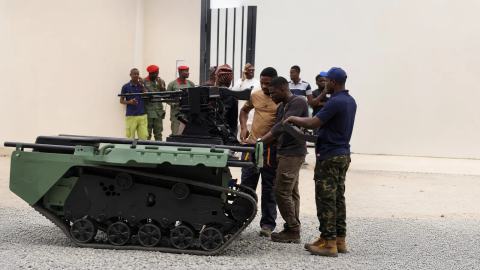
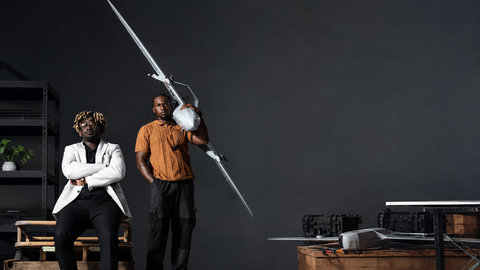
The company is developing technologies that include drones, surveillance systems, autonomous sentry towers and unmanned ground vehicles. These systems are designed to provide monitoring and security capabilities around critical infrastructure and other strategically important locations.
Terra says its technology is already being used to protect assets worth approximately $11 billion across multiple African countries, showing that the company is attempting to move beyond the experimental stage and into real-world deployment.
That is important because building sophisticated defence technology is very different from creating an ordinary consumer application.
It requires engineering, software development, hardware manufacturing, testing, capital and the ability to operate in highly sensitive environments. Terra's ability to attract $52 million at the seed stage suggests that investors see significant potential in the problem the company is trying to solve.
The funding itself has also come in stages.
Terra raised approximately $11.75 million in January 2026, followed by another $22 million in February. The company then announced an additional $18 million in August, bringing its total seed funding to $52 million.
The latest investment included existing backers such as 8VC, Silent Ventures, Nova Global, Belief Capital and SV Angel, as well as new investor Norleo Space Investments and angel investor Grant Gordon.
With that capital, Terra plans to expand its manufacturing operations, increase deployments across the Global South, strengthen its engineering and business-development teams and establish an international presence in London.
That international expansion is particularly significant because Terra is not positioning itself simply as a Nigerian company serving Nigerian customers.
Its ambitions are considerably larger.
The company is targeting the wider Global South, a market that includes countries and regions where governments and businesses face complex infrastructure-security challenges and where there is growing interest in autonomous technologies.
And while the word "defence" may immediately make people think about military operations, Terra's broader technology proposition also revolves around protecting important infrastructure and monitoring large areas.
That could include energy facilities, mining operations and other assets that require constant surveillance and security.
This is where autonomous technology becomes increasingly relevant.
Instead of depending entirely on people to physically monitor every location, companies and governments can use drones, sensors, surveillance systems and autonomous machines to collect information, monitor environments and potentially respond more efficiently to security situations.
Of course, technology does not eliminate the need for human judgment, and building reliable autonomous systems is a complicated process. Terra still has to prove that its technology can perform consistently at scale, compete internationally and navigate the regulatory and operational challenges that come with entering the global defence technology market.
But the company's strategy is already attracting serious attention.
One of the biggest developments to watch is Terra's manufacturing ambitions in Africa.
The company is developing a new manufacturing facility in Ghana known as Pax-2, which it says is expected to open in the fourth quarter of 2026. The planned facility will reportedly cover about 34,000 square feet, and Terra says it will become the largest drone manufacturing facility on the African continent once fully operational.
If that happens, the significance could extend beyond Terra itself.
Africa has spent years being viewed primarily as a market for technology developed elsewhere. Consumers across the continent use smartphones, software, social media platforms and other technologies that are often designed and manufactured outside Africa.
But companies like Terra are helping to introduce another side of the story.
Africa can also be a place where sophisticated technology is designed, engineered, manufactured and exported.
That shift in mindset matters.
It means the African technology conversation does not have to stop at fintech or mobile applications. There is room for robotics, artificial intelligence, cybersecurity, advanced manufacturing, agriculture technology, healthcare technology, climate technology and defence technology.
And this is probably one of the most important things to take away from Terra's $52 million funding announcement.
The opportunity is not necessarily in copying what another successful company is doing. The bigger opportunity can come from identifying a problem that has not been properly solved and building something useful around it.
Terra did not become interesting simply because it was a Nigerian startup.
It became interesting because it was attempting to solve a serious problem with technology.
That same principle applies even if you are not an engineer, investor or startup founder.
Someone reading this article might be looking at Terra and thinking, "I could never build something like this."
And that would be true for most people.
You do not need to build autonomous defence systems to learn something from the company.
You can start much smaller by asking yourself a different question: What problem can I solve with the skills and resources I already have?
That question can open an entirely different door.
For example, someone with a smartphone can learn content writing and help businesses create articles for their websites. Another person can learn social media management and help small businesses maintain their online presence. Someone else can learn video editing, graphic design, SEO, virtual assistance or digital marketing.
You could even turn knowledge you already have into a digital product, such as a guide, template, online resource or educational material.
Artificial intelligence is also making it easier for individuals to research ideas, organise information, brainstorm content and improve their productivity. But AI itself is not the business. The value comes from knowing how to use these tools to solve real problems for real people.
That distinction is important.
A smartphone is not a business.
An AI application is not automatically a business.
A social media account is not automatically a business.
The business begins when you can use those tools to provide something that another person genuinely needs and is willing to pay for.
In that sense, the story of Terra Industries is surprisingly relevant to anyone thinking about starting a digital business.
The company identified a problem, developed a solution and attracted investment around that solution.
You can apply the same thinking on a much smaller scale.
You can identify a problem among small businesses in your community. You can learn a skill that helps solve it. You can offer your first service to one customer, improve your work, collect results and gradually build from there.
You do not need to start with millions of dollars.
You need to start with usefulness.
And that is why I think Terra's story deserves attention beyond the headline about $52 million.
The funding is certainly impressive, but the bigger story is the ambition behind it.
A Nigerian startup founded only in 2024 is attempting to build sophisticated autonomous security technology, expand manufacturing in Africa and compete for opportunities across the Global South.
There is still a long road ahead.
Terra will have to prove that it can execute its plans, scale its operations, maintain the quality of its technology, compete with established global players and navigate the complex regulatory environment surrounding defence and autonomous systems.
Funding can provide the fuel, but execution determines how far the journey goes.
Still, the company's progress represents something worth watching.
It shows that African technology companies are increasingly willing to enter industries that require deep expertise, substantial investment and global ambition.
More importantly, it challenges the old idea that Africa's role in technology is simply to consume what other parts of the world create.
There is another possibility.
Africa can build.
Africa can manufacture.
Africa can innovate.
And African entrepreneurs can develop solutions for local problems that eventually find customers around the world.
For young entrepreneurs, creators and professionals, that may be the most valuable lesson hidden inside Terra Industries' $52 million funding story.
You do not have to begin by trying to build the biggest company in the world.
Start by becoming useful.
Find a problem.
Learn the skill required to solve it.
Use the tools available to you.
Start small.
Improve continuously.
Then allow the value you create to determine how far the opportunity can grow.
Terra Industries may be building autonomous security systems for governments and critical infrastructure, but the underlying entrepreneurial principle is something almost anyone can understand: big opportunities often begin with someone taking a serious problem seriously enough to build a solution.
And perhaps somewhere in Nigeria or elsewhere in Africa, another entrepreneur is already looking at a problem everyone else has ignored.
The next big African technology company could be working on something completely different from Terra.
It could be in agriculture, education, artificial intelligence, healthcare, finance, logistics, content creation or even a simple digital service that solves an everyday problem.
The important thing is to stop waiting for the perfect opportunity and start paying attention to the problems around you.
Because sometimes, the biggest business opportunity is hiding inside the problem everyone has become accustomed to living with.
If you have an article, opinion piece, event or news story you would like published, Global News Arena would love to hear from you. If you are ready to begin your journey toward building a profitable online content-writing business from your phone or laptop, you can also take that first step today. Send your article, story or enquiry to advertise@globalnewsarena.com.