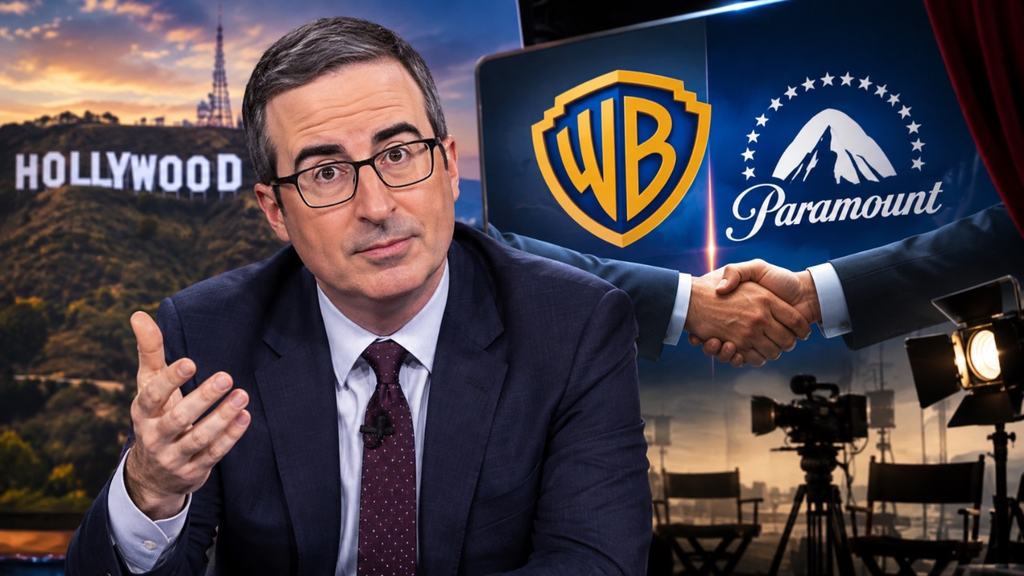
British comedian John Oliver has reacted to the major Hollywood merger that has placed HBO’s parent company, Warner Bros. Discovery, under Skydance’s control. On his Sunday programme, Last Week Tonight, Oliver joked about becoming part of the new company and told its owners that his show would not change. His comments, made on October 11 and reported the following day, came as the entertainment industry continued to discuss what the takeover could mean for television, film and news.
Oliver made his remarks at the end of the programme, using humour to address the change in ownership. He welcomed the new owners sarcastically and suggested that viewers should not expect his show to become different because of the deal. His response attracted attention because Last Week Tonight is known for examining political issues, powerful institutions and public figures. The programme’s future has become part of a wider discussion about whether television shows can maintain their independence when the companies behind them change hands.
The takeover brings major entertainment and media operations under one corporate structure. Warner Bros. Discovery owns HBO and Warner Bros. film and television businesses, while Skydance has built its own presence in film and television production. The deal also brings major news operations, including CNN and CBS, into a wider media group. This makes the merger important beyond Hollywood films because the company’s decisions can affect entertainment programmes, streaming services and news organisations.
The deal has attracted attention because of its enormous size and the number of well known brands involved. Warner Bros. and HBO have been responsible for films and television programmes watched by audiences around the world. Paramount and Skydance also have a long history in entertainment. Bringing these businesses together could create opportunities to share resources, develop new productions and distribute content across more platforms. However, it also raises questions about how the new company will decide which films and programmes receive money and which projects may be dropped.
One concern surrounding large media mergers is the possibility of job cuts. When companies combine, they may decide that some departments perform similar work or that they can reduce costs by bringing operations together. That can affect workers in production, marketing, technology, administration and other areas. Entertainment industry observers are also watching how the company’s leadership will manage its different brands and whether creative teams will continue to have room to take risks.
Another concern is editorial independence, particularly for news organisations. Some public figures and media workers have questioned whether ownership changes could influence which stories are covered and how programmes discuss powerful people. Skydance leadership has said it supports editorial independence. However, critics remain concerned about the concentration of media ownership and the influence that large companies can have over what audiences see and hear. These concerns are part of the broader debate surrounding the merger, rather than proof that any particular programme has already been ordered to change.
For viewers, the effects of a merger may not be obvious immediately. Some may eventually see changes in streaming services, the films available to watch or the programmes that receive new seasons.
The company could also make decisions about subscriptions, release schedules and how its content is distributed. These changes often take time, and the full impact will depend on the decisions made by the new leadership. For people working in entertainment, the important questions include whether there will be enough opportunities for different kinds of stories and whether creative teams will retain the freedom to develop them.
Oliver’s reaction has brought a human face to a business deal that involves billions of dollars and some of the world’s most recognisable entertainment brands. His joke does not settle the questions surrounding the merger, but it shows that the change has become a subject of public conversation among people who make and watch television. As the new company begins shaping its plans, audiences and industry workers will be watching to see how the takeover affects the programmes, films and news they rely on.
If you have an article, opinion piece, event or news story you would like published, Global News Arena would love to hear from you.
Send a message to Global News Arena contact to get in touch.