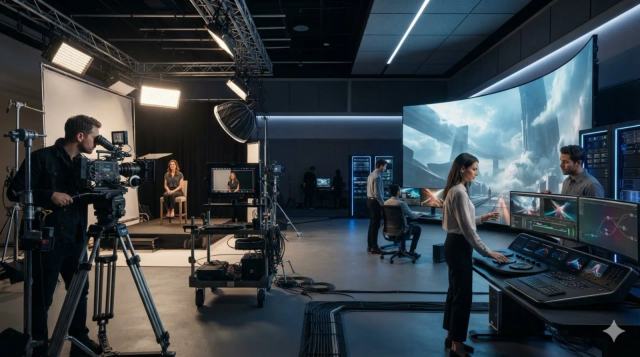
One reason companies merge is to become stronger in a competitive industry. Making films and television programmes can cost a great deal of money. Companies need writers, actors, directors, cameras, studios, special effects teams and many other workers. They must also promote their productions and find ways to reach audiences.
By combining resources, two companies may be able to finance bigger projects, share technology and distribute their work across more countries.
A merger can also bring well known entertainment brands under one roof. A company might own film studios, television channels, streaming services and libraries of older programmes.
Bringing these together may make it easier to offer audiences more content through connected services. It can also help a company negotiate distribution agreements and promote different productions to the same viewers.
However, combining brands does not automatically mean that every film or programme will become available on one platform.
The biggest changes for audiences often depend on what company leaders decide to do after a merger. They may combine streaming services, change subscription prices or adjust the way films are released.
A programme that once appeared on one service might move to another, while some older films may become easier to find. In other cases, content may be removed as companies review costs and decide which titles they want to keep available.
Workers in the entertainment industry can also feel the effects. When two companies have similar departments, the new owner may decide to combine them or reduce the number of roles.
This can create uncertainty for employees and contractors.
Production teams may also find that a project they were developing is delayed or cancelled if the new company changes its plans.
At the same time, a stronger company may have more money to invest in selected productions and create new opportunities in other areas.
Another important issue is the variety of stories that audiences get to see.
Large companies must decide how to spend their budgets, and they may focus on projects they believe will attract the largest audiences.
That can help fund popular films and major television shows, but there is a risk that smaller or unusual stories may receive less support. Independent producers and smaller studios can play an important role by creating work that serves audiences whose interests are not always met by the biggest companies.
Media mergers can also affect news and public discussion when a company owns both entertainment brands and news organisations.
Viewers may worry about whether journalists and programme makers will be free to investigate powerful people or discuss controversial issues.
Company leaders may promise to protect editorial independence, but audiences and workers often want to see how those promises are put into practice.
The ownership of a media company matters because it can influence the resources available to its teams and the decisions made about their work.
A merger is not automatically good or bad. Its impact depends on how the company is managed, whether it invests in creative work, how it treats employees and whether audiences continue to have access to a wide range of stories. Viewers can pay attention to changes in subscriptions, release schedules and the kinds of programmes being produced.
For the entertainment industry, the real test is whether a larger company uses its resources to create better opportunities or simply reduces choices in the name of saving money.
If you have an article, opinion piece, event or news story you would like published, Global News Arena would love to hear from you.
Send a message to Global News Arena contact to get in touch.