

Space exploration often makes people think about rockets travelling to distant planets or astronauts walking on the Moon. But some of the most important discoveries come from machines that watch the universe from above Earth, NASA Swift space telescope.
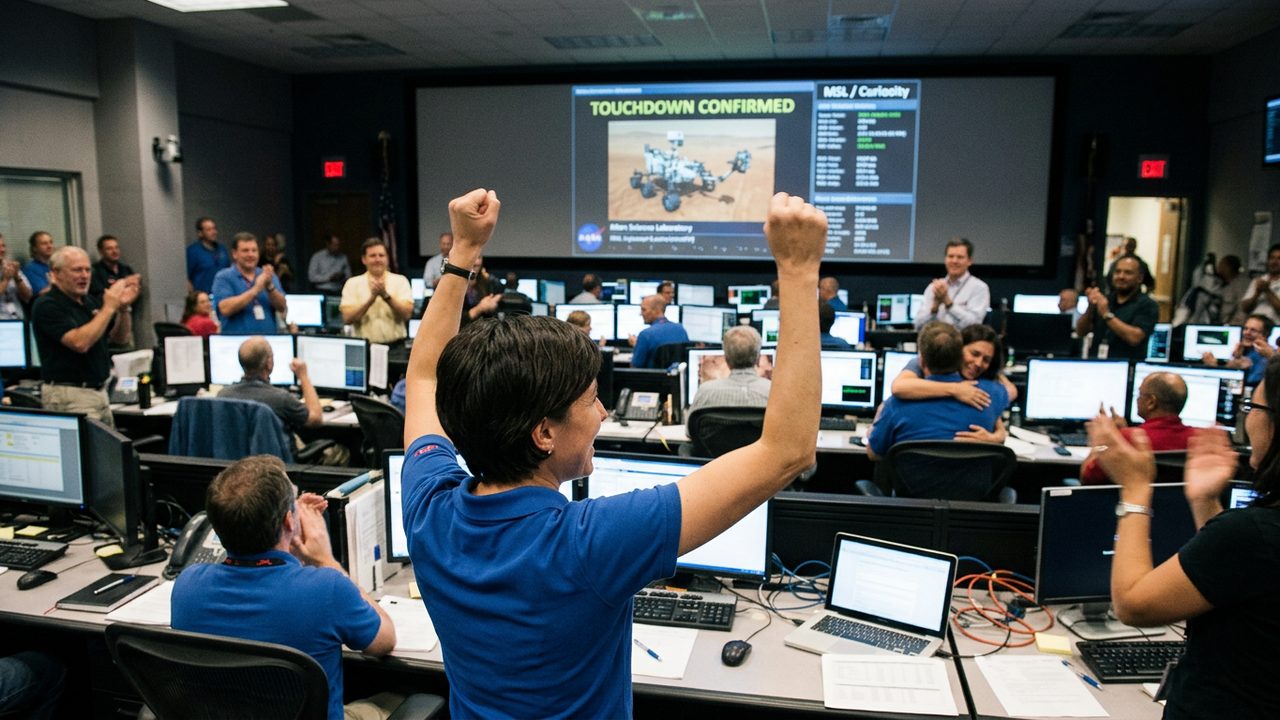
READ: NASA's Curiosity Rover Lands Safely on Mars
One of those machines was NASA’s Neil Gehrels Swift Observatory. After nearly 22 years in space, the telescope re-entered Earth’s atmosphere over Indonesia on November 4, 2026, ending a mission that had helped scientists study some of the most powerful events in the universe.
Read: Do you need a professional writer in 72 hours? Contact Auxi Chat
The spacecraft was designed to study gamma-ray bursts, which are sudden flashes of extremely energetic radiation from distant cosmic events. During its long mission, it also observed objects and events such as black holes, supernovae, stellar flares, asteroids and comets.
READ: Europe Ancient Forests Study Challenges Old Landscape Beliefs
For me, the story is a reminder that scientific missions can be valuable long after their original design life. Swift was expected to operate for about two years, yet it continued helping scientists for almost two decades beyond that plan.
What Was NASA Swift space telescope?
Read: Need a professional website in 72 hours? Contact Auxi Chat
The Neil Gehrels Swift Observatory was a space-based scientific mission launched in 2004. It carried instruments designed to detect and study gamma-ray bursts and observe the events that followed them.
Gamma rays are a form of electromagnetic radiation with very high energy. Some cosmic events release enormous amounts of energy, producing flashes that can be detected by specialised instruments.
These flashes may last only a short time, so scientists need equipment that can detect them quickly and help direct further observations.
Swift was built to respond to these events and examine them using its instruments. Its observations helped researchers investigate what happens when massive stars collapse or other extreme cosmic events occur.
The spacecraft’s work also extended beyond its original main purpose. It contributed observations of black holes, supernovae, stellar flares and other objects in space.
This is one reason long-running scientific missions matter. A telescope designed to answer a particular set of questions may also help scientists investigate new problems as technology and understanding improve.
Why the Swift Mission Was Important
The universe contains events that cannot be studied easily from the ground.
Earth’s atmosphere blocks or absorbs much of the high-energy radiation coming from space. Scientists therefore use specialised instruments in space to detect signals that would be difficult or impossible to observe from the surface.
Swift was designed to help researchers detect gamma-ray bursts and quickly observe them at different wavelengths.
That allowed scientists to study how the events changed after the initial flash and gather information about the distant objects and explosions that produced them.
The mission contributed to thousands of scientific papers, according to reporting on its final return. Those papers helped expand research into powerful cosmic events and the environments in which they occur.
Swift was not a telescope that people looked through with their eyes. It was a scientific observatory that collected measurements and sent information back to researchers on Earth.
Its value came from the observations it made and the questions those observations helped scientists answer.
How Did the Space Telescope Return to Earth?
Swift spent nearly 22 years orbiting Earth. Over time, its orbit gradually changed, and the spacecraft eventually descended towards the atmosphere.
The observatory did not have the propulsion capability needed to raise its orbit sufficiently to prevent its eventual return to Earth.
NASA and a private space company attempted a rescue effort in 2026 to raise the spacecraft’s orbit. Reports said the attempt failed after the rescue vehicle experienced problems, leaving Swift on a path towards re-entry.
The spacecraft eventually entered Earth’s atmosphere over Indonesia on November 4.
When an object travels into the atmosphere at very high speed, friction and compression heat its outer surfaces. The intense conditions can destroy much of the object as it passes through the atmosphere.
Swift weighed about 3,200 pounds. Reports said most of the spacecraft was expected to burn up, although small pieces could potentially survive and reach the ground.
The available reporting said no injuries or damage were reported in connection with the re-entry.
The event marked the end of the spacecraft’s physical journey, but the scientific information it collected will continue to be studied.
Why Spacecraft Burn Up During Re-Entry
A spacecraft returning to Earth moves at very high speed. As it encounters the atmosphere, the air around it becomes extremely hot because of the intense compression and heating associated with the journey.
Many spacecraft and satellites are not designed to survive an uncontrolled re-entry. Their materials can melt, break apart or burn before reaching the ground.
However, not every piece is guaranteed to disappear. Some components may be made from materials that can survive parts of the journey, depending on their size, shape and construction.
This is why scientists and space agencies study the path of objects returning from orbit. They estimate where re-entry may occur and assess the possibility that surviving fragments could reach populated areas.
In Swift’s case, reports described the expected re-entry over Indonesia and said no damage or injuries had been reported.
The event shows that space missions must consider not only how to launch and operate spacecraft, but also how they will eventually leave orbit.
Why Scientists Could Not Keep Swift in Space Forever
A spacecraft’s life depends on several things, including its design, power supply, equipment condition and orbit.
Satellites in low Earth orbit experience a small amount of atmospheric drag. Even though the air is extremely thin at those heights, it can gradually slow a spacecraft and lower its orbit.
A spacecraft can sometimes use propulsion to raise its orbit and extend its mission. But that depends on whether it has suitable engines, fuel and functioning systems.
Swift’s orbit became increasingly unstable, and the spacecraft did not have the capability needed to maintain a sufficiently high orbit indefinitely.
The mission had already operated far beyond its original two-year design life. Keeping it in orbit would have required a successful way to change its trajectory and maintain its altitude.
The failed rescue effort meant the spacecraft continued towards re-entry.
Although its return ended the mission, it does not erase the work Swift completed over more than two decades.
What Swift Taught Scientists About the Universe
Swift helped scientists study gamma-ray bursts, some of the most energetic explosions observed in the universe.
By detecting these flashes and observing what happened afterward, researchers could learn more about the events that produced them.
The observatory also helped scientists study black holes and other objects that produce powerful signals. Black holes themselves do not emit light in the ordinary way, but material around them can become extremely hot and produce radiation that telescopes can detect.
Swift’s observations supported a wide range of research. The mission’s long life gave scientists opportunities to compare events, follow changing objects and investigate questions that emerged over time.
No single telescope can answer every question about the universe. Scientists combine observations from different instruments and wavelengths to build a fuller picture.
Swift became one important part of that effort. Its data can continue to be examined long after the spacecraft itself has returned to Earth.
READ: Pancreatic Cancer Vaccine Shows Promise in Trial
Why the End of a Space Mission Still Matters
The end of a mission can be a moment to examine what the project achieved and what future missions might do differently.
Swift was designed to operate for about two years but remained useful for nearly 22 years. That is a significant extension of its planned life.
Its experience also highlights the importance of planning for the full life of a spacecraft. Engineers must think about launch, operation, maintenance, possible rescue and eventual re-entry.
Future missions may benefit from systems that allow spacecraft to change their orbits more easily or from designs that make their eventual return safer and more predictable.
However, every mission has different requirements. The best design depends on the spacecraft’s purpose, location, available technology and cost.
Swift’s return provides a reminder that space exploration involves careful engineering as well as scientific discovery.
What Happens to the Data Swift Collected?
The end of the spacecraft does not mean its observations disappear.
Scientific measurements collected during the mission can continue to support research. Scientists can examine existing data, compare it with observations from other telescopes and use it to answer new questions.
A discovery made today may lead researchers to revisit information collected years earlier. New methods can reveal patterns that were not obvious when the data was first gathered.
This is one of the lasting benefits of scientific missions. Their value is not measured only by how long the spacecraft remains in orbit, but also by the knowledge it helps create.
Swift’s mission has now ended, but the information it collected can remain useful to scientists studying high-energy events in space.
A Final Journey After Nearly 22 Years
NASA’s Swift Observatory has completed a remarkable journey. Launched in 2004 with a planned life of about two years, it continued observing the universe for nearly 22 years before returning to Earth’s atmosphere over Indonesia.
The spacecraft helped researchers study gamma-ray bursts, black holes, supernovae and other cosmic events. Its observations contributed to a large body of scientific work that will continue to inform research.
Its re-entry also reminds us that spacecraft have a finite life. Engineers must plan for the day when equipment can no longer remain in orbit and consider how its return may affect people on Earth.
For me, the most important part of the story is not simply that an old telescope fell back to Earth. It is that a machine built to answer scientific questions continued serving researchers for far longer than expected.
The spacecraft is gone, but its scientific contribution remains. In that sense, the mission’s final journey is also an opportunity to recognize how long-term scientific work can expand our understanding of the universe.
The writer of this article does not claim to know the individuals named personally. The information regarding their backgrounds as published on Global News Arena is based on independent online research.
If you have an article, opinion piece, event or news story you would like published, Global News Arena would love to hear from you.