Light and Sound Therapy for Alzheimer’s Faces a Major Test
READ: NASA Swift Space Telescope Returns to Earth After 22 Year
A device designed to help people with Alzheimer’s disease by stimulating the brain with flashing lights and rhythmic sounds has failed to show a clear benefit across the overall group of patients in a major clinical trial.
Read: Do you need a professional writer in 72 hours? Contact Auxi Chat
The findings, reported by Nature on November 17, 2026, are a setback for researchers exploring whether carefully timed light and sound stimulation can help protect memory and thinking skills in people living with the disease.
READ: Pancreatic Cancer Vaccine Shows Promise in Trial
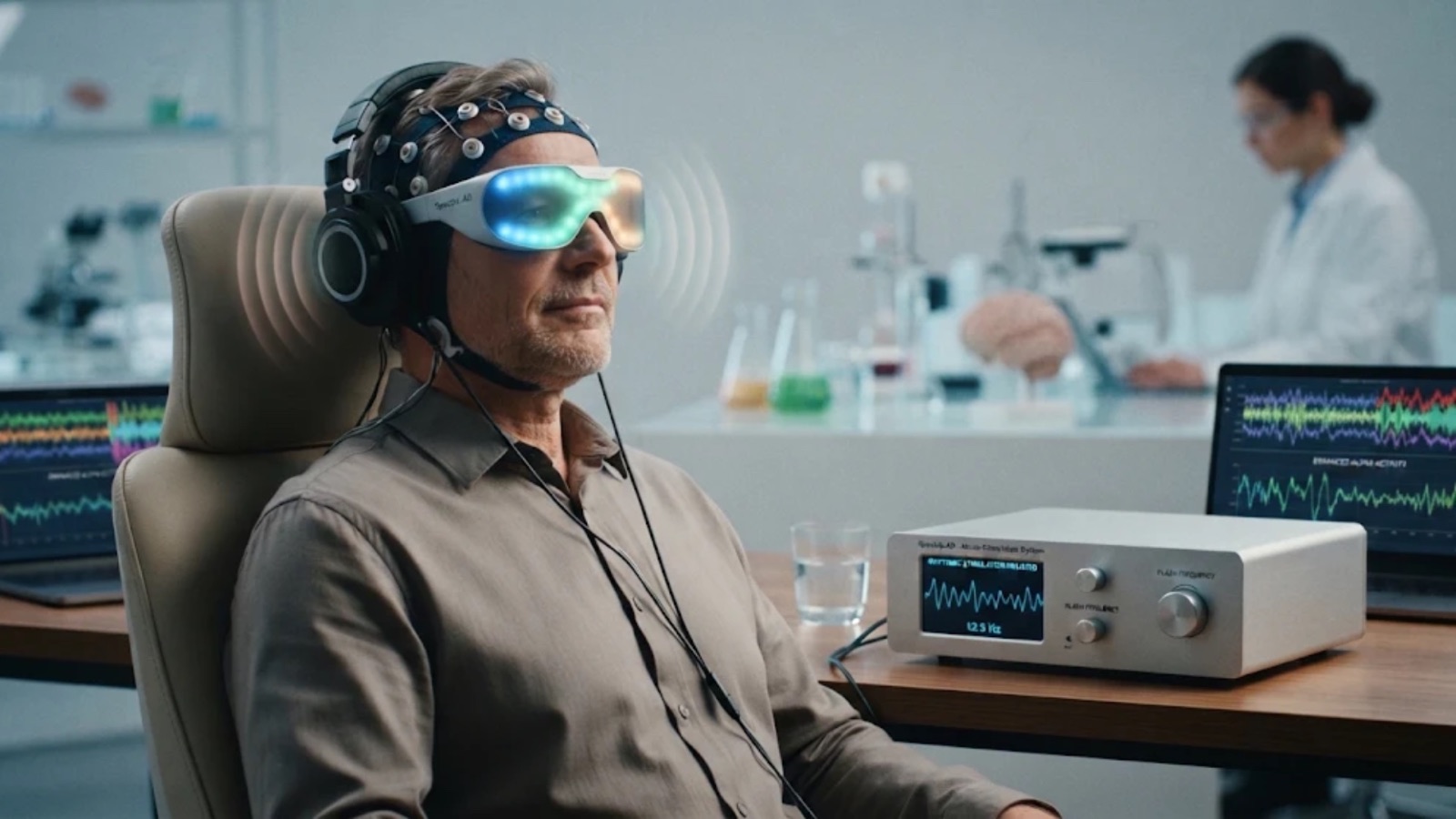
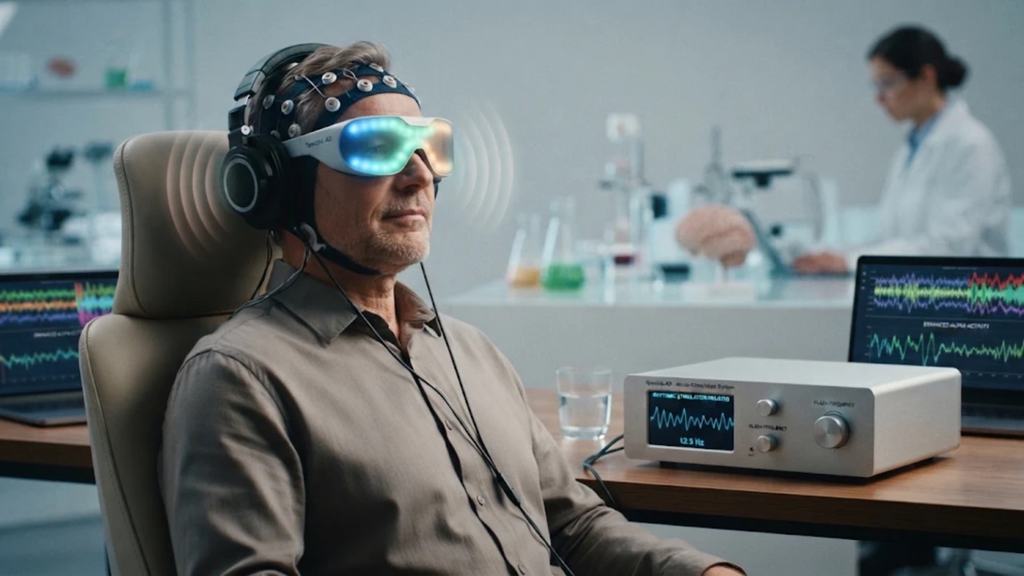
The device, called Spectris AD, was developed by Cognito Therapeutics, a biotechnology company based in Cambridge, Massachusetts. It uses goggles that produce flashing lights alongside headphones that deliver rhythmic sounds. The aim is to encourage the brain to produce electrical activity known as gamma waves, which researchers have linked to attention, memory and other brain functions.
However, after 12 months of treatment, the study did not show a significant improvement in cognitive function across the overall group receiving the active treatment compared with participants given a sham device.
Read: Need a professional website in 72 hours? Contact Auxi Chat
The result raises fresh questions about whether this approach can become a reliable treatment for Alzheimer’s disease, which gradually affects memory, thinking and a person’s ability to manage everyday activities.
What the Alzheimer’s Clinical Trial Found
The trial randomly assigned 673 participants with Alzheimer’s disease to use either the active Spectris AD device or a sham version. Participants were instructed to use their assigned device for about one hour each day at home for 12 months.
The researchers compared changes in participants’ cognitive abilities and their capacity to carry out daily activities.
People who used the active device experienced an average decline of 8.97 points on a combined measure of cognition and daily functioning. Those in the sham-treatment group declined by 8.82 points.
The results showed no meaningful advantage for the active device across the overall study population.
This matters because the main purpose of a clinical trial is to determine whether a treatment performs better than a suitable comparison. In this case, the results did not establish that the light and sound therapy could slow Alzheimer’s symptoms across the full group of participants.
The findings were presented at the Clinical Trials on Alzheimer’s Disease conference in Boston, United States, on November 16.
Why Patients With Mild Alzheimer’s Showed Some Promise
Although the overall result was disappointing, researchers reported more encouraging findings among participants with mild Alzheimer’s disease.
In that subgroup, people who received the active treatment showed slower decline on several measures of daily functioning and disease severity compared with those who received the sham treatment.
The company reported that the mild Alzheimer’s group experienced a 56 per cent slower decline on one measure of daily functioning and a 47 per cent slower decline on a measure of disease severity.
However, these findings need to be interpreted carefully. The trial did not meet its primary objective in the overall study population, and some measures in the mild-disease subgroup did not show statistically significant benefits.
Researchers have therefore stressed the need for further evidence before the treatment can be considered effective.
The results do not prove that the device works for everyone with early Alzheimer’s, nor do they establish that it can reverse memory loss.
What the Results Mean for Future Alzheimer’s Treatment
The research is part of a wider effort to investigate whether stimulating the brain’s gamma waves could help protect brain function. Earlier research, including studies involving animals, helped inspire the approach.
But promising findings in laboratory experiments do not always translate into effective treatments for people. The latest trial highlights the difficulty of turning an interesting scientific idea into a treatment that consistently improves patients’ lives.
Cognito Therapeutics has indicated that it plans to pursue discussions with the United States Food and Drug Administration about potential approval for patients with mild Alzheimer’s disease.
The device remains investigational, and the trial results do not mean that it is an established or approved treatment.
READ: Europe Ancient Forests Study Challenges Old Landscape Beliefs
For families affected by Alzheimer’s, the findings underline the importance of distinguishing between an experimental approach and a treatment proven to provide meaningful benefits.
The search for better Alzheimer’s treatments continues, but the latest results show that light and sound therapy for Alzheimer’s still needs stronger evidence before its benefits can be established across a broad group of patients.
The writer of this article does not claim to know the individuals named personally. The information about their backgrounds, as published on Global News Arena, is based on independent online research.
Are you interested in learning how to write professionally and earning money as a writer and content creator? Contact Auxi Chat today to start your writing journey immediately.
If you have an article, opinion piece, event or news story you would like published, Global News Arena would love to hear from you.
Are you interested in learning how to write professionally and earn money as a writer and content creator? Contact us today to start your writing journey immediately.
Need a professional website in 72 hours? Contact us
Do you need a professional writer in 72 hours? Contact us
If you have an article, guest story, event or news tip you would like published, Global News Arena would love to hear from you.