Pancreatic Cancer Vaccine Gives Scientists New Hope
READ: GIMLI Lunar Cave Mission Could Unlock a Hidden World Beneath the Moon
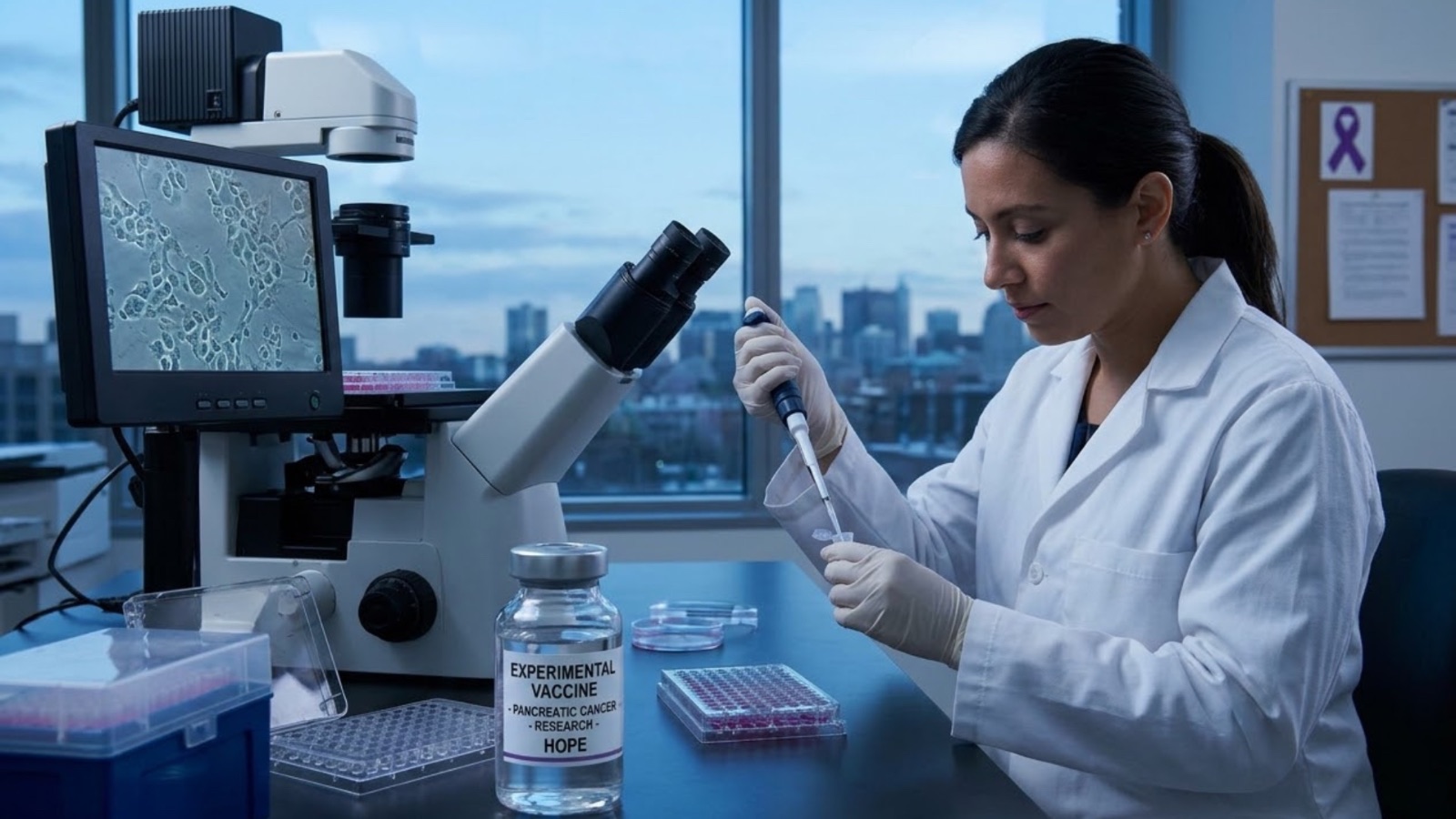
Scientists are studying a new pancreatic cancer vaccine that could help the body fight one of the hardest cancers to treat.
Read: Do you need a professional writer in 72 hours? Contact Auxi Chat
The vaccine, called camuppepimut, is designed to teach the body’s defence system to recognise special changes found in cancer cells. These changes can help cancer grow and survive.
READ: UNILORIN Science and Technology Park Woos Chinese Investors
In a clinical trial, nearly 99 out of every 100 patients who could be tested developed an immune response after receiving the vaccine.
This is an encouraging result because pancreatic cancer often returns even after a person has had surgery and chemotherapy.
Read: Need a professional website in 72 hours? Contact Auxi Chat
However, there is an important point to understand. The study did not prove that the vaccine significantly increased the amount of time patients stayed free of cancer across the entire group. Scientists need more research before they can say how much the vaccine helps patients.
The findings were published in the medical journal Nature Medicine on October 23, 2026. They received further attention in health news reports on November 7.
The research gives scientists useful information as they look for better ways to treat pancreatic cancer and help patients stay healthy for longer.
What Is Pancreatic Cancer?
Pancreatic cancer is a disease that begins in the pancreas, a small organ inside the body that helps people digest food and control the amount of sugar in their blood.
Cancer happens when some cells begin growing in the wrong way. Instead of following the body’s normal rules, these cells can grow out of control and damage nearby parts of the body.
Pancreatic cancer can be difficult to find early because many people do not notice clear warning signs at the beginning.
Doctors may use scans, blood tests and other medical checks to help find the disease. Treatment can include surgery, chemotherapy and other medicines, depending on the patient’s condition.
Even when treatment appears to remove the cancer, some cancer cells may remain too small to see on a scan. These cells can sometimes grow again later.
This is one reason researchers are studying whether a pancreatic cancer vaccine can help the body’s immune system find and attack cancer cells that might otherwise remain hidden.
How Does the Pancreatic Cancer Vaccine Work?
Think of the immune system as the body’s security team. Its job is to protect the body from things that can cause harm.
Some immune cells can recognise unusual cells and help the body fight them. But cancer cells can sometimes hide from these defences.
The experimental pancreatic cancer vaccine is designed to help the immune system recognise certain changes in cancer cells.
These changes involve a gene called KRAS. A gene is like a set of instructions inside the body’s cells. When KRAS changes in certain ways, it can help cancer cells grow.
The vaccine targets seven common forms of these changes.
After vaccination, special immune cells called T cells can learn to recognise the targeted changes. These cells are important because they help the body identify and respond to threats.
In simple terms, the vaccine is like giving the body’s security team a picture of what to look for.
The vaccine does not work like a traditional vaccine that prevents an infection before it happens. Instead, it is an experimental cancer treatment intended to help people whose cancer has already been treated with surgery and chemotherapy.
It is also designed to target several KRAS changes, rather than being made separately for just one patient.
Scientists hope this approach could eventually make the treatment useful for more people whose tumours have the changes targeted by the vaccine.
Nearly 99 Per Cent of Tested Patients Developed an Immune Response
The clinical trial included 144 people with pancreatic cancer linked to changes in the KRAS gene.
All the patients had already undergone surgery and chemotherapy. They had no visible signs of cancer returning on scans when they entered the study.
Researchers divided the patients into two groups.
One group of 96 patients received the experimental vaccine. The other group of 48 patients was observed without receiving the vaccine as part of the trial.
Scientists then studied how the patients responded and whether the cancer returned.
Among the 90 patients in the vaccine group whose immune responses could be evaluated, 89 developed a response against the targeted KRAS changes. This represented 98.9 per cent of those tested.
That means almost everyone in the group tested developed the kind of immune response the researchers wanted to see.
The result is important because pancreatic cancer has often been difficult to treat using approaches that depend on the immune system.
Still, an immune response does not automatically mean that a treatment will stop cancer from returning. Researchers must also establish whether the treatment improves important outcomes for patients.
Did the Pancreatic Cancer Vaccine Stop Cancer From Returning?
This is the biggest question raised by the study.
Although the vaccine produced a strong immune response, it did not meet the trial’s main goal of showing a statistically significant improvement in disease-free survival across the full study population.
Disease-free survival means the length of time a person remains alive without the cancer returning or another event included in the study’s definition occurring.
The researchers reported a median disease-free survival of 23.8 months in the vaccine group. In the observation group, it was 21.2 months.
The vaccine group’s result was numerically higher, but the difference was not statistically significant. This means the study did not provide strong enough evidence to conclude that the vaccine improved disease-free survival across the whole group.
The researchers also examined what happened during the first six months. During that period, 75.7 per cent of the vaccine group remained free of disease, compared with 61.7 per cent of the observation group.
This early difference may be worth investigating, but it does not prove that the vaccine works. The researchers need larger studies and more follow-up to understand whether the difference represents a real treatment benefit.
This distinction matters because patients need treatments that improve their health, not simply treatments that produce encouraging laboratory results.
Some Patients May Benefit More Than Others
The researchers also found clues that could help them understand which patients might benefit most from the vaccine.
One important clue involved something called circulating tumour DNA. This is tiny material released by cancer cells into the bloodstream.
Doctors and scientists can sometimes use this material to look for signs that cancer may remain in the body after treatment.
In a planned analysis, patients who had no detectable circulating tumour DNA at the start of the study showed a signal of better disease-free survival with the vaccine than with observation alone.
The study also examined patients who had received radiation treatment. Researchers found that previous radiation was associated with differences in immune-cell levels and the strength of the response to the vaccine.
These findings may help scientists plan future trials and decide which factors need closer attention.
However, they do not yet provide a simple rule for deciding who should receive the vaccine. More research is needed to confirm whether these differences can reliably predict who will benefit.
Was the Experimental Cancer Vaccine Safe?
The researchers reported that the vaccine was generally well tolerated during the trial.
They did not report treatment-related deaths or side effects that caused patients to stop receiving the vaccine.
READ: The Science of Drifting Off: Why Your Brain Thinks Up Its Best Ideas Right Before You Sleep.
This is encouraging, but it does not mean that the treatment has no risks.
Every medical treatment can have side effects, and researchers need to study larger groups of people for longer periods to understand how safe a treatment is.
A trial involving 144 patients cannot answer every question about safety or show how the vaccine will work for all people with pancreatic cancer.
Doctors and researchers must continue monitoring patients and collecting information as development moves forward.
The vaccine remains experimental. Patients should not treat it as an approved replacement for surgery, chemotherapy or other care recommended by their medical team.
What Happens Next?
Scientists plan to study camuppepimut further in a larger Phase 3 clinical trial.
A Phase 3 trial usually involves more patients and is designed to provide stronger evidence about whether a treatment works and how its benefits compare with existing care.
Researchers are considering ways to build on the findings, including studying additional vaccine doses and whether the vaccine could be combined with other treatments.
They also want to understand why some patients develop stronger immune responses than others and whether those differences affect the risk of cancer returning.
These questions are important because a successful cancer treatment must do more than teach the immune system to recognise a threat. It must also help patients in ways that matter to their health and lives.
The current results give scientists a reason to continue investigating the vaccine, but the next trial will be important in deciding whether it should move closer to wider use.
Why This Pancreatic Cancer Vaccine Research Matters
Pancreatic cancer remains a major challenge for patients, families and doctors. Treatment can be difficult, and the disease can return even after surgery and chemotherapy.
That is why researchers are looking at different ways to help the body fight cancer.
The new pancreatic cancer vaccine offers one possible approach. It is designed to help immune cells recognise changes that appear in cancer cells, and the trial showed that it could trigger a strong response in nearly all the patients tested.
The research also shows why medical discoveries must be explained carefully. A strong immune response is an important scientific result, but it is not the same as proof that a treatment prevents cancer from returning.
The trial did not meet its main disease-free survival goal, so further studies are necessary.
For patients and families, the most useful message is one of cautious hope. Scientists have found a way to trigger the desired immune response in almost everyone tested, and they now have more information to guide the next stage of research.
The coming trials will help answer the question that matters most: can this vaccine help people live longer without pancreatic cancer returning?
Until those results are available, the vaccine should be viewed as a promising area of research, not a proven cure.
The writer of this article does not claim to know the individuals named personally. The information regarding their backgrounds as published on Global News Arena is based on independent online research.
If you have an article, opinion piece, event or news story you would like published, Global News Arena would love to hear from you.