Whenever I read about cancer research, I think about the people waiting for better answers. A patient may be hoping for more time with family. A parent may be searching for treatment for a child. A family may be trying to understand difficult medical information while holding on to hope.cancer cells produce drugs
READ: More People in England Are Getting Cancer Than Ever Before
That is why a new study exploring how cancer cells produce drugs is worth explaining carefully. Researchers in Japan have developed an experimental chemical method that uses carbon monoxide inside certain cancer cells to help create a compound that can damage those cells.
Read: Do you need a professional writer in 72 hours? Contact Auxi Chat
The work was led by researchers associated with Katsunori Tanaka at the RIKEN Pioneering Research Institute in Japan. The findings were published in the scientific journal Nature Communications.
READ: New Labs Help Doctors Find Malaria and TB Faster
The idea is to make an active compound inside the cancer cell instead of relying only on delivering a finished drug from outside. The study offers an early scientific result, but it does not mean doctors can use the method to cure cancer today.
How Cancer Cells Produce Drugs in the New Research
Read: Need a professional website in 72 hours? Contact Auxi Chat
To understand the study, I find it helpful to start with a simple idea. A medicine is more useful when it reaches the place where it is needed and works as intended.
Cancer treatment can be difficult because the body contains many healthy cells as well as the dangerous cells doctors want to destroy. Some cancer medicines can harm healthy cells too, which is one reason treatment may cause side effects.
Scientists have therefore been looking for ways to make treatment more targeted. Some methods try to carry medicine directly to a tumour. Others try to activate a drug only when it reaches a particular place.
The Japanese team explored another approach. It developed a chemical system that could use carbon monoxide found inside certain cancer cells to help produce an active compound.
The researchers used a specially designed metal-based catalyst with albumin, a protein found in the body. The system was designed to protect the catalyst and help it enter cells so that the chemical reaction could take place.
A catalyst is a substance that helps a chemical reaction happen. In this case, the catalyst helped the researchers produce the intended compound inside the cells being studied.
The goal was to create the active substance at the target location. However, a method that works inside a laboratory-grown cell must still pass many tests before it can become a safe treatment for patients.
Why Scientists Used Carbon Monoxide
Carbon monoxide is a poisonous gas that can stop the body from using oxygen properly. Exposure can be dangerous, and people should never treat it as a home remedy or a cancer treatment.
The research does not suggest that patients should breathe in carbon monoxide or expose themselves to it. Instead, the scientists studied how a controlled chemical reaction could use carbon monoxide that was already present inside the cells.
Certain cancer cells can contain carbon monoxide produced through their own chemical processes. The researchers used this fact as part of the design of their experimental system.
The team also faced a technical problem. A catalyst may not work well inside a cell because other substances can interfere with the reaction.
To address this, the researchers developed an albumin-based system to help protect the catalyst and support its activity inside cells.
This is an important distinction. The possible benefit does not come from carbon monoxide acting as a medicine on its own. It comes from the carefully designed chemical process that uses it to help make another compound.
The approach is an example of how scientists study the chemical changes inside diseased cells and ask whether those changes can be used to create more targeted treatments.
What Happened in the Laboratory Tests?
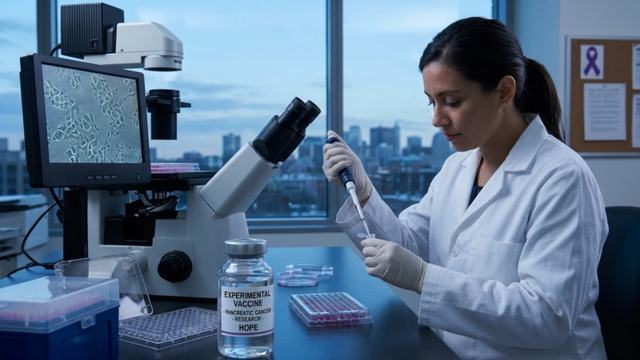
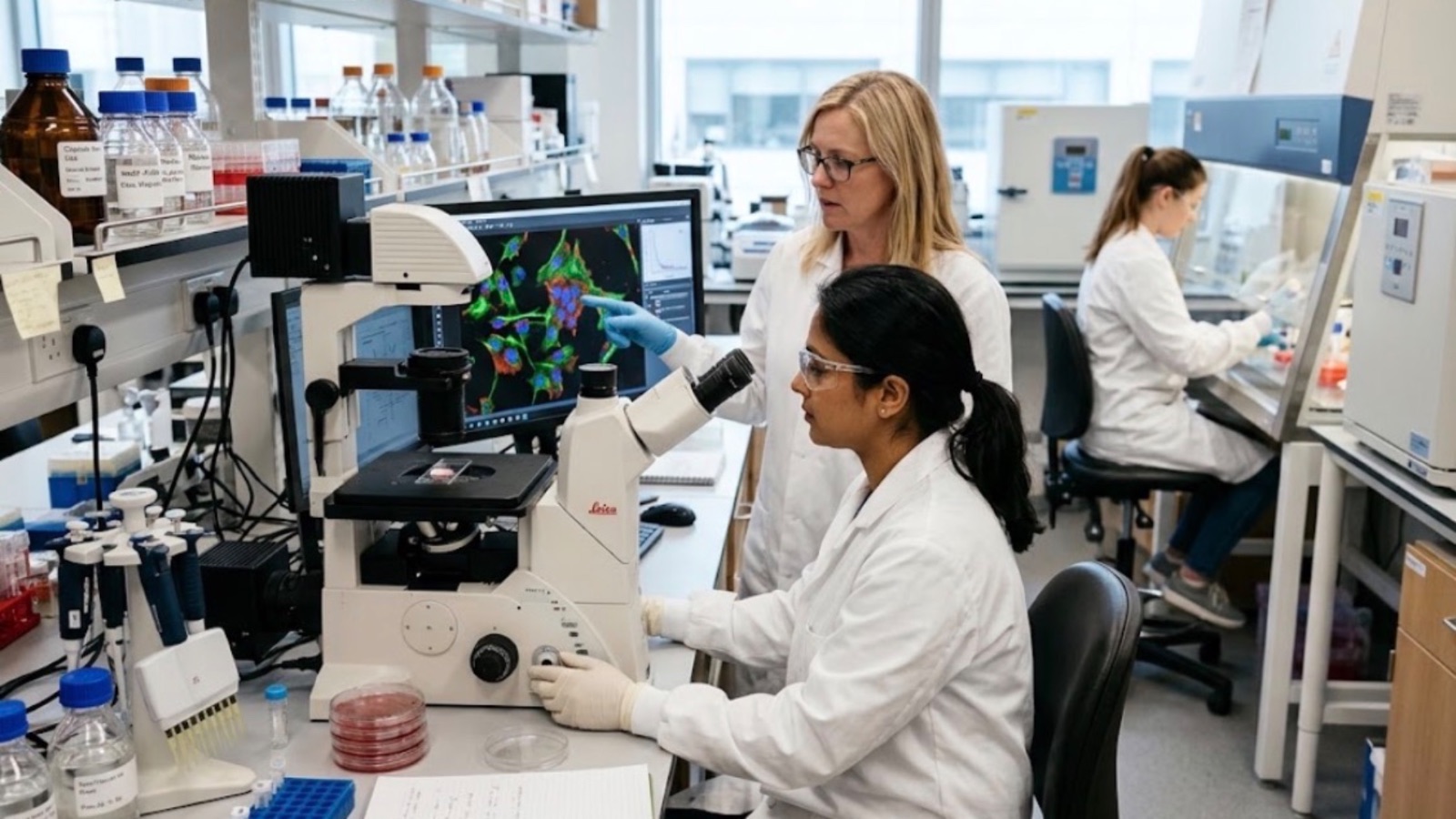
The researchers tested the method in laboratory-grown cells. Their experiments included several cancer cell lines, including cells used in studies of liver, lung and breast cancer, as well as a non-cancerous cell line for comparison.
The team reported that the system could produce the intended compounds inside cancer cells. In the tests, the desired product was not detected in the non-cancerous cell line in the same way.
The researchers also demonstrated production of a compound with known cancer-fighting activity in liver cancer cells. The resulting compound caused harmful effects in those cells.
These findings are important because they show that the chemical process can work under the conditions tested.
But laboratory-grown cells are not the same as a living person. Inside the body, a treatment must travel through blood and tissues, reach the right cells and work in an environment filled with many other chemicals.
A reaction that works in a laboratory dish may behave differently in an animal or a human. The body may break down the materials, prevent them from reaching the tumour or respond in ways that scientists did not see in the first experiments.
For that reason, I would describe this study as a promising early research result, not proof of a new cancer cure.
Could the Method Make Cancer Treatment Safer?
One major challenge in cancer treatment is finding ways to damage cancer cells while protecting healthy tissue.
Some established cancer treatments can affect healthy cells as well as cancer cells. The type and severity of side effects depend on the treatment, the dose and the person receiving it.
This is one reason researchers investigate targeted approaches. If a medicine can act more strongly where cancer cells are present, it may eventually be possible to reduce some unwanted effects.
The new method explores the idea of producing an active compound inside cancer cells. If future studies show that it can work safely in living organisms, it could provide another way to design targeted treatments.
However, the study has not shown that patients receiving this method would have fewer side effects. It has not established a safe dose for people or proved that the approach can destroy tumours in the human body.
Those questions need careful testing. Scientists would need to examine how the system moves through the body, how long it remains active and whether it harms healthy organs or tissues.
They would also need to compare it with existing treatments to determine whether it offers a real advantage.
What Makes the Research Different?
The wider scientific idea behind the study is known as therapeutic in vivo synthetic chemistry. In simple terms, researchers explore ways to use chemical reactions inside living systems to create substances that may be useful for treatment.
Normally, a medicine is made before it enters the body. Doctors then give it to the patient, and the medicine must reach the place where it can work.
The new approach asks whether some active compounds could instead be created inside the target cells through a carefully controlled reaction.
This is a difficult task. The chemical system must reach the right location, remain active and produce the correct compound. It must also avoid dangerous reactions in other parts of the body.
The research is therefore not simply about putting a chemical inside a cancer cell. It involves designing a system that can work under complicated conditions and produce a useful result.
If scientists can overcome these challenges, the approach may offer ideas for future drug development. But each possible application would need to be tested separately.
Why This Is Not Yet a Cancer Cure
Scientific discoveries often receive attention because they offer a new possibility. However, there is a major difference between showing that a method works in laboratory cells and proving that it can safely treat a person.
The Japanese study demonstrated a chemical process under laboratory conditions. The next stages of research must establish whether the method works in living organisms.
Animal studies can help researchers learn how a system behaves in a complete body, including whether it reaches tumours and what side effects it may cause. Even successful animal studies would not automatically mean that the method is safe or effective for people.
READ: NMA Hospital Reforms: Why Punishment Alone Will Not Save Lives
Clinical trials would be needed before a treatment could be considered for human use. These studies generally examine safety, appropriate dosing and whether the treatment provides benefits to patients.
Many experimental methods do not become approved medicines. Some fail because they do not work well enough, while others cause side effects or face practical problems.
This is why news about cancer research must be reported with care. The results may be exciting without proving that a cure is ready.
Patients should not stop prescribed treatment or replace medical advice with an experimental research finding. Anyone considering a change to cancer care should speak with a qualified medical professional.
What the Study Could Mean for Future Cancer Research
The study gives scientists another way to think about making cancer treatment more targeted.
If the method can eventually be shown to work safely in living organisms, researchers may be able to investigate whether similar chemical systems could produce active compounds at other disease sites.
The findings may also encourage more research into the chemical differences between cancer cells and healthy cells. These differences can sometimes help scientists design ways to identify or target diseased tissue.
However, each new application would require its own evidence. The fact that a chemical reaction works in one set of cells does not mean it will work in every cancer type.
Cancer is not one single disease. Different cancers can behave differently, and even tumours of the same type may respond differently to treatment.
That is why scientists need to study the method in more settings before deciding how useful it might become.
For patients and families, the practical message is to distinguish between a promising laboratory result and a treatment that doctors can offer today.
A Reason for Interest, Not a Promise of a Cure
I believe research like this deserves attention because it shows how scientists are searching for new ways to address difficult medical problems. The idea of producing a cancer-killing compound inside cancer cells is a different approach from simply giving a finished drug and hoping it reaches the right place.
The laboratory findings offer a reason for further study. They do not yet tell us whether the method will work in people, whether it can safely target tumours or whether it will improve treatment outcomes.
Those answers will depend on future experiments and careful medical testing.
For now, the study should be understood as an early step in cancer research. It is not a reason for patients to change their treatment plans, and it should not be presented as a cure.
The most useful way to view the findings is with both interest and care. Scientific progress often begins with an idea that works in a controlled experiment. The next challenge is proving that the idea can be turned into something safe, effective and useful for patients.
The writer of this article does not claim to know the individuals named personally. The information regarding their backgrounds as published on Global News Arena is based on independent online research.
If you have an article, opinion piece, event or news story you would like published, Global News Arena would love to hear from you.