
Nigeria’s Malaria and TB Fight Gets a Major Laboratory Boost
READ: Katsina Polio Vaccination Drive Puts 2.7m Children First
Nigeria’s malaria and TB diagnosis efforts have received a significant boost following a Global Fund-supported programme to train 464 laboratory personnel across nine states. The initiative is designed to improve testing accuracy, strengthen disease surveillance and address the diagnostic weaknesses that can affect treatment decisions in healthcare facilities.
Read: Do you need a professional writer in 72 hours? Contact Auxi Chat
When I consider the scale of Nigeria’s public health challenges, I believe this development deserves attention beyond the announcement of the number of people trained. It raises a more important question: how much difference can better laboratory services make to the everyday experience of patients who walk into Nigerian hospitals and primary healthcare centres seeking answers about their health?
READ: NMA Hospital Reforms: Why Punishment Alone Will Not Save Lives
For many people, fever immediately suggests malaria. In some communities, patients may even arrive at a hospital convinced that they already know what is wrong with them. Yet fever can have several causes, and treating someone for a disease they do not have can delay the correct treatment. This is one of the reasons accurate laboratory diagnosis remains essential.
The Global Fund-supported programme, implemented through the National Malaria Elimination Programme (NMEP) and the Federal Ministry of Health and Social Welfare, is intended to strengthen the ability of laboratory professionals to identify malaria and tuberculosis more reliably.
Read: Need a professional website in 72 hours? Contact Auxi Chat
The programme was inaugurated at Mokland Hotel in Ibara, GRA, Abeokuta, Ogun State, with health professionals and other stakeholders participating in the capacity-building exercise.
Although the training figure of 464 personnel is encouraging, I believe the real measure of its success will be what happens after participants return to their respective health facilities.
Why Malaria and TB Diagnosis Must Improve in Nigeria
Malaria remains a major public health concern in Nigeria. It affects households, places pressure on health facilities and contributes to the financial burden experienced by families seeking treatment.
However, one of the problems in managing malaria is the assumption that every fever is malaria. A patient may have another infection or medical condition, yet receive antimalarial medication because of an unconfirmed suspicion.
This is where laboratory professionals become particularly important.
A reliable test helps health workers establish whether malaria parasites are present and supports decisions about the appropriate treatment. It can also help prevent unnecessary medication, reduce avoidable expenses and encourage further investigation when a patient tests negative but continues to experience symptoms.
The same principle applies to tuberculosis.
TB can be difficult to identify, particularly when patients do not recognise the early symptoms or cannot access appropriate diagnostic services. Delayed diagnosis can allow the disease to continue affecting the patient and increase the possibility of transmission to other people.
For me, the connection between these two diseases is important. They require different diagnostic approaches, but both demonstrate why a healthcare system cannot depend on symptoms and assumptions alone.
Strengthening malaria and TB diagnosis is therefore not simply a laboratory project. It is part of the wider responsibility to make healthcare more dependable, affordable and effective.
What the Global Fund-Supported Training Is Designed to Achieve
The training is focused on improving the technical ability of laboratory personnel to carry out accurate investigations and maintain reliable diagnostic standards.
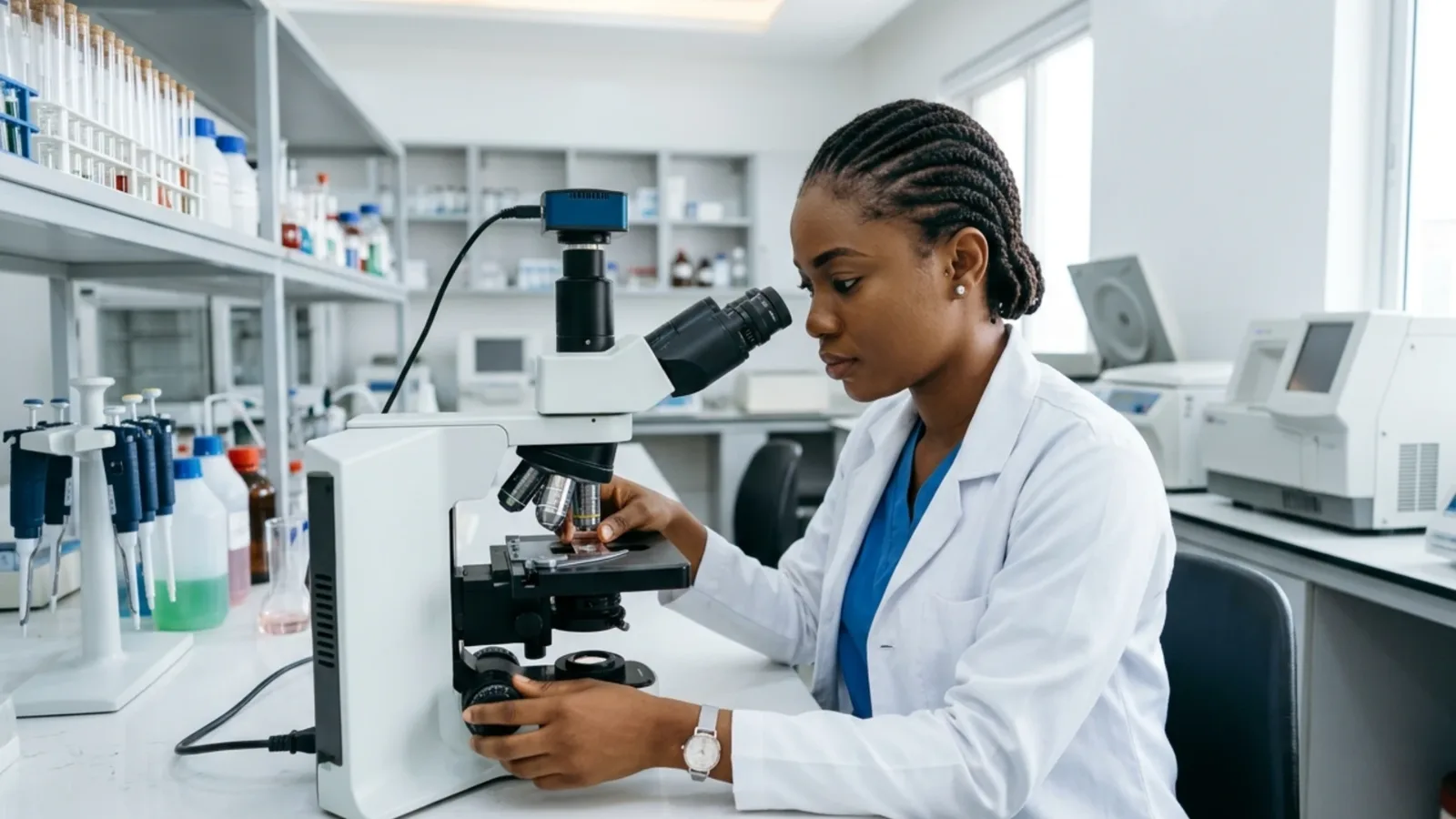
Participants are expected to develop or strengthen skills in areas including microscopy, slide preparation, parasite identification, laboratory quality management, documentation and reporting.
Microscopy remains an important tool in malaria diagnosis. It allows trained personnel to examine blood samples, identify malaria parasites and assess relevant features of infection. The quality of the result, however, depends on several factors, including the preparation of the sample, the condition of the microscope, the competence of the professional and the quality assurance procedures in place.
Rapid diagnostic tests and molecular technologies also have important roles in modern healthcare. The challenge is ensuring that laboratory personnel understand the appropriate use and limitations of the available methods.
Consultant Medical Parasitologist at the College of Medicine, University of Lagos, Professor Wellington Oyibo, emphasised the importance of accurate diagnosis and the ability of laboratory professionals to identify different malaria parasite species.
His position reflects a wider issue within Nigeria's healthcare system. Having diagnostic equipment is not enough if the people expected to operate it have not received adequate training or if the facility lacks the necessary resources to maintain quality standards.
The programme also places importance on quality assurance and internationally recognised laboratory practices, including standards associated with ISO 15189.
These standards matter because laboratory results must be consistent, traceable and dependable. A result should not become less reliable simply because a patient visits a different facility or because the laboratory is operating under difficult conditions.
Ogun State Highlights the Importance of Local Healthcare Capacity
Ogun State provides an important example of how the programme is expected to reach healthcare facilities at different levels.
The state’s participation reportedly covers all 20 local government areas, with personnel drawn from primary, secondary and tertiary health facilities, as well as private and faith-based institutions.
The Ogun State component is expected to involve 44 laboratory personnel.
I find this aspect particularly significant because Nigeria's healthcare system does not operate only through major teaching hospitals and specialist centres. A large number of patients first seek care at primary healthcare facilities, where the availability of reliable diagnostic services can influence what happens next.
If a patient can receive an accurate malaria test at a nearby primary healthcare centre, the facility may be better positioned to make an appropriate treatment decision without immediately referring every case to a larger hospital.
This does not mean every medical condition can be managed at the primary level. More complicated cases still require referral and specialist attention. However, improving the quality of basic diagnostic services can help ensure that patients receive appropriate care earlier.
Officials involved in the Ogun State programme have also highlighted the need for better laboratory equipment, particularly microscopes.
That concern deserves attention. Training can improve professional competence, but it cannot completely compensate for damaged equipment, inadequate supplies or poorly maintained facilities.
A laboratory professional may understand the correct procedure and still struggle to deliver dependable results if the necessary tools are unavailable.
The Problem of Patients Rejecting Negative Malaria Results
One issue raised during the programme is the difficulty health workers sometimes face when patients insist that they have malaria despite receiving negative test results.
Ogun State Malaria Elimination Programme Manager, Mrs Olamide Adeyinka, reportedly drew attention to this challenge, explaining that some patients expect antimalarial treatment even when laboratory investigations do not confirm the infection.
This is an important public health concern.
In many Nigerian communities, malaria has become so familiar that fever and malaria are often treated as interchangeable terms. People may have taken antimalarial medicines repeatedly over the years and may therefore find it difficult to accept that a new episode of fever could have another cause.
But a negative malaria test should not be treated as an inconvenience to be ignored. It should encourage further clinical assessment where symptoms persist.
Healthcare professionals also have a responsibility to explain results in language patients can understand. A patient who receives a negative result without an explanation may leave the facility confused, dissatisfied or determined to obtain medication elsewhere.
I believe public health education must therefore accompany laboratory training. Improving the technical quality of diagnosis is one part of the solution. Helping patients understand why test results matter is another.
The aim should not be to blame patients for their expectations, but to build trust in evidence-based medical decisions.
Tuberculosis Testing Needs Consistent Attention Too
While malaria often receives attention because of its familiar symptoms and widespread impact, tuberculosis remains a serious disease that requires sustained diagnostic attention.
TB can affect the lungs and other parts of the body. It may cause persistent coughing, fever, night sweats, weight loss and tiredness, although symptoms can vary from one person to another.
Laboratory services are essential in identifying the disease and supporting appropriate treatment decisions.
The growing use of molecular diagnostic technologies has created new opportunities for faster and more accurate tuberculosis testing. However, microscopy and other established laboratory methods continue to have roles in diagnostic services, depending on the clinical situation and available resources.
During the programme, the State TB Quality Assurance Officer in Ogun State, Mr Ogundimu Olusola, reportedly raised concerns that the introduction of molecular diagnostic methods had reduced interest in microscopy among some laboratory workers.
This is worth considering carefully. New technology should improve the healthcare system, not create gaps in professional competence.
Laboratory personnel need continuing education so that they can work confidently with relevant diagnostic methods and understand how different tools complement one another.
The objective should be a laboratory workforce that can adapt to technological developments while maintaining the fundamental skills required for dependable testing.
Training Must Be Supported With Equipment and Investment
One of the most important lessons I take from this development is that Nigeria cannot solve its diagnostic challenges through training alone.
The country needs competent laboratory professionals, but it also needs functional laboratories, reliable electricity, adequate reagents, appropriate equipment, maintenance services and effective supervision.
A microscope that cannot be maintained will eventually become a problem. Reagents that are unavailable will interrupt testing. Poor documentation can make it difficult to monitor results, identify recurring errors or evaluate the performance of a laboratory.
There must therefore be a connection between training programmes and practical investment in the facilities where the knowledge will be used.
State governments and relevant health authorities have important responsibilities in this regard. They must ensure that healthcare facilities have the resources required to sustain improvements after external support or a training programme has ended.
The Global Fund's wider work on laboratory systems recognises the importance of diagnostic services in the fight against malaria, tuberculosis and other infectious diseases. Its investments in laboratory capacity are part of a broader effort to strengthen health systems and improve access to reliable testing.
However, long-term progress requires national and state institutions to take ownership of the improvements.
READ: Ebola disease in Nigeria: Two suspected cases reported.
Can 464 Trained Personnel Make a Difference Across Nine States?
The training of 464 laboratory personnel is a positive development, but its impact should be assessed realistically.
Nigeria has a large population and a healthcare system that serves communities with different levels of infrastructure and access to medical services. A training programme involving hundreds of professionals cannot, by itself, resolve every diagnostic challenge across the country.
Nevertheless, the programme can make a meaningful contribution if participants apply their skills, share knowledge with colleagues and improve procedures in their respective facilities.
The Ogun State component has reportedly placed emphasis on knowledge transfer, with trained personnel expected to help strengthen the competence of other laboratory workers.
This approach could extend the benefits of the programme beyond those who directly attend the sessions.
I would also like to see a clear system for measuring the results. How many laboratories improve their testing procedures after the programme? Are test results becoming more reliable? Are facilities documenting their work properly? Are patients receiving more appropriate treatment because diagnostic errors are being reduced?
These are the kinds of questions that should guide future assessments.
Without measurable follow-up, training risks becoming an activity that looks impressive at its inauguration but produces limited change in everyday healthcare delivery.
What Nigerians Should Expect From Better Laboratory Services
For ordinary Nigerians, the importance of this initiative should be understood in practical terms.
A person who visits a hospital with fever should be assessed properly rather than automatically receiving medication based on an assumption. A person being investigated for tuberculosis should have access to appropriate testing and timely follow-up. A laboratory result should be dependable enough to support a healthcare professional's decision.
Patients also have a role to play. They should provide accurate information about their symptoms, follow professional advice and avoid demanding particular medicines without proper assessment.
At the same time, health workers should communicate clearly and treat patients with respect. Good diagnostic services depend not only on technical knowledge but also on the relationship between healthcare professionals and the people they serve.
For Nigeria, strengthening laboratory services is also an investment in public confidence. When people trust the results they receive, they are more likely to understand treatment decisions and follow appropriate medical guidance.
The Real Test Begins After the Training
The Global Fund-supported training of 464 laboratory personnel across nine states is an encouraging step in Nigeria's efforts to improve malaria and tuberculosis diagnosis.
It recognises an important truth: the fight against infectious diseases depends on more than medicines and public awareness. It also depends on the people and systems responsible for identifying illnesses accurately.
I see the initiative as an opportunity to strengthen professional competence, improve laboratory practices and encourage better cooperation between healthcare facilities and public health authorities.
But the country must not measure success only by the number of participants who receive training certificates.
The real test will be whether patients experience better diagnosis, whether laboratories become more reliable and whether health facilities have the equipment and resources needed to maintain the standards being taught.
Nigeria needs diagnostic services that work not only during special programmes but every day, in rural communities, urban hospitals, primary healthcare centres and private facilities.
If the knowledge gained through this programme is supported with sustained investment, effective supervision and public education, the benefits could extend well beyond the 464 professionals involved.
For me, that is the bigger story. Better diagnosis can lead to better decisions, and better decisions can give patients a stronger chance of receiving the right care at the right time.
The writer of this article does not claim to know the individuals named personally. The information regarding their backgrounds as published on Global News Arena is based on independent online research.
If you have an article, opinion piece, event or news story you would like published, Global News Arena would love to hear from you.