A Campaign That Could Protect Millions of Young Lives
READ: malaria and TB diagnosis Fight Gets a Major Laboratory Boost
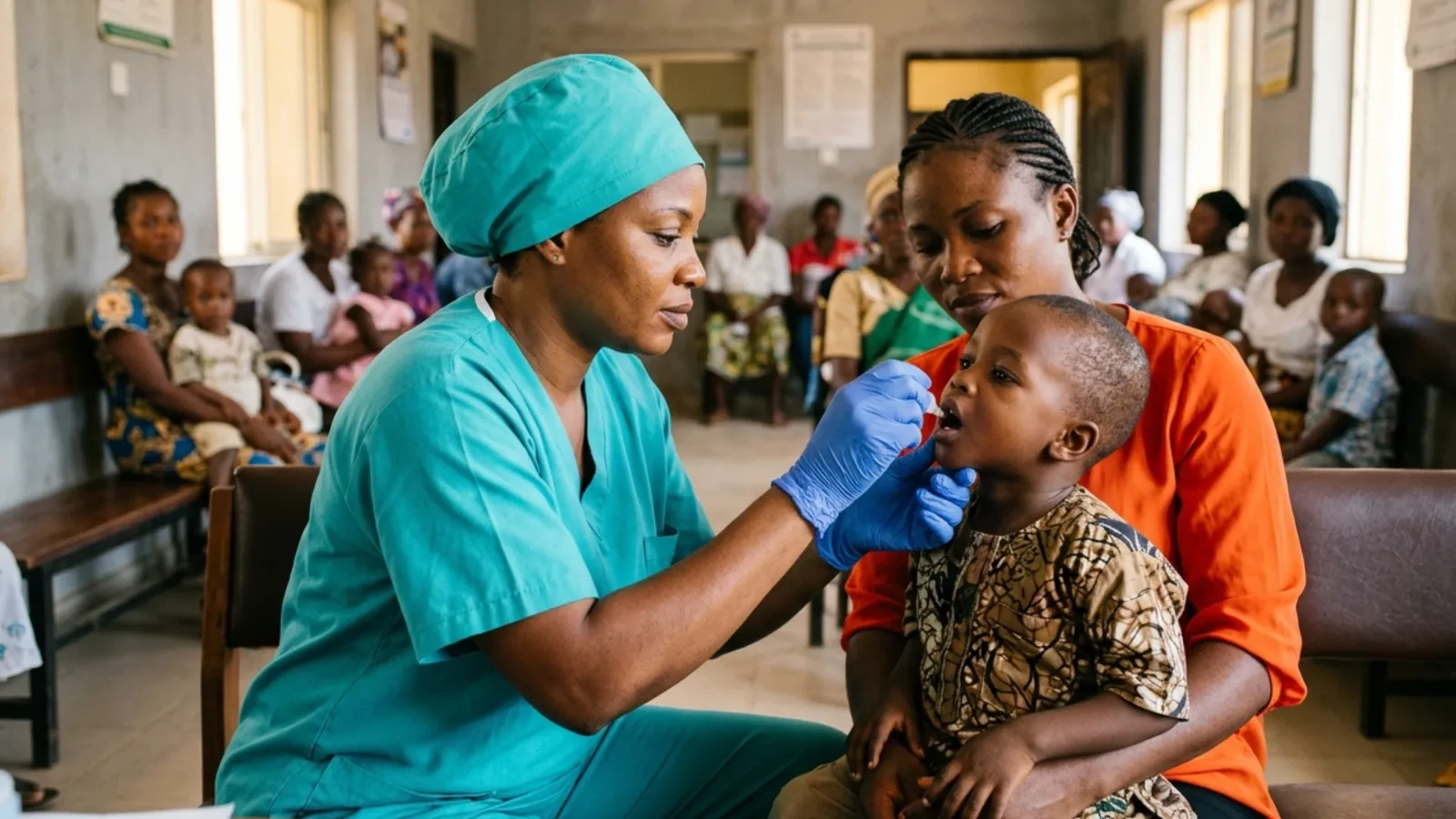
The Katsina polio vaccination drive is placing the health of nearly 2.7 million children at the centre of a major public health effort in northern Nigeria. Scheduled to begin on Saturday, November 7, 2026, the campaign is expected to reach 2,688,730 children aged between zero and 59 months across 28 local government areas.
Read: Do you need a professional writer in 72 hours? Contact Auxi Chat
When I consider a figure of this magnitude, I find myself looking beyond the announcement and asking a more important question: what does it actually mean for the families whose children are expected to benefit?
READ: NMA Hospital Reforms: Why Punishment Alone Will Not Save Lives
For a parent, the protection of a child is not a political achievement or a government statistic. It is something deeply personal. It is the reassurance that a child can grow, play, attend school and experience the ordinary joys of childhood without being exposed to a disease that can cause lifelong disability.
That is why this campaign deserves attention.
Read: Need a professional website in 72 hours? Contact Auxi Chat
According to information released by the Katsina State Primary Health Care Development Agency and reported by Nigerian media, the exercise will cover 299 wards and more than 17,000 settlements. The state government is working with development partners, including UNICEF, to strengthen immunisation coverage and ensure that eligible children are reached.
The scale is significant. But as I see it, the real measure of success will not be the number announced at a press conference. It will be the number of children who actually receive the protection they need.
Katsina Polio Vaccination Drive: What Parents Need to Know
The campaign will be implemented in 28 of Katsina State's 34 local government areas. The six local government areas excluded from this particular round are Bindawa, Dutsi, Kankia, Kusada, Safana and Sandamu.
Health authorities have identified children aged zero to 59 months as the target population. This means that parents and caregivers with children under five should pay attention to information from local health authorities and make their children available to authorised vaccination teams.
The vaccination exercise is expected to use several delivery methods, rather than depending on one approach.
These include
Door to door vaccination visits.
Directly observed vaccination activities.
Special teams operating at transit locations.
Fixed vaccination posts.
Temporary vaccination posts.
Follow up activities to reach children missed during the initial exercise.
This arrangement matters because not every household has the same circumstances. Some families live far from health facilities, others may be away from home during working hours, while some communities require additional mobilisation before residents are comfortable participating in vaccination exercises.
A campaign that depends entirely on parents travelling to health centres may struggle to reach every eligible child. By taking vaccination services closer to households and public gathering points, health authorities can reduce some of the barriers that prevent children from receiving essential preventive care.
The reported operational plan also includes activities to identify and reach children who may have been missed during the main vaccination exercise.
For parents, the message is straightforward: pay attention to announcements from authorised health workers, cooperate with vaccination teams and seek clarification from recognised health facilities when uncertain about your child's eligibility.
Why Polio Remains a Public Health Concern
One might reasonably wonder why vaccination campaigns continue to be necessary when Nigeria has already achieved an important milestone in its fight against polio.
Nigeria was certified free of indigenous wild poliovirus transmission in 2020. That achievement represented years of work by health professionals, government agencies, international partners and community volunteers.
However, being certified free of wild poliovirus does not mean that every form of poliovirus has disappeared from the country.
Circulating vaccine derived poliovirus remains a public health concern in areas where population immunity is insufficient. This is an important distinction that is sometimes lost in public conversations about polio.
Polio is a highly infectious disease caused by a virus that can attack the nervous system. It can cause permanent paralysis, particularly when it affects the muscles responsible for movement and breathing. There is no cure for the disease, making vaccination the most effective means of prevention.
The World Health Organization explains that polio vaccination, administered through the recommended schedule, provides protection against the disease. It also stresses that maintaining strong population immunity is essential to preventing outbreaks and stopping transmission.
This is where the importance of continued immunisation becomes clear. A country can make considerable progress against a disease and still face the possibility of outbreaks if some communities remain inadequately protected.
Progress is valuable, but it must be maintained.
The Three Vaccines Behind the Katsina Campaign
Another important detail in the Katsina polio vaccination drive is the range of vaccine formulations expected to be used during the exercise.
According to the health authorities' announcement, the campaign will include the novel Oral Polio Vaccine Type 2, commonly called nOPV2, the bivalent Oral Polio Vaccine, known as bOPV, and the fractional Inactivated Polio Vaccine, or fIPV.
These vaccines have different roles in polio prevention.
The novel oral polio vaccine Type 2 is designed for responses to outbreaks involving circulating vaccine derived poliovirus Type 2. It was developed to offer improved genetic stability while maintaining its ability to interrupt transmission.
The bivalent oral polio vaccine provides protection against poliovirus Types 1 and 3. It is an important part of immunisation strategies aimed at maintaining protection against these strains.
The fractional inactivated polio vaccine is an injectable vaccine administered in a fractional dose under approved immunisation guidelines.
The specific vaccine or combination recommended for a child depends on the applicable health guidelines and eligibility requirements. Parents should therefore allow qualified health workers to determine the appropriate vaccination procedure rather than making assumptions based on information circulating online.
Nigeria's National Primary Health Care Development Agency provides useful information about polio, available vaccines, repeated vaccination and common public concerns.
Its official resource can be accessed
One detail I consider particularly important is that previous vaccination should not automatically make parents assume their children are excluded from a new campaign.
Supplementary immunisation exercises are designed to strengthen population immunity. The number of doses required can depend on the vaccine, the child's immunisation history and the specific campaign guidelines.
The safest approach is to follow the instructions of authorised health professionals.
Why Community Trust Could Determine the Outcome
There is something about vaccination campaigns that goes beyond medicine. They depend heavily on relationships between health authorities and the communities they serve.
A government can provide vaccines, organise thousands of health workers and announce ambitious targets. Yet, if parents refuse access to vaccination teams or do not understand why the exercise matters, the campaign may struggle to achieve its objectives.
This is one of the reasons community engagement deserves as much attention as vaccine distribution.
Health officials have called on journalists, social media influencers, members of the National Youth Service Corps and community stakeholders to help communicate accurate information ahead of the exercise.
I find this particularly significant because public health communication has changed considerably. Information no longer travels exclusively through radio announcements, television broadcasts or community meetings. A misleading message shared in a WhatsApp group can reach hundreds of families before an official clarification becomes available.
That creates a responsibility for everyone who communicates with the public.
Parents deserve clear explanations, not intimidation. Communities deserve answers to legitimate questions, not dismissal. Health workers also deserve an environment where they can carry out their responsibilities without unnecessary hostility.
The answer to misinformation is not silence. It is consistent communication, credible information and the willingness to address genuine concerns.
Global News Arena has previously examined how misleading interpretations of vaccine safety information can affect public understanding. Our related report, Fact Check: Recurring Claims About Vaccine Safety Data, explores why health information must be interpreted carefully and why claims should be assessed against reliable evidence.
Beyond Polio: An Opportunity to Strengthen Child Healthcare
The November exercise is also expected to provide opportunities for additional health interventions through the Maternal, Newborn and Child Health Week and the SARMAAN II Project.
READ: Ebola disease in Nigeria: Two suspected cases reported.
This is an encouraging aspect of the campaign.
For many families, access to preventive healthcare can be difficult because of distance, transportation costs, limited health facilities and competing household responsibilities. When health services are brought closer to communities, families have more opportunities to receive care without making multiple journeys.
Integrating essential services into vaccination activities can therefore make a difference beyond the immediate objective of preventing polio.
However, integration must be properly organised. Vaccination teams need adequate supplies, trained personnel, clear instructions and reliable systems for recording the services delivered.
The campaign's reported coverage of more than 17,000 settlements also presents a considerable logistical responsibility. Reaching a large population across different communities requires coordination, reliable information and careful monitoring.
There is also a need to ensure that children in difficult to reach settlements are not overlooked simply because they are harder to access.
The success of a public health programme should be measured by how effectively it reaches people who need it, not merely by how impressive its initial target appears.
The Real Test Begins When Vaccination Teams Reach Communities
As the November 7 commencement approaches, I believe the most important part of this announcement is the opportunity it creates for millions of children to receive protection against a preventable disease.
But announcements are only the beginning.
The Katsina polio vaccination drive will ultimately be judged by its implementation, the cooperation of parents, the preparedness of health workers and the ability of authorities to identify children who were missed during earlier immunisation efforts.
The government and its development partners have outlined an ambitious target. The next responsibility is to translate that target into meaningful results across the communities involved.
It is also important that the public receives transparent information about the campaign's progress. How many children were reached? Which communities experienced difficulties? Were vaccination teams able to access all the intended settlements? What measures were taken to reach children who were initially missed?
These are reasonable questions, and the answers will help the public understand whether the programme is delivering on its promise.
I keep returning to one simple thought: a child does not choose the circumstances into which they are born. They do not decide whether their community has adequate health facilities or whether their parents can afford transportation to a clinic. Yet, they are often the ones who bear the consequences when essential healthcare is inaccessible.
That is why childhood immunisation must remain a priority.
Katsina's plan to reach nearly 2.7 million children is a significant public health undertaking. If properly implemented, it could strengthen protection across the state and contribute to Nigeria's wider efforts to eliminate polio transmission.
For parents and caregivers, the immediate responsibility is to stay informed and cooperate with authorised vaccination teams. For government agencies, it is to ensure that the vaccines, personnel and logistical support reach the communities they are intended to serve.
And for the rest of us, it is to recognise that protecting children from preventable diseases is not simply the responsibility of health professionals. It is a shared responsibility that affects the future of families, communities and the country.
Because when it comes to a child's health, being reached should never depend on how visible, wealthy or accessible their household happens to be.
The writer of this article does not claim to know the individuals named personally. The information regarding their backgrounds as published on Global News Arena is based on independent online research.
If you have an article, opinion piece, event or news story you would like published, Global News Arena would love to hear from you.