Nigeria woke up today to a different kind of working day.
Public service workers across the country have begun a three day warning strike after the Joint National Public Service Negotiating Council directed federal, state and local government employees to participate in the action.
The unions cited worsening economic hardship and unresolved demands around fuel prices, wage support and negotiations for a new national minimum wage. The warning strike runs from October 2 to October 4.
For citizens, the immediate concern is access to public services.
For businesses, there is another lesson.
What happens when the person responsible for an important process is suddenly unavailable?
It is an uncomfortable question because many businesses still operate this way.
One person answers customer enquiries.
One person handles quotations.
One person follows up with leads.
One person knows where important documents are.
One person manages a company's WhatsApp messages.
When that person is absent, everything slows down.
The problem is not necessarily the employee.
The problem is the system.
A business that requires a particular person to remember every customer, every follow up and every unfinished task is vulnerable to disruption.
That disruption does not need to be a strike.
It could be illness.
It could be leave.
It could be an unexpected resignation.
It could simply be a particularly busy day.
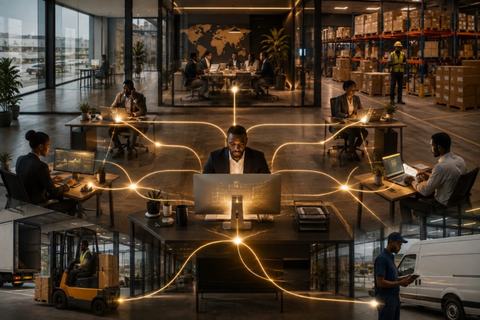
Modern businesses are increasingly using automation to reduce this dependence.
Customer enquiries can be captured automatically. Leads can be organized.
Routine questions can receive immediate responses. Follow ups can be scheduled instead of relying on someone's memory.
Auxi Sherpa brings these capabilities together through AI business automation, sales automation and customer support systems. The idea is not to remove people from the business. It is to make sure important business processes do not stop simply because one person is unavailable.
That distinction matters.
People should handle the decisions that require judgement, relationships and experience.
Systems should handle the repetitive work that can easily be documented and automated.
The current strike is a reminder of what happens when an organization's ability to function is closely tied to the physical availability of its workforce.
Businesses cannot prevent every disruption.
They can, however, reduce how much damage a disruption causes.
The strongest businesses are not necessarily those that never experience interruptions.
They are businesses that have built enough structure to keep important work moving when something unexpected happens.
Because when people cannot work, the real question is not whether the business will feel the absence.
It is whether everything else has to stop with them.
If you have an article, opinion piece, event or news story you would like published, Global News Arena would love to hear from you.
Send an email to advertise@globalnewsarena.com.