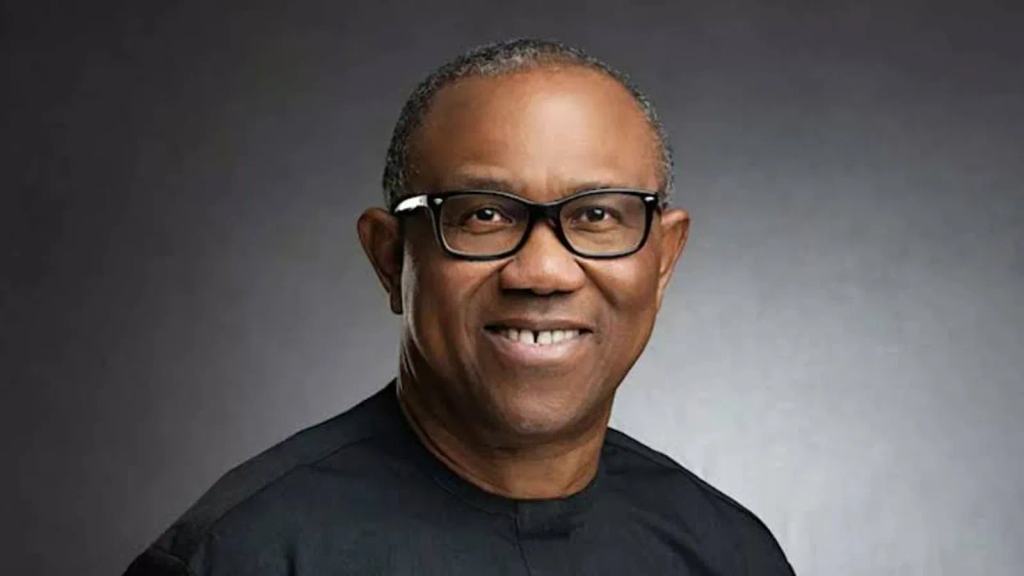
Peter Obi is a Nigerian politician and businessman best known for his tenure as governor of Anambra State and his presidential candidacy for the Labour Party in 2023. His rise from regional politics to national prominence has made him a significant figure in debates about leadership, public spending and Nigeria’s economic direction.
READ: Mosley Music: Biography, History and Its Label Legacy
He has cultivated a public image centred on personal restraint, careful management of government resources and investment in education. Supporters see these qualities as an alternative to established political practices, while his record and proposals remain subjects of public scrutiny.
Early life and education
READ: Independent National Electoral Commission: History and Role
Peter Gregory Obi was born on July 19, 1961, in Onitsha, a major commercial city in Anambra State, southeastern Nigeria. He attended Christ the King College in Onitsha before studying philosophy at the University of Nigeria, Nsukka, where he graduated in 1984.
His upbringing in a prominent trading centre provides part of the background to a career that began in business rather than elected office. His education and commercial experience later became recurring themes in his explanations of how government should manage resources and set priorities.
Business career and entry into politics
Before entering public office, Obi worked in trading and held leadership positions in private companies, including in financial services. He served as chairman of Fidelity Bank, a role that became one of the most widely recognised credentials of his business career.
Obi contested the Anambra governorship election in 2003 under the All Progressives Grand Alliance, commonly known as APGA. After the declared result went against him, he challenged it through the courts.
His successful legal challenge brought him into office in March 2006. The lengthy dispute helped establish his national reputation as a politician willing to pursue electoral claims through judicial processes.
Governor of Anambra State
Obi’s early period as governor was marked by repeated legal battles. He was impeached in 2006 but returned to office after a court overturned the impeachment. A further dispute followed the 2007 governorship election, held before he had completed four years in office.
The Supreme Court ruled that his tenure ran from the date he first took office, allowing him to return as governor. The decision became an important reference point in Nigeria’s system of governorship elections held outside the main national election cycle.
He won reelection in 2010 and remained governor until 2014. His administration emphasised education, health services, infrastructure and financial management. Partnerships with churches and other organisations in delivering public services were a notable feature of his approach.
Obi frequently points to his governorship as evidence of his ability to manage public money. His emphasis on savings and spending discipline became central to his national political identity.
National politics and presidential ambition
After leaving office, Obi joined the Peoples Democratic Party in 2014. He was the party’s vice-presidential candidate alongside Atiku Abubakar in the 2019 election, which they lost to President Muhammadu Buhari.
READ: Houdegbe North American University: Biography, History and Campus
In 2022, Obi left the PDP and joined the Labour Party, becoming its presidential candidate for the 2023 election. His campaign attracted substantial support among younger voters and Nigerians seeking an alternative to the two dominant parties. Many supporters adopted the name “Obidients”.
He campaigned on expanding production, improving security, reducing waste and strengthening public institutions. He finished third in the official results behind Bola Tinubu and Atiku Abubakar, and challenged the outcome unsuccessfully in court.
Obi’s broader significance lies in his transition from businessman and state governor to a national opposition figure. His career illustrates both the importance of the courts in Nigerian electoral politics and the potential for campaigns outside the dominant parties to mobilise voters.
Are you interested in learning how to write professionally and earn money as a writer and content creator? Contact Auxi Chat today to start your writing journey immediately.
Need a professional website in 72 hours? Contact Auxi Chat
If you have an article, opinion piece, event or news story you would like published, Global News Arena would love to hear from you.