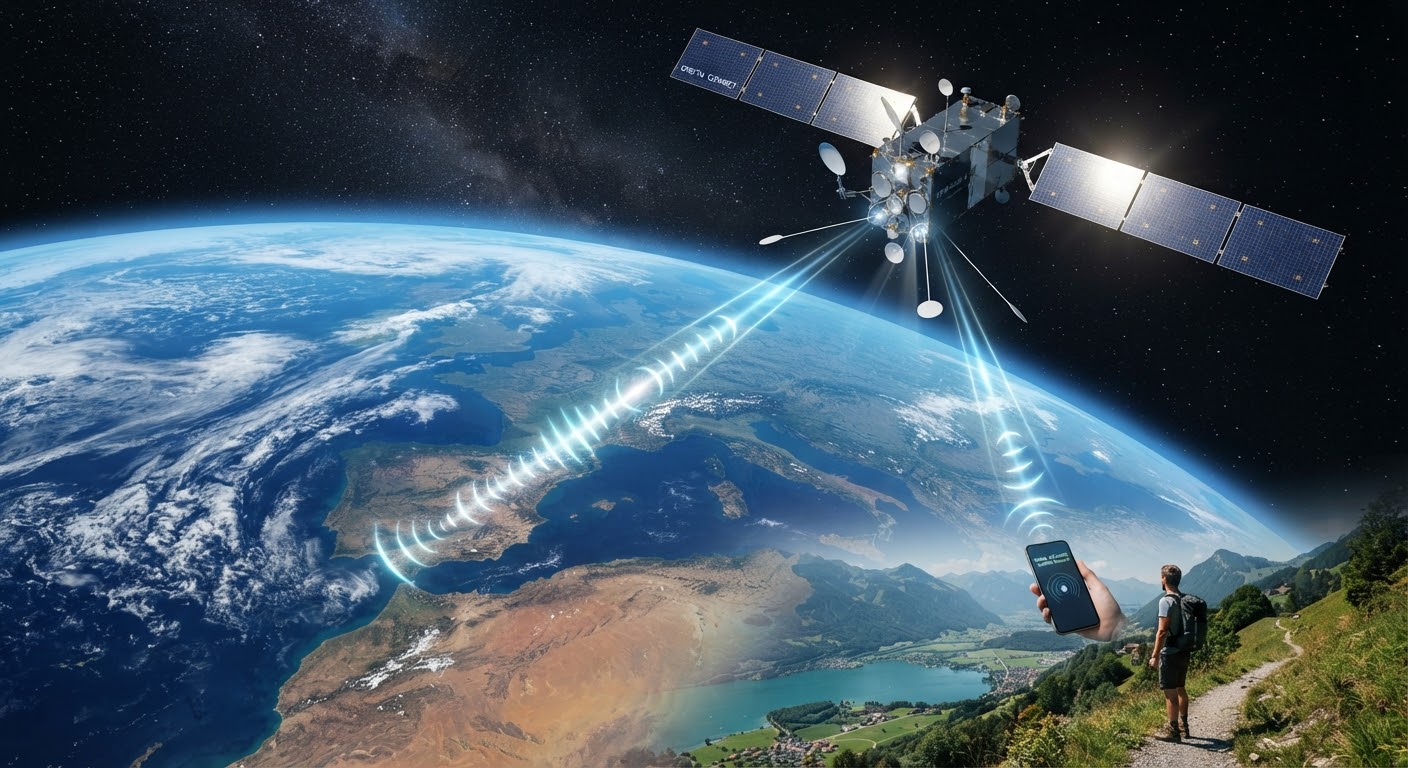
The project, known as SELYCE, is being conducted through a partnership with the European Space Agency (ESA). It aims to advance European 5G satellite connectivity by developing and testing technologies that could support future direct-to-device services.
READ: MTN Nigeria revenue growth Rises as Nigeria Recovery Supports Growth
The announcement was made on November 17, 2026, with SES taking responsibility for coordinating the project's industrial activities.
Read: Do you need a professional writer in 72 hours? Contact Auxi Chat
What the European 5G Satellite Connectivity Project Will Do
The SELYCE initiative will focus on developing standards-based 5G Non-Terrestrial Network (NTN) technology.
Non-terrestrial networks combine satellite systems with traditional mobile infrastructure. They are designed to extend communication services beyond the areas reached by conventional mobile networks.
Read: Need a professional website in 72 hours? Contact Auxi Chat
With direct-to-device technology, compatible smartphones and other devices could communicate with satellites without necessarily requiring a separate satellite phone.
The project will bring together European technology companies and research organisations to develop, integrate and test the systems needed to support future commercial services.
However, the initiative is still focused on technology development. It does not mean that satellite connectivity is already available to all European smartphone users.
ESA and European Agencies Support the Initiative
The project is being conducted under a Partnership Project with the European Space Agency.
It is primarily funded by the Luxembourg Space Agency, with support from the Belgian Science Policy Office and the UK Space Agency.
SES will coordinate the development and validation of the technology components required for future direct-to-device services.
The initial participants include Amphinicy Luxembourg, the University of Luxembourg and Redu Space Services, a wholly owned SES subsidiary based in Belgium.
Additional European organisations are expected to join as the project develops.
The partnership is intended to strengthen cooperation between Europe's space and telecommunications industries while supporting the development of technologies that can work across different networks.
Messaging, Vehicles and Emergency Communications Among Key Uses
One of the project's main areas of attention is communication in locations where ordinary mobile coverage is unavailable.
The initial applications include satellite connectivity for vehicles, messaging and emergency voice communications outside terrestrial network coverage.
The technology could also support communication during natural disasters and other emergencies when ground-based telecommunications infrastructure is damaged or disrupted.
For example, if a conventional mobile network becomes unavailable during an emergency, satellite-based services could provide another communication option, depending on the technology, coverage and services eventually deployed.
The project also aims to support connected devices and Internet of Things applications, which include equipment and sensors that exchange information through communication networks.
SES Plans Technology Testing Before Commercial Deployment
SELYCE will follow a phased development process.
SES and its technology partners plan to validate the required systems in an end-to-end test environment. This will allow the participants to assess how the different technology components work together before moving towards possible demonstrations in orbit.
The testing process is expected to help prepare the technology for future commercial deployment.
However, SES and ESA have not announced a confirmed date for the start of commercial services through the SELYCE project.
READ: MTN Nigeria Corporate Profile
The outcome will depend on technical development, testing, regulatory requirements and further deployment decisions.
Why Satellite-to-Phone Technology Matters for Europe
The initiative reflects a wider effort to make telecommunications networks more resilient by combining satellite and terrestrial infrastructure.
Traditional mobile networks depend on ground-based equipment such as towers and fibre connections. Satellite systems can provide an additional communication layer, particularly in remote areas or during situations where ground infrastructure is unavailable.
For consumers, businesses and public institutions, the long-term aim is to improve access to communication services and reduce dependence on a single type of network.
The project also supports Europe's broader ambition to strengthen its technological capabilities and develop more independent communications infrastructure.
SELYCE is still at the development stage, but its progress could contribute to the future of satellite-enabled mobile services. Its success will depend on whether the technology can be tested, integrated and eventually deployed commercially.
Are you interested in learning how to write professionally and earn money as a writer and content creator? Contact us today to start your writing journey immediately.
Need a professional website in 72 hours? Contact us
Do you need a professional writer in 72 hours? Contact us
If you have an article, guest story, event or news tip you would like published, Global News Arena would love to hear from you.