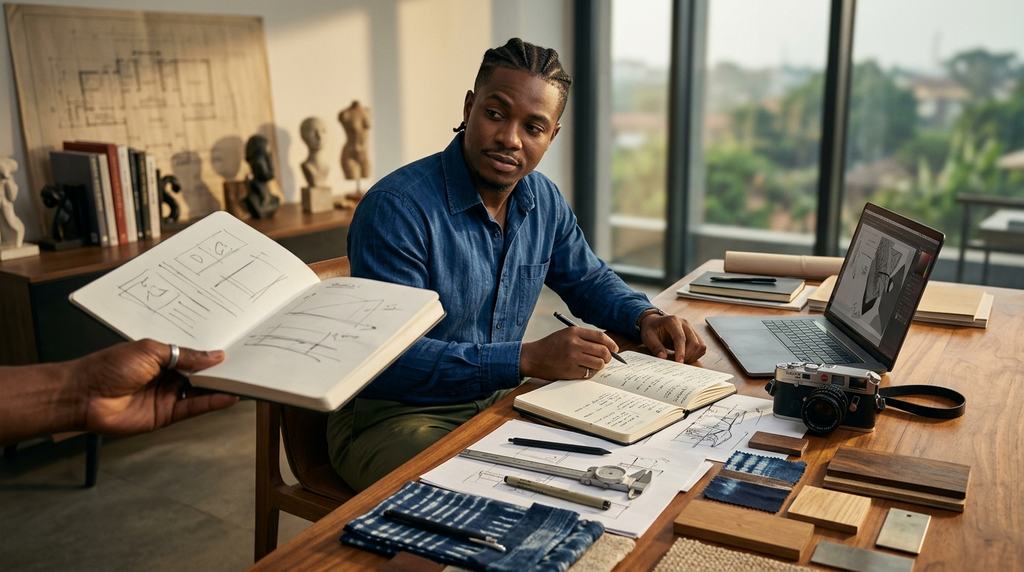
"Can I pick your brain for a few minutes?"
That sentence has probably produced more unpaid consulting than most people realise.
And before anyone gets offended, I'm not saying every person who asks this question is deliberately trying to take advantage of someone.
Usually, they aren't.
They genuinely think they're asking for a small favour.
That's the problem.
What feels like a small favour to one person can represent years of work to the other.
A writer's ability to turn a complicated idea into something people actually understand didn't appear overnight.
A designer's ability to look at something and immediately know what feels wrong came from years of studying, practising and making terrible designs before making better ones.
A marketer's advice about positioning came from campaigns that worked, campaigns that failed and probably a lot of money spent learning the difference.
A business strategist's ability to spot a problem quickly came from solving similar problems over and over again.
You see the answer.
They see the years it took to develop the ability to give it.
That's the part people sometimes miss.
Knowledge isn't less valuable because it happens to be delivered verbally.
If I spend two years learning something and then someone asks me for the useful parts over coffee, the fact that the conversation takes thirty minutes doesn't mean I only provided thirty minutes of value.
The thirty minutes are simply the delivery mechanism.
The expertise existed long before the coffee.
And creative professionals are particularly vulnerable to this because the work can look deceptively easy once you're good at it.
A strong writer makes writing look effortless.
A good designer makes design decisions look obvious.
An experienced social media manager can produce a strategy that looks like common sense.
That's usually the result of experience, not evidence that the work was easy.
This is where I think we need to get better at respecting expertise.
If you genuinely want someone's advice, there are plenty of respectful ways to approach it.
You can ask whether they offer consultations.
You can hire them for a small project.
You can ask what their paid rate is.
You can even be honest and say, "I know this is asking for your time and expertise. Do you offer paid calls?"
That is very different from assuming access to their knowledge because you're friends, mutuals or happened to meet them online.
And yes, sometimes people will happily give free advice.
That's their choice.
The important word is choice.
There is a difference between someone choosing to help you and someone being socially pressured into doing unpaid work because saying no feels rude.
This becomes particularly important when you're building a freelance business.
A beginner can spend months doing exactly this without realising it.
Someone asks for "a quick opinion" on their website.
Then they want feedback on their logo.
Then they ask what you think their social media strategy should be.
Then they ask if you can "just quickly look over" a proposal.
Before you know it, you've spent three hours consulting for free.
And because you weren't technically hired, you may even feel uncomfortable admitting how much time it took.
That's how creative people accidentally train other people to undervalue their work.
I've written about turning skills into paid services in The Skill You Already Have That People are Literally Paying For, and this is really the next part of that conversation.
You don't need to build a giant agency before your knowledge becomes valuable.
A writing consultation.
A website audit.
A social media strategy session.
A design review.
A content plan.
A one-hour business consultation.
The format can be simple.
The value is in the expertise.
And you don't have to charge enormous amounts immediately.
If you're new, you might start with an accessible price while you build experience and testimonials.
The point is simply to stop pretending that your time has no value.
There's also a healthier way to respond when someone asks you to "pick your brain."
You don't have to become rude.
You don't need to send them a six-paragraph explanation about capitalism.
You can simply say:
"Happy to help. I offer paid consultation calls for this, and my rate is X. If you'd like, I can send you the details."
That's it.
Clear.
Professional.
No apology.
No awkward justification.
And if they aren't interested, that's okay.
Not everyone who asks for your expertise is going to become a customer.
That's normal.
Understand that your knowledge has value even when you aren't actively producing a physical product.
Creative work is still work.
Experience is still an asset.
And expertise doesn't become free simply because somebody asks nicely.
The next time someone says, "Can I pick your brain?"
Maybe the answer doesn't have to be no.
Maybe it can simply be:
"Sure. Here's how you can book me."
That's not being difficult.
That's treating your craft like a business.
Frequently Asked Questions
Why is "picking your brain" considered disrespectful to creative professionals?
It often asks for years of paid expertise and experience for free, disguised as a casual, low effort request.
Is it ever okay to ask a professional for free advice?
Brief, genuine questions are usually fine, but extended consultations or detailed guidance are reasonably worth compensating.
How should I respond if someone asks to "pick my brain"?
It's reasonable to offer a paid consultation option or be upfront that you value your time and expertise appropriately. Knowledge isn't weightless just because it's delivered in a conversation.
Does charging for advice make someone seem unapproachable?
Not necessarily. Most professionals are still happy to help, they simply expect compensation for substantial time and expertise.
Why does this happen more to creative professionals specifically?
Creative and intellectual labor is sometimes seen as less tangible than physical products, making people underestimate its actual value.
If you have an article, opinion piece, event or news story you would like published or you are ready to begin building a profitable online content writing business from your phone or laptop, Global News Arena would love to hear from you.
Send an email to advertise@globalnewsarena.com