Team Trump posted a video of Donald and Melania watching fireworks, soundtracked by Taylor Swift's "August," with a caption daring her to notice.
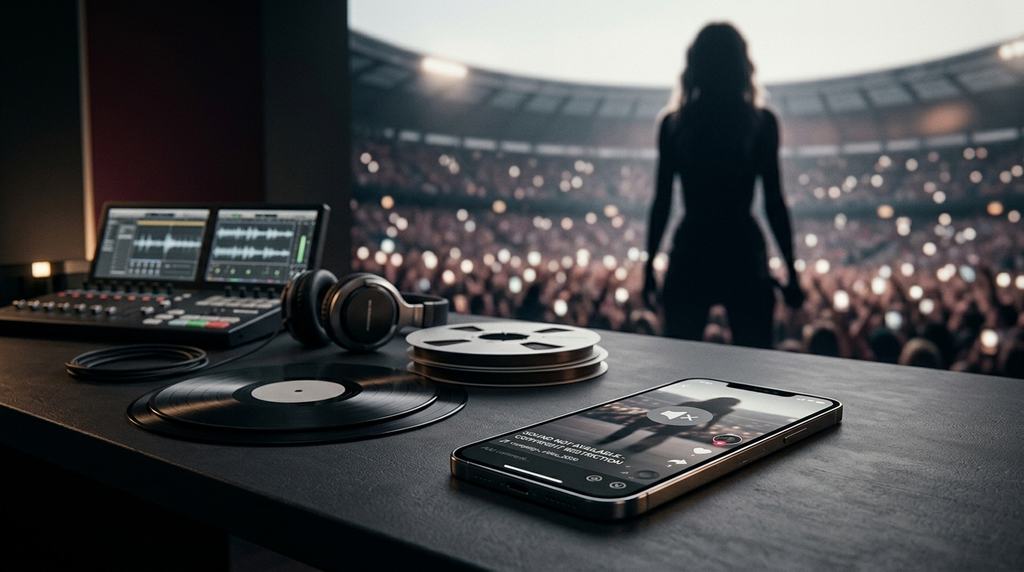
Days later, the audio was gone, replaced with a message saying, "the copyright owner hasn't made this sound available in your country."
No press release.
No lawyer's letter made public.
No tweet.
Just the procedural sound of a rights holder making a song unavailable, and the internet immediately understanding what had happened.
This wasn't a one-off either.
Variety reported that a separate Team Trump video using Swift's "Father Figure," posted back in November 2025, also had its audio stripped around the same time.
Meanwhile, an official White House TikTok posted months earlier using Swift's "The Fate of Ophelia" was left untouched.
So this wasn't a blanket ban on Swift's catalogue appearing anywhere near Trump content.
It was selective.
And that distinction is the entire lesson.
To be clear, neither Swift nor her representatives publicly confirmed that they personally ordered these removals. The copyright-owner notice tells us the audio was restricted, not exactly who made the decision.
But that's almost beside the point.
Anyone can own copyright on paper.
Actually controlling what happens to that work is another matter entirely.
Enforcement takes time, money and the ability to act quickly enough to matter, especially online, where a viral moment can be over before a lawyer finishes drafting the letter.
This is where Swift's long-running fight over her masters becomes relevant.
She spent years fighting to regain control over her early catalogue and began re-recording those albums to build ownership and leverage around her music.
That wasn't just about old songs.
It was about control.
Owning your work matters most when someone else wants to use it, remix it, profit from it or attach it to a message you never agreed to.
There's a business lesson buried underneath all the celebrity drama for anyone who creates something people might want to borrow.
Ownership without practical control is just paperwork.
Ownership backed by the ability to enforce your rights is leverage.
And leverage doesn't always need a public statement.
Sometimes the most effective response is simply making the thing unavailable.
None of this required Swift to publicly say a word about Trump, politics or the video.
The song disappeared.
Everyone understood the significance anyway.
Frequently Asked Questions
What happened to Taylor Swift's "August" on Team Trump's TikTok?
Team Trump posted a TikTok using Swift's "August." Days later, the audio was removed and replaced with a copyright-related message saying the sound wasn't available in the user's country.
Was "August" the only Taylor Swift song affected?
No. A separate Team Trump TikTok using "Father Figure" also reportedly had its audio removed around the same time.
Did Taylor Swift publicly confirm that she ordered the removals?
No. Swift and her representatives did not publicly confirm that they personally requested the removals.
Why does this matter beyond the Trump-Swift drama?
Because it highlights the difference between owning creative work and having meaningful control over how that work is used. For creators and businesses, that control can be a major form of leverage.
If you have an article, opinion piece, event or news story you would like published or you are ready to begin your journey toward building a profitable online content writing business from your phone or laptop, Global News Arena would love to hear from you.
Send an email to advertise@globalnewsarena.com