Day of the Dead, known in Spanish as Día de Muertos or Día de los Muertos, is a Mexican tradition dedicated to remembering people who have died. Families prepare offerings, tend graves and share stories, creating a space for grief, affection and celebration.
The observance is most closely associated with November 1 and 2, although preparations and local customs can extend beyond those days. There is no single way to mark it. Practices differ across regions, Indigenous communities and households, and not every Mexican family takes part.
Where the tradition comes from
Day of the Dead developed through the interaction of Indigenous beliefs about death and ancestors with Catholic practices introduced during Spanish colonial rule. Its familiar dates overlap with All Saints' Day on November 1 and All Souls' Day on November 2.
Many communities associate November 1 with deceased children and November 2 with adults. These distinctions are not universal, and some places follow more detailed calendars of remembrance.
A central idea is that the dead remain part of family and community life. In many traditions, the celebration offers a time when their spirits are believed to return. For others, participation is primarily an expression of cultural identity and loving memory.
What goes on an ofrenda
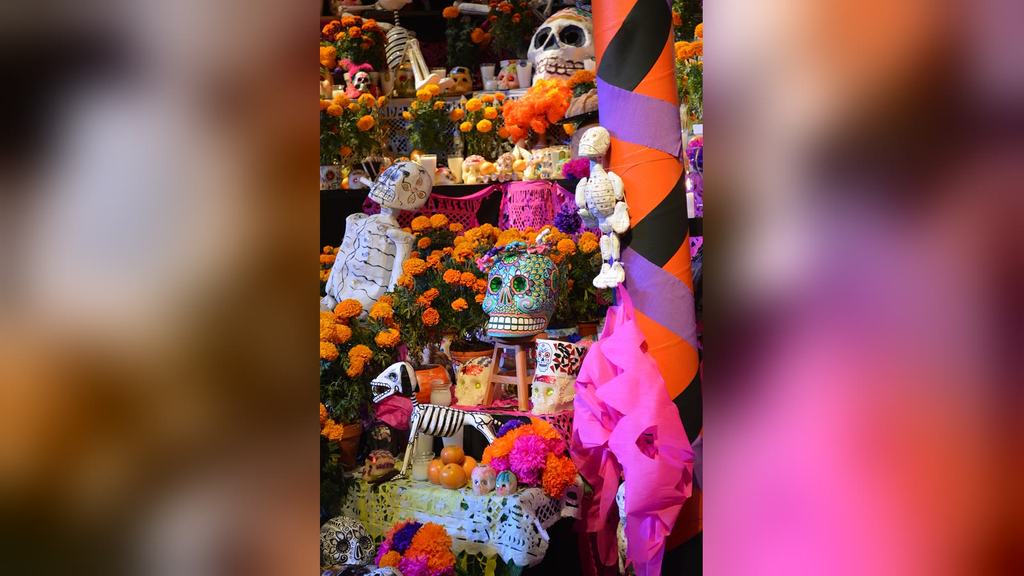
The ofrenda, or offering, is one of the observance's best-known features. Often arranged as an altar in a home or public space, it may hold photographs, candles, flowers, water and foods associated with the people being remembered.
Orange and yellow marigolds, commonly called cempasúchil, are especially prominent. Their colour and scent are traditionally understood to help guide returning spirits. Petals may be laid out in paths leading towards an altar or grave.
Offerings often include a loved one's favourite dishes, fruit or drinks. Water is commonly provided to refresh the spirits after their journey. Candles offer light, while incense, including copal in some communities, may be used to purify or perfume the space.
Papel picado, decorative cut paper, adds colour. Sugar skulls and pan de muerto, a bread made for the season, are also familiar. The bread's shape and recipe vary, though a rounded loaf decorated with bone-like strips of dough is widely recognised.
Cemetery visits and shared remembrance
Families may clean graves, arrange flowers and candles, and spend time at cemeteries. In some communities, vigils continue through the night. Prayer, music and food can accompany these gatherings, depending on local practice.
The atmosphere is not simply solemn or festive. Sadness and humour can exist together, and telling a familiar story about someone who has died can be as important as any formal ritual.
Customs in places such as Michoacán and Oaxaca are particularly well known, but they represent only part of a much broader tradition. Mexican communities abroad also maintain and adapt the observance, often through family altars and cultural gatherings.
Skulls, humour and cultural meaning
Skeletons and skulls appear throughout Day of the Dead imagery. Rather than serving only as frightening symbols, they can present death as a shared human reality. Playful skeleton scenes and humorous verses known as calaveras literarias reflect this approach.
La Catrina, the elegantly dressed female skeleton associated with artist José Guadalupe Posada and later popularised by Diego Rivera, has become an especially recognisable figure.
Despite its proximity to Halloween and some overlapping imagery, Day of the Dead has distinct roots and purposes. Costumes and public spectacles may attract attention, but its enduring centre is personal remembrance: welcoming the memory of loved ones through objects, places and rituals that connect generations.
Are you interested in learning how to write professionally and earn money as a writer and content creator? Contact Auxi Chat today to start your writing journey immediately.
Need a professional website in 72 hours? Contact Auxi Chat
If you have an article, opinion piece, event or news story you would like published, Global News Arena would love to hear from you.