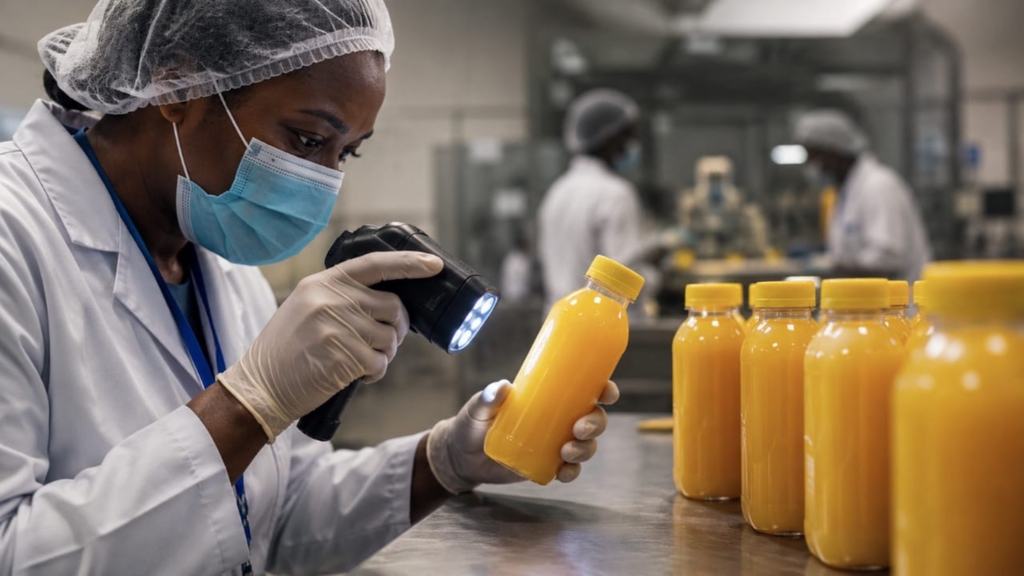
The discovery of an alleged fake Barkas juice factory in Badagry, Lagos, has renewed concerns about the growing counterfeit product problem in Nigeria.
Operatives of the Nigeria Security and Civil Defence Corps reportedly uncovered a facility where the drink was allegedly produced with water, chemicals, colourants and sweeteners rather than real fruit.
Two women were arrested and the facility was shut down while investigations continue.
The case is disturbing because the problem does not end with one illegal factory.
A counterfeit product becomes dangerous when it successfully moves from production to distribution and eventually reaches a customer who believes the product is genuine.
That means the real challenge is not only finding illegal producers. It is also knowing where products come from, how they move through the market and whether the information attached to them can be trusted.
For consumers, this creates a problem that is becoming harder to solve by simply looking at packaging.
A product may have familiar branding, attractive packaging and even what appears to be a legitimate registration number.
In the Badagry case, officials alleged that the products carried a fake NAFDAC registration number and were distributed beyond Lagos.
For legitimate businesses, counterfeit products create another kind of damage.
A company that spends money developing a product, maintaining quality and building customer trust can find itself competing against someone selling a cheaper imitation.
When customers cannot easily distinguish between the original and the fake, the genuine business can lose sales while its reputation is also exposed to damage.
This is why businesses need stronger control over their own operations and supply chains.
Product records should be organised.
Suppliers should be properly documented.
Distribution channels should be monitored.
Customer complaints should not disappear into WhatsApp chats or scattered spreadsheets.
When something goes wrong, a business should be able to trace what happened and respond quickly.
The same principle applies to customer communication. If people are asking whether a product is genuine, where it was purchased or how they can verify it, businesses need a reliable system for answering those questions.
Delayed responses create room for rumours, misinformation and distrust to spread faster than the company can correct them.
This is where technology can become part of the solution. Auxi Sherpa helps businesses build stronger systems around customer enquiries, information management, lead handling and repetitive operational tasks.
The goal is not to replace people, but to make sure important questions and processes do not get lost when the business becomes busy.
The fake juice discovery is a reminder that trust is becoming one of the most valuable assets a business can build.
Customers may forgive a mistake when a company responds honestly and quickly.
They are much less likely to trust a business that cannot explain where its products come from or what it is doing when something goes wrong.
If you have an article, opinion piece, event or news story you would like published, Global News Arena would love to hear from you.
Send an email to advertise@globalnewsarena.com.