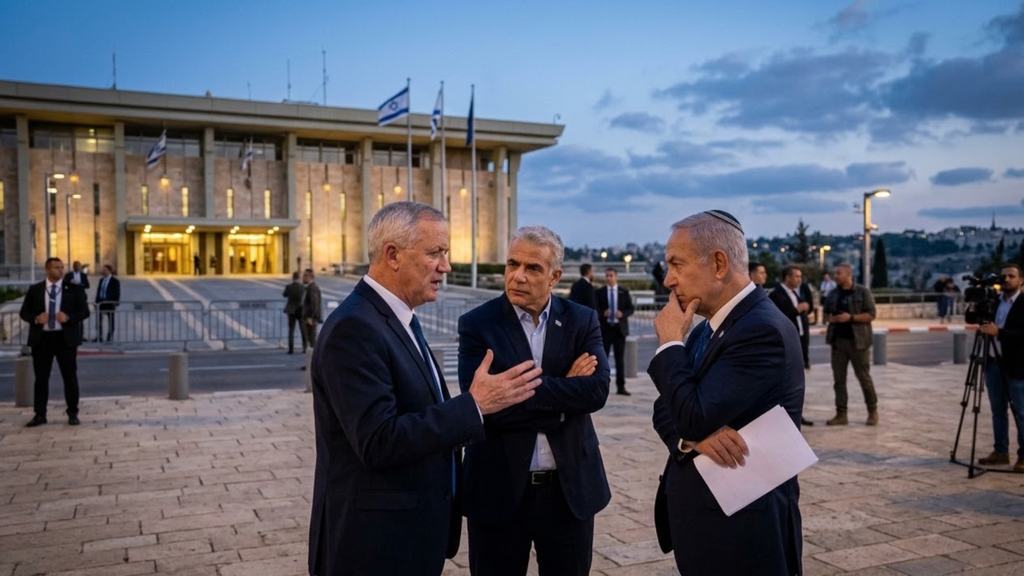
Israel’s Election Leaves the Country Waiting for a New Government Israel political crisis moment after its latest election left the country without a clear winner who can easily form a government.
READ: Oshiomhole Says Food Can Cost Just ₦2,000 Under Tinubu
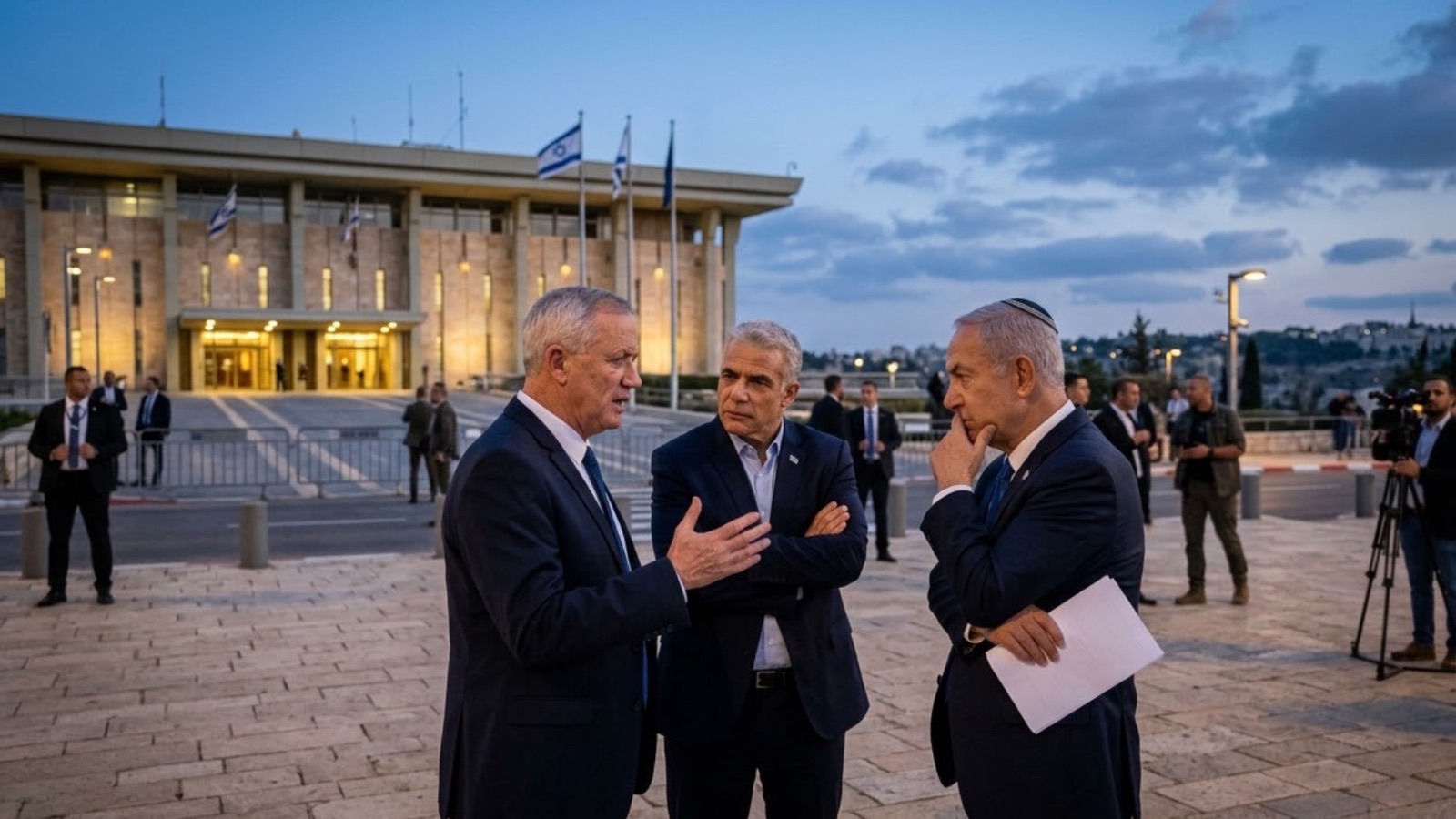
The election, held on October 27, 2026, left Prime Minister Benjamin Netanyahu and his main rival, Gadi Eisenkot, without enough support to control parliament on their own. Both men want to lead the country, but neither has found an easy way to bring enough lawmakers together.
Read: Do you need a professional writer in 72 hours? Contact Auxi Chat
Now, President Isaac Herzog has an important decision to make.
READ: Nigeria Public Finance Needs a Better Test Than New Buildings
Herzog has said he intends to choose a lawmaker to try to form the next government on Sunday, November 8. His choice could shape Israel’s political future and decide whether Netanyahu remains in power or his main rival gets a chance to lead the country.
The decision comes after days of talks between the president and political parties. During those discussions, more lawmakers recommended Eisenkot for the job than Netanyahu. However, the numbers alone do not guarantee that Eisenkot can build a government that will survive.
Read: Need a professional website in 72 hours? Contact Auxi Chat
For ordinary people, this political struggle may sound like a problem that concerns only politicians. But the outcome matters because the government makes decisions about security, public spending, military service and the country’s future.
Until the leaders agree on a way forward, Israel faces a period of uncertainty.
Why Israel Cannot Easily Form a Government
To understand the crisis, it helps to understand how Israel’s political system works.
Israel has a parliament called the Knesset. It has 120 seats, and a party or group of parties generally needs the support of at least 61 lawmakers to form a majority government.
Think of it as a group of people trying to choose a team leader. One person may receive more support than anyone else, but that does not mean they have enough votes to make every important decision.
That is the problem facing Israel.
Netanyahu’s Likud party won 27 seats, making it the largest single party in parliament. However, the wider group of parties that supports him has only 53 seats.
Eisenkot’s political alliance has 48 seats. Although he has received support from more lawmakers during the discussions with the president, he still faces the difficult task of turning that support into a working government.
Two parties representing Palestinian citizens of Israel won a combined 19 seats. Their support could help Eisenkot reach the number needed to govern, but his position on working with those parties has created another problem.
Both major political camps face disagreements with possible partners. Some parties want changes to military service rules, while others disagree over security, religion and the role of different communities in government.
This means that the crisis is not simply about who won the most seats. It is also about who is willing to work with whom.
President Herzog Must Make an Important Decision
President Isaac Herzog now has the responsibility of choosing which lawmaker should receive the first chance to form a government.
The president held talks with representatives of the political parties after the election. At the end of those discussions, lawmakers representing 67 seats recommended Eisenkot, while lawmakers representing 46 seats recommended Netanyahu.
Those figures gave Eisenkot an advantage in the recommendations, but Herzog has warned that the situation is not straightforward.
Some political parties have refused to work with certain leaders or groups. These disagreements make it difficult to know which candidate can actually bring enough lawmakers together to govern.
Herzog has said he wants to find a stable government rather than allow the country to remain stuck in a political struggle.
His task is therefore more complicated than simply choosing the candidate with the highest number of recommendations. He must consider who has a realistic chance of securing the support needed to govern.
The president’s decision is expected on Sunday, November 8.
Once a candidate receives the opportunity to form a government, that person will normally have 28 days to negotiate an agreement. An additional 14 days may be granted if necessary.
If the first candidate fails, another may be given a chance under the country’s political rules.
The process could give Israel a new government, but it could also lead to another election if the parties cannot reach an agreement.
Netanyahu Is Fighting to Keep His Position
Benjamin Netanyahu has been one of Israel’s most powerful political figures for many years. Losing the ability to form a government would be a major setback for him.
Although his Likud party won the largest number of seats for an individual party, his wider political alliance did not secure enough seats to continue governing with a clear majority.
One of the problems for Netanyahu is that a longtime ally, United Torah Judaism, declined to recommend either him or Eisenkot during the talks with Herzog.
The disagreement is linked to the question of military service for ultra-Orthodox Jewish men. Netanyahu’s coalition has faced pressure over legislation that would exempt many members of this community from military service.
The dispute has weakened his position because he needs the support of other parties to remain in power.
Netanyahu could still attempt to attract lawmakers from rival groups or negotiate an agreement that brings more parties into his coalition. However, those talks would require compromises, and some opposition leaders have made clear that they do not want to serve under him.
For Netanyahu, the challenge is to show that he can still build a government despite the loss of a clear majority.
For his opponents, the election offers an opportunity to bring an end to his leadership.
Gadi Eisenkot Has an Opportunity to Lead Israel
Gadi Eisenkot, a former military chief and opposition leader, has emerged as a serious challenger to Netanyahu.
His political alliance brought together parties with different views, including groups from the centre-left and the right. The alliance won 48 seats in the election, fewer than Netanyahu’s wider bloc.
However, Eisenkot received recommendations from a larger number of lawmakers during the president’s consultations.
That gives him an important political advantage as Herzog prepares to choose a candidate.
Still, Eisenkot faces a difficult choice. He needs to attract more support without breaking promises made to his own political partners.
The support of the two Arab-led parties could help him build a government. Together, those parties hold 19 seats, giving them an important role in the current political situation.
Yet Eisenkot has ruled out bringing those parties directly into his government unless certain conditions are met. This creates a gap between the number of lawmakers recommending him and the support he may be able to use to govern.
He could try to win support from other parties, including religious parties that have fallen out with Netanyahu. But those groups may demand changes to government policies in return.
Eisenkot’s success will depend on his ability to turn political support into an agreement that different parties can accept.
Arab-Led Parties Have Become Important in the Political Fight
One of the most important developments in the election was the strong performance of parties representing Palestinian citizens of Israel.
The two Arab-led political groups won a combined 19 seats in the 120-member parliament. Their support has become important because neither Netanyahu nor Eisenkot has an easy path to a majority without attracting lawmakers from outside their main alliances.
The Joint List and the United Arab List, known as Ra’am, have different political positions, but both recommended Eisenkot during the consultations with Herzog.
Their support reflects a desire to prevent Netanyahu and his current political allies from returning to power.
The parties have also raised concerns about issues affecting Arab communities, including crime, house demolitions, discrimination and the need for better protection and public services.
However, winning support from these lawmakers does not automatically mean that they will be included in the next government.
Eisenkot has been reluctant to form a government with them, even though their recommendations have helped strengthen his position.
This has created a difficult situation. The parties may help him receive the chance to form a government, but he must still decide how he would work with them once negotiations begin.
The issue also raises wider questions about political representation and whether the views of minority communities will be reflected in government decisions.
Why the Israel political crisis Matters to Ordinary Israelis
Political negotiations may take place in parliament and behind closed doors, but their effects can reach far beyond government offices.
A country needs a functioning government to make decisions, approve spending plans, respond to security threats and provide public services.
When political leaders cannot agree, important decisions may be delayed. Government departments may also face uncertainty over future policies and funding.
Israel is dealing with serious security and diplomatic challenges, making the formation of a stable government particularly important.
The next government will have to make decisions about military policy, relations with other countries, the economy and the future of the conflict involving Palestinians.
It will also face pressure from citizens who want their leaders to address everyday concerns, including the cost of living, public safety and the use of public money.
For families, workers and businesses, the main question is not simply which politician wins the struggle for power. It is whether the leaders can build a government capable of making decisions and responding to the country’s problems.
The longer the political deadlock continues, the more attention will turn to whether another election is necessary.
Could Israel Hold Another Election?
Another election remains possible if no candidate can form a government.
Under Israel’s political process, the first candidate chosen by the president receives 28 days to build a coalition, with the possibility of a 14-day extension.
If that attempt fails, another candidate may be given the opportunity to try.
The process provides more than one chance to reach an agreement, but it cannot guarantee success.
If all attempts fail, the Knesset may be dissolved and another election called under the country’s legal rules.
That would mean voters could be asked to return to the polls only weeks or months after the previous election.
Another election could change the balance of power, but it would also mean more campaigning, more political arguments and further uncertainty about who will lead the country.
Netanyahu would remain caretaker prime minister while the process continued. A caretaker government can carry on with necessary duties, but it would not have the same political position as a newly formed government with a stable parliamentary majority.
President Herzog has urged political leaders to look for a way forward and avoid another election if possible.
READ: Nigerian Political Campaigns Must Put Voters Before Power
The coming days will show whether the rival camps are willing to make the compromises needed to reach an agreement.
What the Election Says About Israel’s Political Divisions
The current crisis shows how divided Israel’s political system has become.
The election did not produce a clear majority for either of the two main political camps. Instead, it left several parties with enough seats to influence the negotiations.
That gives smaller political groups considerable power. Their support could determine which candidate becomes prime minister and what policies the next government follows.
But this situation also creates a risk: the demands of individual parties may make it harder to reach an agreement that works for the country as a whole.
Political leaders may have to change some of their promises, accept compromises or work with people they would normally oppose.
For voters, the situation can be frustrating. People cast their ballots expecting the election to produce a clear direction, but the final outcome may depend on negotiations that continue after voting has ended.
The result is a reminder that winning an election and forming a government are not always the same thing.
A party can win more seats than any other party and still be unable to govern without help.
That is why the talks between Netanyahu, Eisenkot and other political groups matter so much.
The World Is Watching Israel’s Next Move
Israel’s political future matters beyond its borders.
The country plays an important role in Middle Eastern security and diplomacy. Decisions made by its government can affect relations with neighbouring countries, international partners and Palestinians.
Foreign governments will be watching to see whether Israel forms a stable administration or enters another period of political uncertainty.
The next government will face difficult questions about security, military operations, diplomacy and the country’s international relationships.
A change in leadership would not automatically mean that Israel’s policies would change. Any new prime minister would still face political pressures, security concerns and disagreements within parliament.
However, the identity of the next leader and the parties supporting that leader could influence how decisions are made.
For international partners, a stable government could make negotiations easier. Continued political uncertainty could make it harder to know what direction Israel will take.
The outcome will therefore matter to both Israelis and people following developments across the Middle East.
What Happens on Sunday Could Shape Israel’s Future
President Isaac Herzog’s expected decision on Sunday, November 8, is an important step in the process of forming Israel’s next government.
Eisenkot has received recommendations from more lawmakers than Netanyahu, but he still needs to find a way to bring different political groups together.
Netanyahu, meanwhile, has not been pushed out of office. He remains prime minister while the process continues and may still try to find a path to another government.
Neither side has an easy solution.
The coming negotiations will test whether the political leaders are prepared to compromise for the sake of forming a stable government.
If an agreement is reached, Israel could move beyond the immediate election crisis. If the talks fail, the country may face another election and an even longer period of uncertainty.
For now, Israelis must wait to see which candidate Herzog chooses and whether that person can persuade enough lawmakers to work together.
The biggest question is no longer just who won the election. It is who can build a government that will last.
What do you think Israel’s leaders should do to end the political deadlock? Should they work with rival parties to form a government, or should voters be given another chance to choose their leaders? Share your thoughts and join the conversation.
The writer of this article does not claim to know the individuals named personally. The information regarding their backgrounds as published on Global News Arena is based on independent online research.
If you have an article, opinion piece, event or news story you would like published, Global News Arena would love to hear from you.