I keep noticing the same pattern every time petrol prices shift, and it's worth spelling out plainly: fuel prices rarely stay a fuel story.
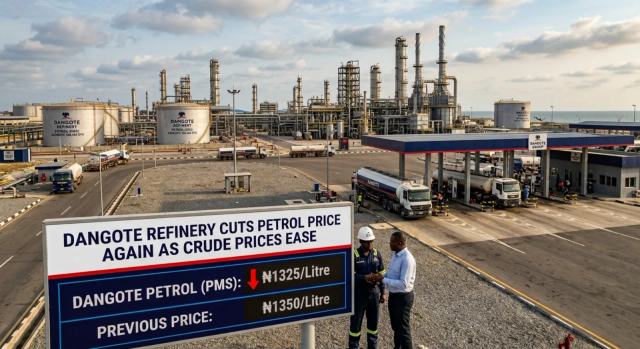
Dangote Petroleum Refinery has cut its petrol price by ₦25 per litre, bringing its ex-gantry price down from ₦1,350 to ₦1,325. This comes just days after an ₦85 increase pushed the price up from ₦1,265 to ₦1,350 in the first place. The latest move is tied to a decline in international crude prices, with Brent crude reported around $100 a barrel and West Texas Intermediate near $92. But the ex-gantry price is only what marketers pay at loading — what motorists actually pay depends on transport costs, location, and depot pricing, which is why coastal depots in Warri and Port Harcourt were selling around ₦1,330, Calabar depots near ₦1,327, while Lagos depots stayed higher at around ₦1,351.
That inconsistency is the part I think business owners underestimate. A price cut at the refinery doesn't automatically mean cheaper fuel at your local station, and it definitely doesn't move at the same speed everywhere. But even a temporary swing filters outward fast, transport operators adjust fares, delivery costs shift, and businesses quietly reprice goods and services in response. None of that gets announced. It just shows up in your operating costs a week or two later, and by the time you notice, you're already absorbing it.
Here's what I've seen happen to a lot of small and growing businesses during moments like this: they react to fuel price volatility instead of planning around it. Prices go up, so they scramble to adjust their own pricing overnight, sometimes confusing customers or eroding trust in the process. Prices come down, and they don't adjust at all, quietly losing margin they didn't need to lose. Either way, the business is being pushed around by a cost it never built a strategy for.
The businesses that handle this better aren't the ones with insider access to fuel market data. They're the ones who understand their own numbers well enough to know exactly how a ₦25 or ₦85 swing in fuel actually touches their delivery costs, staff transport, and pricing, and who make that call deliberately, rather than by instinct or panic. That kind of clarity doesn't come from guessing. It comes from actually looking at the data your business produces every day and using it to make decisions, instead of reacting to headlines about crude oil prices.
This is exactly where Auxi Sherpa's Analytics & Business Dashboards service becomes genuinely valuable by helping business owners turn scattered numbers into a clear picture of how external shocks like fuel prices are actually affecting their costs and margins in real time, so pricing decisions are based on what's actually happening in the business, not a guess made under pressure.
Fuel prices will keep moving, up and down, in ways most business owners have no control over. What you can control is whether your business is reacting blindly each time, or watching closely enough to know exactly what a ₦25 shift really costs you.