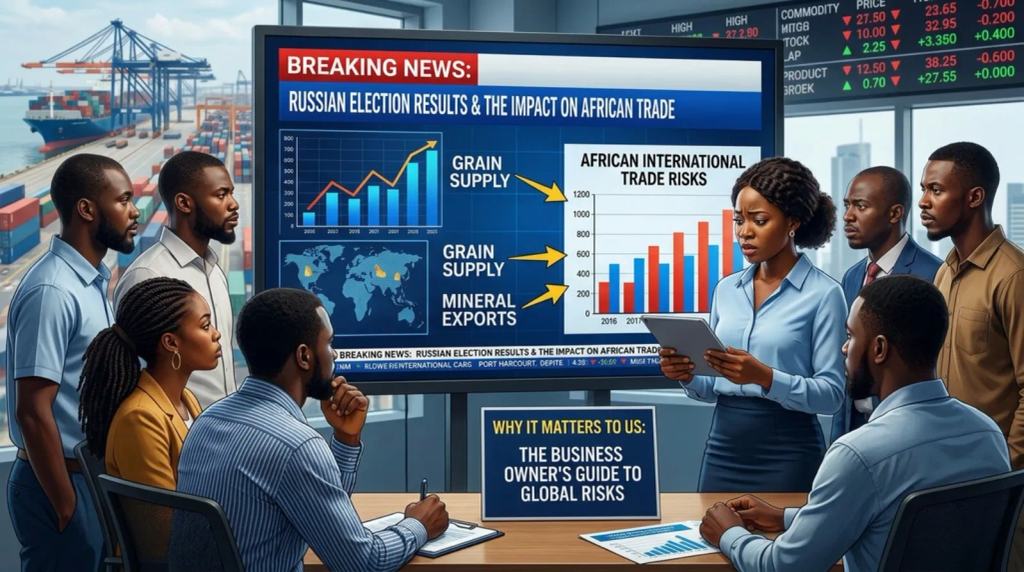
I've learned to stop reading foreign election headlines as "someone else's news." Russia's parliamentary election is a good example of why.
On paper, the result isn't shocking. Preliminary numbers cited by their electoral body, United Russia, the party backed by President Vladimir Putin, holding onto its constitutional majority in the State Duma. The election happened after more than four years of war in Ukraine, against a backdrop of battlefield losses, economic pressure, and fuel shortages linked to Ukrainian drone strikes on Russian oil facilities. The political environment was tightly controlled too, which Yabloko described as the only anti-war party in the race, was removed from the ballot just twelve days after being registered, and its chairman alleged that some candidates were jailed or blocked from running altogether. The parties expected to sit in the new Duma are largely the same familiar, pro-Kremlin faces from before.
So the outcome itself isn't the interesting part. What I keep coming back to is what happens next, because that's the part that eventually reaches business owners like us, even ones who have never set foot in Russia.
Reports make an important point: the Kremlin can now present this result as proof of public backing for Putin, and use that "mandate" to justify whatever comes next, including decisions about the war. Putin has ruled out another mobilisation drive for now, saying there's no current scenario requiring one, but the anxiety around a future one hasn't disappeared inside Russian society. That tells me the political story isn't finished, it has just paused, waiting on a decision.
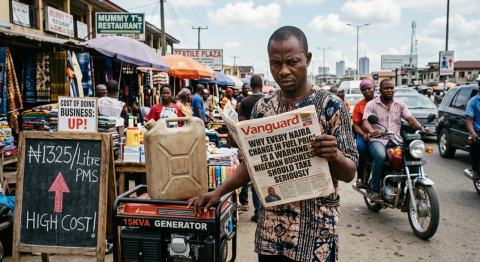
Here's why I think this matters far beyond Russia's borders. Russia is one of the largest oil and gas exporters in the world, and decisions coming out of Moscow about the war, about sanctions, about energy policy all have a habit of moving global oil prices almost overnight. When oil prices move, shipping costs move with them. Manufacturing costs move. And eventually, so does the price tag on goods sitting on a shelf in Lagos, Accra, or Nairobi. It's rarely a straight line you can point to, but it's a line that exists.
The same goes for foreign exchange markets. Political uncertainty in one region can trigger currency volatility somewhere completely unrelated, simply because global markets are more connected than most of us give them credit for. If your business depends on paying international suppliers, invoicing overseas clients, or managing subscriptions billed in dollars, that volatility isn't background noise — it's a direct line to your margins.
What I've noticed, watching businesses go through periods like this, is that the ones who struggle most usually aren't the ones caught off guard by the news itself. They're the ones who never built any flexibility into how they handle international money movement in the first place. A shipment gets delayed. A supplier's price doubles without warning. A payment that should have landed in full arrives worth noticeably less after a currency swing nobody planned for. None of that happens because a business "failed to predict a war." It happens because the systems underneath the business weren't built to absorb shocks they didn't see coming.
That's really the lesson I keep pulling out of stories like this one. You don't need to follow Russian politics closely to be affected by Russian politics. You just need to be running a business that touches international money, international suppliers, or international clients in any way and most growing businesses eventually do.
This is where I think preparation quietly becomes more valuable than prediction. Having dependable international payment infrastructure, the kind that lets you send and receive money across borders without being fully exposed to whatever volatility a distant news story creates and becomes something closer to insurance for your business. Auxi Sherpa's Global Payment Links and International USD Virtual Card exist for exactly this reason. It is here to keep transactions moving for African businesses even when global markets are unsettled, instead of leaving you stuck waiting out a storm you had no hand in creating.
Russia's election result will shape decisions made in Moscow long before it shapes anything here. But in a global economy this connected distance was never really protection. The businesses that come out ahead of stories like this one aren't the ones who saw it coming — they're the ones who built themselves to withstand it either way.
If you have an article, opinion piece, event or news story you would like published or you are ready to begin your journey toward building a profitable online content writing business from your phone or laptop, Global News Arena would love to hear from you.
Send an email to advertise@globalnewsarena.com