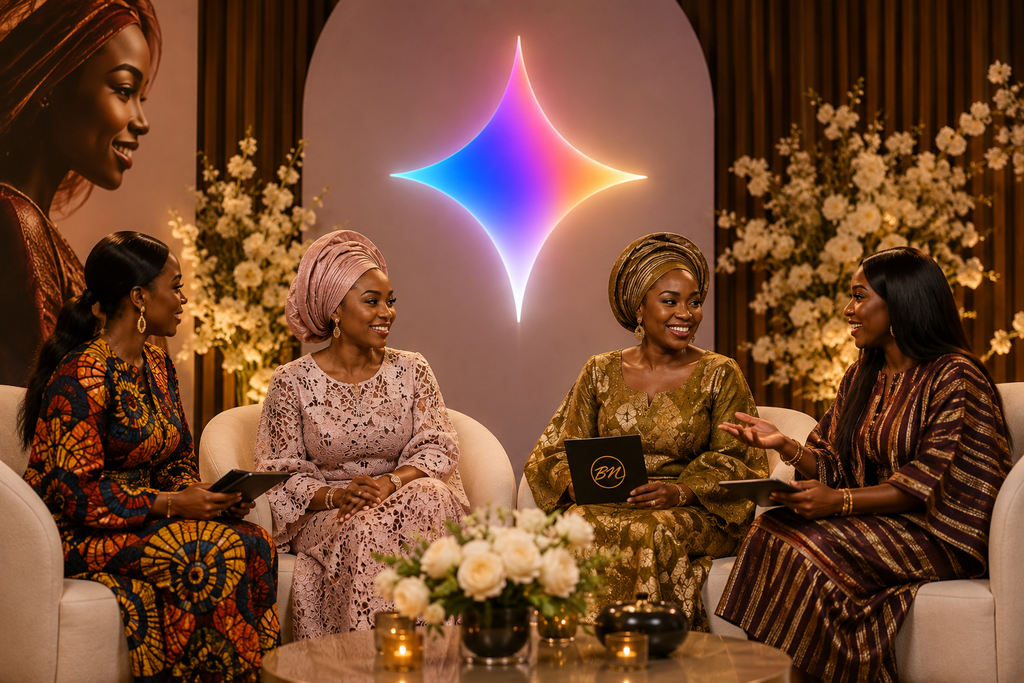
The other day, I came across a story that, at first glance, looked like just another corporate announcement. Google Gemini had partnered with BellaNaija to organise the Next Gen Creator House, an initiative designed to equip young Nigerian creators with skills in storytelling, personal branding, audience growth, and the responsible use of artificial intelligence. It brought together some of the country's most recognisable creators and media personalities to share knowledge with the next generation. On the surface, it was simply another event. But the more I thought about it, the more I realised the real story wasn't the event itself; it was the message behind it.
You see, I have always believed that sometimes the biggest opportunities don't arrive wearing a signboard that says, "This is your chance." They arrive disguised as ordinary news stories. Most people read the headline, nod in agreement, maybe share it on social media, and move on. I have trained myself to pause and ask a different question: "What are the people behind this story seeing that the rest of us are missing?"
That question completely changed how I looked at this partnership.
For years, we've been told that artificial intelligence is coming to change the world. Every other day, someone is predicting that AI will replace jobs, eliminate careers or make certain skills irrelevant. Honestly, I think we've spent so much time worrying about what AI might take away that we've forgotten to pay attention to what it is creating.
What Google and BellaNaija have done, in my opinion, is recognise something many of us are only beginning to understand: that the future will belong to people who know how to combine creativity with technology. Not technology alone. Not creativity alone. The combination of both.
That really struck me because if organisations of this size are investing in young creators, then they clearly believe the creator economy isn't a passing trend. They believe it's an industry worth building. And if they believe that, perhaps the rest of us should stop treating content creation as something people do "when they have time" and start seeing it for what it has become, a genuine economic opportunity.
As I reflected on that, I found myself thinking about something much closer to home.
How many of us are carrying around a business every single day without realising it?
I don't mean a registered company.
I mean that smartphone in your hand.
Most people use it to chat, scroll through social media and watch videos. Yet the same device has become a publishing house, a television studio, a classroom, a design agency and, for millions of people around the world, a source of income.
That doesn't happen by accident.
It happens because someone decided to learn a skill instead of endlessly consuming content.
And this is where AI enters the conversation in a much healthier way.
Contrary to what many people think, AI isn't here to replace your ideas. It can't replace your life experiences, your personality, your judgement or the stories only you can tell. What it does remarkably well is remove the repetitive work that often slows us down. It helps you research faster, organise your thoughts, generate fresh ideas, polish your writing, create graphics, plan projects and automate tasks that would normally consume hours.
Personally, I've come to appreciate platforms that bring many of those capabilities together instead of forcing creators to jump between ten different apps. If you're serious about building a digital business from your phone, it's worth taking a look at Auxi Sherpa Automation. I like the idea behind it because it allows you to handle the human part, thinking, creating, making decisions and building relationships, while AI quietly takes care of much of the repetitive work in the background. Sometimes working smarter isn't about finding another tool; it's about finding one place where the tools already work together.
Interestingly, that's the lesson I took away from the BellaNaija and Google Gemini initiative. It wasn't really about AI. It wasn't even about a one-day event in Lagos. It was about preparation. Somewhere in that room were young people who decided to invest a day learning skills that could completely change the direction of their lives. Five years from now, we may not remember every session that was delivered, but I wouldn't be surprised if we remembered some of the businesses, brands and careers that were born because someone attended.
That's why I always encourage people not to wait until they feel completely ready before they begin. The internet doesn't reward perfection nearly as much as it rewards consistency. Every creator you admire today started with an audience of zero. Every successful freelancer once struggled to find a first client. Every respected journalist wrote a first article. Every entrepreneur made a first sale.
Nobody begins at the top.
As I finished reading about the initiative, one thought stayed with me more than anything else: perhaps the greatest digital divide today isn't between people who have internet access and those who don't. Perhaps it's between people who use technology only to consume and those who use it to create.
The difference between those two groups will define a lot of success stories over the next decade.
And if this article nudges even one person to stop scrolling long enough to start building, then I think the BellaNaija, Google Gemini partnership has achieved something far greater than hosting another event. It has started a conversation that I hope more young Africans will join.
If you have an article, opinion piece or news story you'd like published on Global News Arena, or you're ready to begin your journey towards building a profitable digital business from your phone, I'd love to hear from you.
Send me an email at advertise@globalnewsarena.com.
Read more at Global News Arena