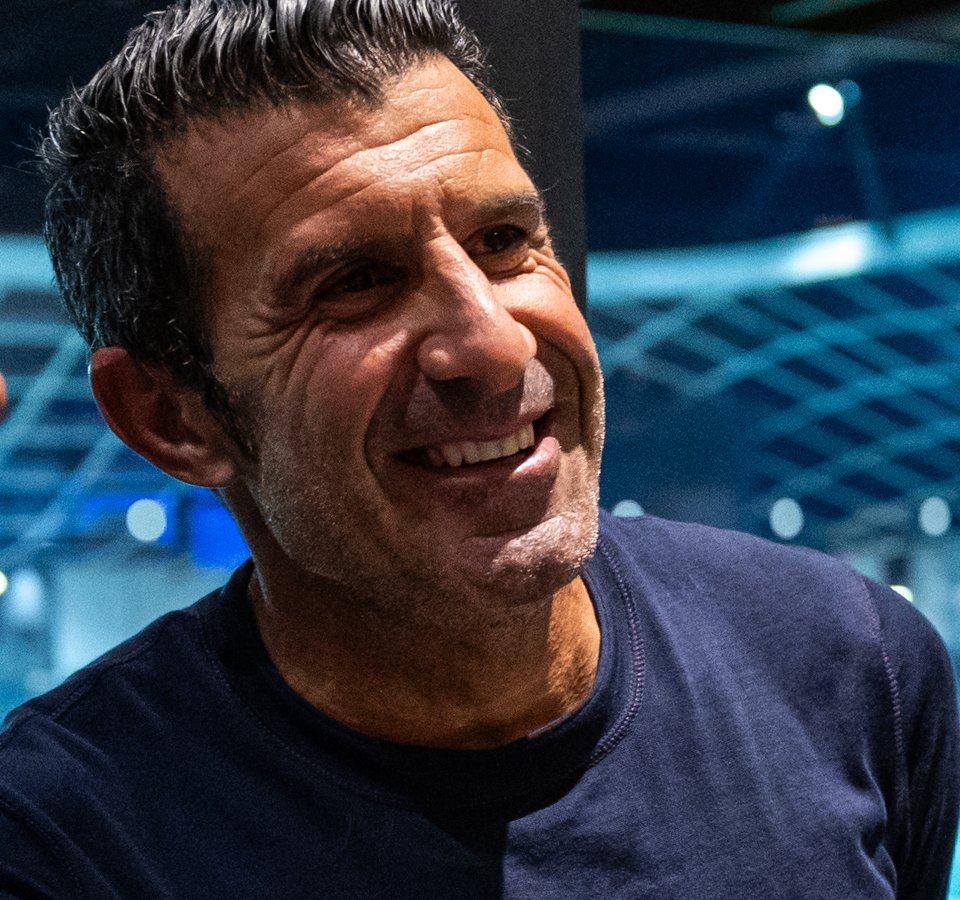
Luís Figo occupies a central place in the history of Portuguese football. A gifted winger and playmaker, he combined individual skill with the ability to shape matches for some of Europe's biggest clubs. His career linked Portugal's celebrated youth generation with a national team increasingly capable of challenging for major honours.
READ: La Liga: Biography, History and Spanish Football Legacy
Figo won the Ballon d'Or in 2000 and was named FIFA World Player of the Year in 2001. Those awards recognised a footballer whose influence extended beyond goals, through his passing, crossing and ability to create opportunities for others.
Read: Do you need a professional writer in 72 hours? Contact Auxi Chat
Luís Figo: Early life and Sporting beginnings
READ: Portugal’s national team: Biography, History and Legacy
Born on November 4, 1972, in Almada, Portugal, Figo developed his football in the Lisbon area before joining Sporting's youth system. The club provided the technical grounding and senior opportunities that launched his professional career.
He made his first-team debut in 1989 and gradually established himself as one of Portugal's most promising young players. Comfortable receiving the ball under pressure, he could beat defenders with close control and changes of direction rather than relying only on speed.
Read: Need a professional website in 72 hours? Contact Auxi Chat
Figo was part of the Portugal side that won the FIFA World Youth Championship in 1991. That team, which also included Rui Costa and João Pinto, became associated with the country's golden generation. Its success raised expectations that Portugal could translate youth excellence into senior international achievement.
Barcelona, Real Madrid and Inter Milan
Figo moved to Barcelona in 1995 and became a leading figure in the Spanish club's attack. During five seasons there, he won two Spanish league titles and the UEFA Cup Winners' Cup, among other honours. His performances established him among Europe's most admired players.
In 2000, he joined Barcelona's fierce rivals Real Madrid in a world-record transfer. The move became one of football's most debated transfers, particularly because of his importance to Barcelona. It also made him a defining early signing of Real Madrid's star-driven Galácticos era.
At Madrid, Figo won two Spanish league titles and the UEFA Champions League in 2002. Playing alongside other leading internationals, he supplied width, creativity and experience to a team built around exceptional individual talent.
He joined Inter Milan in 2005 and adapted his game as he entered the later stages of his career. His time in Italy brought four consecutive Serie A titles. Figo retired from professional football in 2009, having succeeded in three of Europe's strongest domestic leagues.
Leading Portugal on the international stage
Figo made his senior Portugal debut in 1991 and finished his international career with 127 appearances and 32 goals. For much of that period, he was both a creative reference point and a prominent leader.
He helped Portugal reach the semi-finals of Euro 2000 and the final of Euro 2004, which the country hosted. The defeat by Greece in that final denied his generation a major senior trophy, but the tournament demonstrated Portugal's growing competitive strength.
After stepping away from international football, Figo returned and helped Portugal reach the semi-finals of the 2006 World Cup. The team finished fourth, and he ended his international career after the tournament.
Playing style and lasting influence
READ: Cristiano Ronaldo: Biography, Career and Portugal Legacy
Although most closely associated with the right wing, Figo could move inside to organise attacks. His balance, precise delivery and awareness made him dangerous against both tightly organised defences and opponents caught in transition.
His legacy rests on more than medals or individual awards. Alongside his contemporaries, Figo helped make Portugal a consistent presence in the later stages of major tournaments. His success across different leagues also strengthened the international reputation of Portuguese football, providing a powerful example for the generations that followed.
More from Global News Biography. Further reading: Luís Figo on Wikipedia.
Are you interested in learning how to write professionally and earn money as a writer and content creator? Contact Auxi Chat today to start your writing journey immediately.
Need a professional website in 72 hours? Contact Auxi Chat
If you have an article, opinion piece, event or news story you would like published, Global News Arena would love to hear from you.