New Zealand Election Results Reveal a Closely Fought Political Contest
READ: Malaysia King Najib House Arrest Dispute Sparks Royal Warning
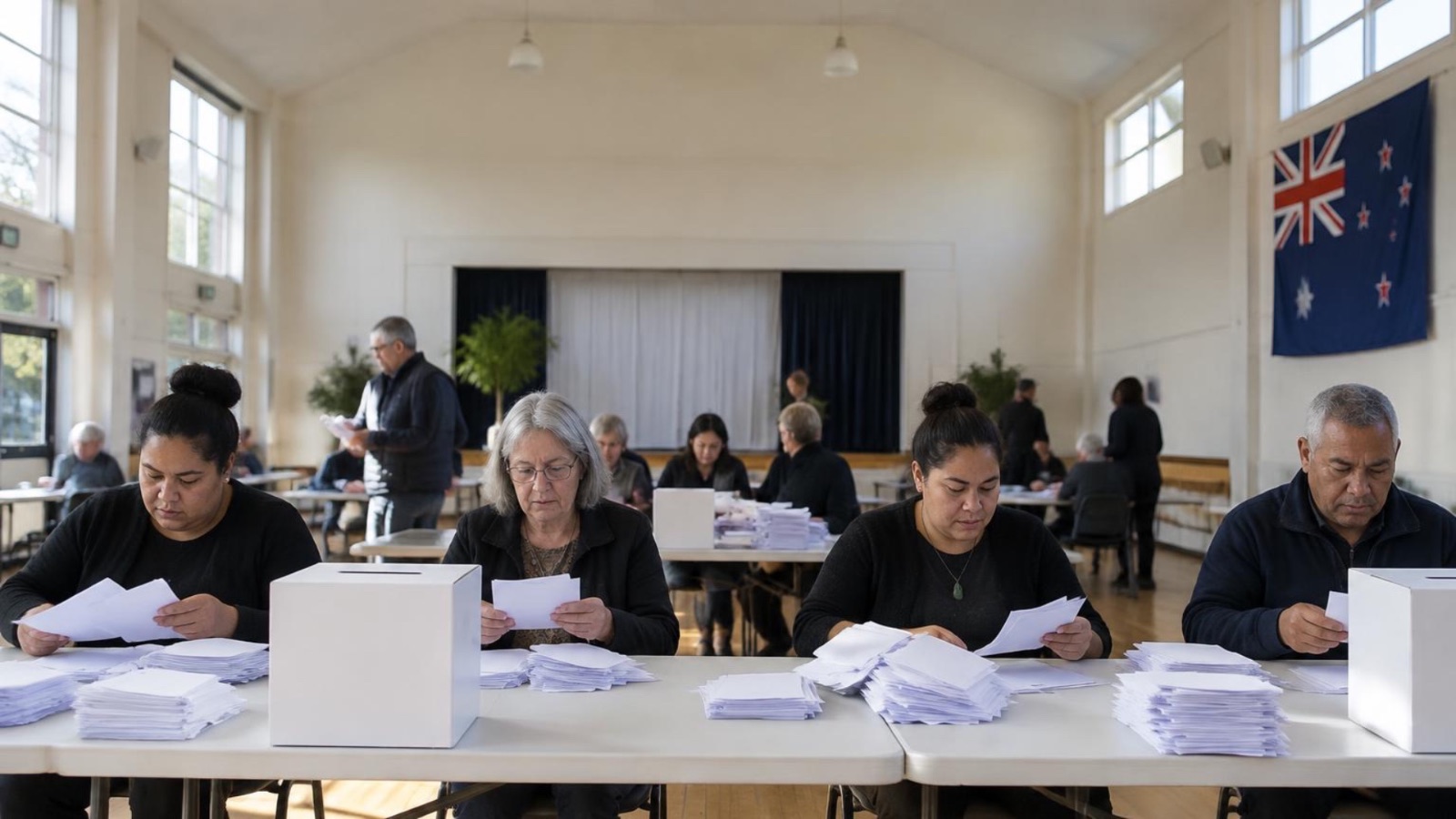
New Zealand's general election has produced a closely contested political race, with early results showing the governing centre-right National Party and the opposition Labour Party competing for support as voters weigh the country's economic challenges, living costs and political direction.
Read: Do you need a professional writer in 72 hours? Contact Auxi Chat
The results emerging on Saturday, November 7, 2026, suggest that neither of the country's two largest political parties has secured a decisive advantage. Instead, the preliminary count points towards a fragmented parliament in which smaller parties could play a crucial role in determining who governs the South Pacific nation.
READ: Russian Missile Attack on Kyiv Damages Homes Ahead of Peace Talks
The contest pits Prime Minister Christopher Luxon's National Party against Labour, led by Chris Hipkins. Both leaders entered the election facing pressure over their records, public confidence and the country's economic difficulties.
According to Reuters, early counting placed both major parties close to 30 per cent of the party vote. The Associated Press also reported that the election was shaping up to be one of the country's tightest contests in years, with neither major political bloc clearly positioned to secure a comfortable parliamentary majority.
Read: Need a professional website in 72 hours? Contact Auxi Chat
The outcome matters beyond the competition between two party leaders. New Zealand's proportional electoral system means that a party can win the largest share of the vote without being able to govern alone. The composition of the next government will therefore depend on parliamentary seats, negotiations and the willingness of smaller parties to support a coalition.
For voters, the result represents a decision about the direction of the economy, public services, housing and the policies that will shape the country's next parliamentary term.
National and Labour Remain Close as Votes Are Counted
The early New Zealand election results have revealed a contest in which relatively small changes in vote shares could affect the balance of power.
Reuters reported that an early count had National and Labour running close together, with both parties polling just below 30 per cent in one snapshot of the count. An Electoral Commission projection at that stage suggested that National's coalition partners could leave the governing bloc with only a narrow parliamentary majority.
The Associated Press reported a similarly uncertain picture, with National and Labour both struggling to establish a commanding lead and the two broader political blocs falling short of a secure majority in preliminary projections.
These figures are snapshots from different stages of an evolving count, not a final result. Vote shares and projected seats can change as additional voting places report their totals.
The closeness of the contest places pressure on both party leaders. National needs sufficient support to retain power, while Labour must secure enough seats, potentially alongside other progressive parties, to assemble an alternative government.
However, winning the largest share of votes is not the only consideration in New Zealand's electoral system. The decisive question is whether a party or coalition can command the confidence of parliament.
That distinction explains why the final political outcome may remain uncertain even after the leading parties' vote shares become clearer.
Why New Zealand's Electoral System Makes Smaller Parties Important
New Zealand uses a mixed-member proportional electoral system, which combines votes for political parties with votes for local constituency candidates.
Under this arrangement, voters cast two ballots: one for their preferred political party and another for a candidate representing their local electorate. The party vote plays a major role in determining the overall distribution of parliamentary seats.
The system is designed to make parliament more representative of the support political parties receive nationally. It also means that smaller parties can win seats and influence government formation when the leading parties lack a majority.
A party that finishes behind National and Labour may therefore become an important participant in negotiations. Its support could determine whether a governing coalition reaches the number of seats required to command a majority.
This possibility is particularly important in the 2026 election because the early results suggest that the leading political blocs are closely matched.
Rather than producing an immediate and straightforward transfer of power, the election could lead to negotiations involving several parties. Those discussions may involve policy commitments, ministerial responsibilities and agreements on how a coalition would operate.
The result is a political system in which the final government is determined not only by the election-night vote count but also by the negotiations that follow.
Opportunity Party Emerges as a Potential Kingmaker
One of the notable developments in the early count has been the performance of the Opportunity Party, a smaller political group led by Qiulae Wong.
The party was polling above the five per cent party-vote threshold in early results reported by Reuters and the Associated Press. Crossing that threshold can provide a route into parliament and make a smaller party relevant to coalition negotiations.
The Opportunity Party's performance has attracted attention because the leading political blocs appear to lack a comfortable majority in preliminary projections.
If its parliamentary representation proves decisive, the party could potentially influence which bloc forms the next government. Its position would depend on the final vote count, the number of seats allocated and the willingness of other parties to negotiate with it.
The early reporting indicated that Opportunity was open to negotiations with either major bloc, although National leader Christopher Luxon had previously ruled out governing with the party.
Such statements may shape the available coalition options, but they do not establish what the final negotiations will produce. The political arithmetic could change as further votes are counted.
Other smaller parties, including the Greens, ACT New Zealand, New Zealand First and Te Pāti Māori, are also relevant to the wider balance of power.
Their representation will help determine whether National can retain office or whether Labour and its potential partners can assemble an alternative majority.
Economic Concerns Shape the Election
Economic pressure has been one of the central issues surrounding the 2026 election.
New Zealand has faced a difficult recovery, with households dealing with living costs, housing affordability concerns and uncertainty about employment and economic growth. These pressures have contributed to public dissatisfaction with the country's political leadership.
Reuters reported that unemployment had risen to 5.7 per cent in the third quarter, its highest level in 11 years. The figure underlined the economic difficulties facing voters as they considered which party should lead the next government.
For many households, the election has been about practical concerns: the cost of groceries, rent or mortgage payments, access to healthcare and the prospects of finding secure employment.
National entered the contest seeking another term after promising to improve the country's economic performance. The party has argued that its policies are intended to strengthen the economy and address the consequences of earlier economic disruption.
Labour, meanwhile, has sought to persuade voters that a different approach would better address household pressures and public-service concerns.
Neither party has been able to translate the political contest into an overwhelming early lead. The close result suggests that voters remain divided over the government's record and the opposition's alternative.
The final outcome could influence the country's fiscal priorities, housing policies, employment strategy and approach to public services.
Housing and Healthcare Remain Major Political Issues
Beyond the economy, housing affordability and healthcare have remained important concerns for New Zealand voters.
Housing costs affect households across different income groups, particularly people trying to buy their first homes or manage rising rental expenses. The issue has also raised broader questions about construction, infrastructure, urban development and the availability of affordable accommodation.
Healthcare has similarly remained a prominent subject of political debate. Access to medical services, pressure on health facilities and the resources available to public healthcare providers can influence how voters assess the performance of a government.
Infrastructure is another concern. Maintaining roads, transport systems and public facilities requires long-term investment, while competing demands on government spending can make decisions about priorities politically contentious.
The election has therefore involved more than a choice between National and Labour. It has also been a contest over how the next government should respond to immediate household pressures while planning for the country's longer-term needs.
The close early results suggest that neither major party has won a decisive mandate based on the preliminary figures alone.
The policies that emerge from coalition negotiations may consequently reflect compromises between several parties rather than the programme of a single political group.
National and Labour Face Different Challenges
For National, the election represents a test of whether voters believe the governing party deserves another term.
Luxon came to office after the 2023 election, leading a coalition that included ACT New Zealand and New Zealand First. His government has pursued policies intended to address economic difficulties and reverse aspects of the previous administration's approach.
However, dissatisfaction over household finances, unemployment and public services has created challenges for the governing bloc.
Labour, under Hipkins, has sought to capitalise on those concerns and regain political ground after its defeat in 2023. Yet the opposition has also faced questions about its own record and whether it can offer a convincing alternative to the current government.
The fact that both parties have remained close in the preliminary count reflects a broader political environment in which neither side has secured an overwhelming advantage.
Smaller parties have benefited from this fragmentation, gaining opportunities to influence the formation of the next government.
For both major leaders, the next phase will involve more than defending their vote totals. They must also consider whether the parliamentary numbers allow them to form a workable administration.
Why the Final New Zealand Election Results May Take Weeks
Although preliminary election results can indicate the likely distribution of seats, they do not immediately settle every question about the composition of parliament.
New Zealand's Electoral Commission is expected to publish the official results on November 27, 2026. The final count will include special votes, including ballots from overseas voters and people who voted outside their electorates.
READ: Delhi Air Pollution Ahead of Diwali as AQI Hits 581
These votes can affect party totals and individual constituency races. In a close election, even relatively small changes can influence the final allocation of seats or the political balance between competing blocs.
The commission's preliminary projections should therefore be distinguished from the formally declared result.
Coalition negotiations may also take time. Political parties need to establish whether they can reach an agreement that provides sufficient parliamentary support for a government to operate.
Those discussions may involve negotiations over policy, confidence arrangements and the responsibilities of coalition partners.
Consequently, the election-night figures should not be treated as proof that a particular leader has definitively secured the premiership or that a new government has already been formed.
Until the final count and political negotiations are completed, the country's next governing arrangement remains subject to change.
What the Election Could Mean for New Zealand's Future
The close contest has important implications for New Zealand's domestic policy and political stability.
A National-led government would be expected to continue pursuing its broad economic and policy priorities, subject to the requirements of coalition partners. A Labour-led administration would likely seek a different approach to some areas of economic management and public services.
However, neither outcome can be assumed from the early figures alone. The composition of parliament and the agreements reached by political parties will determine the government's practical room for action.
The strong showing of smaller parties also highlights a wider challenge for New Zealand's political system. When voters divide their support among several parties, government formation can become more complex, requiring negotiations and compromises that extend beyond the two largest political groups.
For businesses, households and public institutions, the immediate concern will be clarity about the policies and priorities of the next administration.
Economic confidence can be influenced by uncertainty over taxation, public spending, infrastructure investment and the direction of government policy. The next government will also face pressure to respond to employment challenges, housing costs and healthcare needs.
Internationally, New Zealand's political direction matters to its trading relationships and regional engagement. The eventual government will need to balance domestic demands with the opportunities and risks facing a trade-dependent economy.
The final results will provide a clearer picture of the public's preferences, but the negotiations that follow will determine how those preferences translate into a governing programme.
New Zealand Election Results Leave Government Formation Uncertain
The 2026 general election has produced an uncertain early picture, with National and Labour competing closely and smaller parties positioned to influence the final outcome.
The preliminary results do not yet establish which political bloc will govern. Instead, they point towards a contest in which the final distribution of seats and the outcome of coalition negotiations will be decisive.
For National, the priority is to retain enough parliamentary support to continue governing. For Labour, the challenge is to assemble an alternative coalition capable of securing a majority.
The Opportunity Party and other smaller groups may become important participants if neither major bloc can govern independently or secure sufficient support from its existing partners.
The official results expected on November 27 will clarify the final vote totals, including special votes. Until then, the preliminary figures should be understood as an evolving count rather than a final declaration.
What is already clear is that economic concerns, housing affordability, healthcare and public confidence have shaped a closely fought election. The next government will inherit these challenges regardless of which political bloc ultimately secures power.
New Zealand's election has therefore become a test not only of the two leading parties but also of their ability to build a stable governing arrangement in a divided parliament.
The writer of this article does not claim to know the individuals named personally. The information about their backgrounds, as published on Global News Arena, is based on independent online research.
Are you interested in learning how to write professionally and earning money as a writer and content creator? Contact Auxi Chat today to start your writing journey immediately.
If you have an article, opinion piece, event or news story you would like published, Global News Arena would love to hear from you.
Advertise With Us.