Malaysia King Najib House Arrest Dispute Raises Constitutional Questions
READ: New Zealand Election Results Show Tight Race Between National and Labour
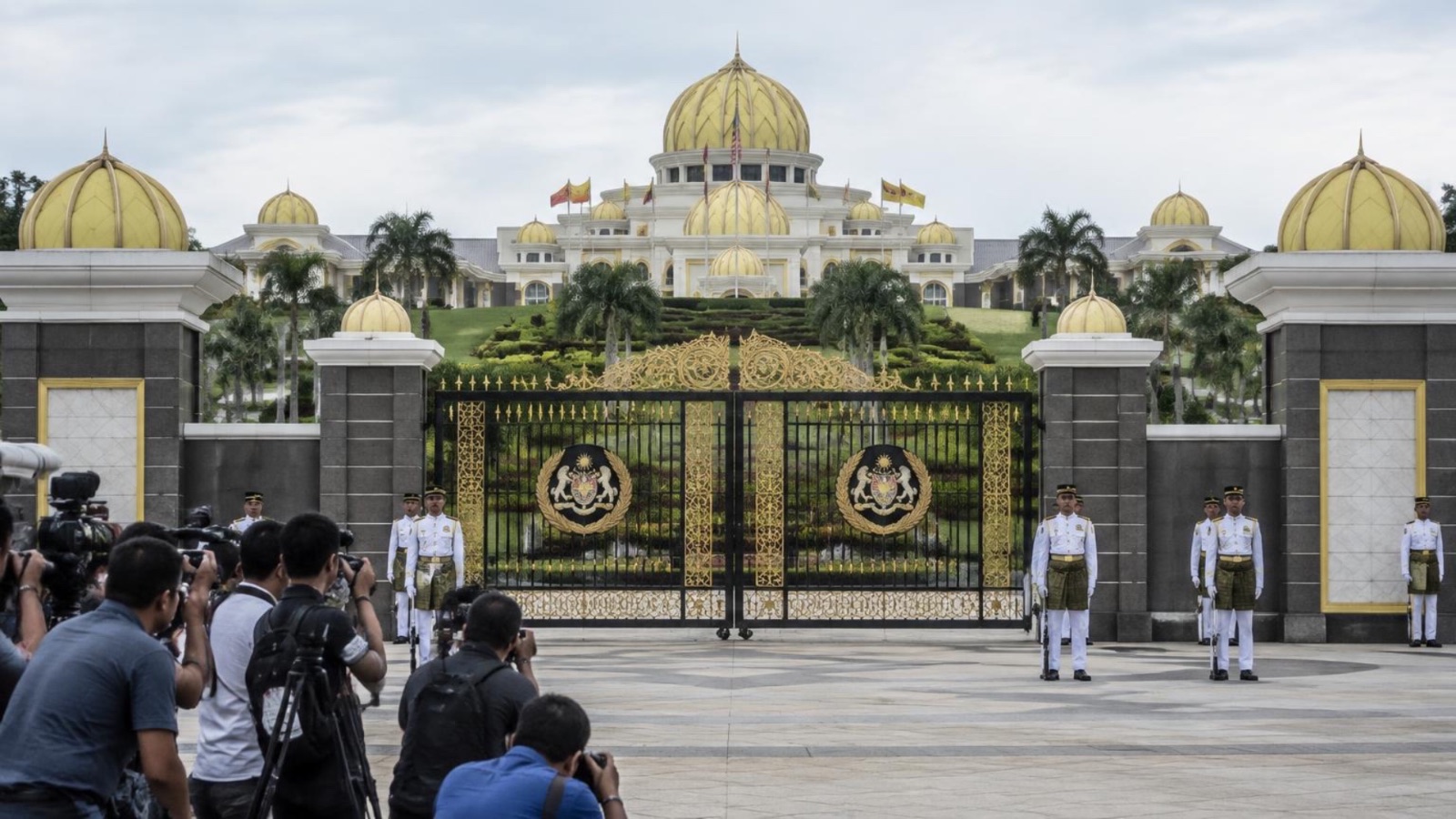
Malaysia’s political and legal establishment faces an unusual confrontation after King Sultan Ibrahim warned that challenging his order allowing former Prime Minister Najib Razak to serve the remainder of a prison sentence under house arrest could amount to defying the monarch’s decree.
Read: Do you need a professional writer in 72 hours? Contact Auxi Chat
The warning, issued on Saturday, November 7, 2026, followed an intervention by Malaysia’s Attorney-General’s Chambers, which temporarily halted Najib’s transfer from prison to his residence while seeking clarification over the legal implications of the royal pardon.
READ: Russian Missile Attack on Kyiv Damages Homes Ahead of Peace Talks
The dispute has attracted national attention because it involves three important institutions: the monarchy, the government’s principal legal office and the courts. At its centre is a question that extends beyond the fate of one former prime minister: how should a royal pardon be implemented when questions arise about its relationship with existing judicial orders and another criminal sentence?
Najib, who served as Malaysia’s prime minister from 2009 to 2018, has been imprisoned since 2022 following a corruption conviction connected to SRC International, a former subsidiary of the state investment fund 1Malaysia Development Berhad, widely known as 1MDB.
Read: Need a professional website in 72 hours? Contact Auxi Chat
In September 2026, the king granted him a conditional pardon that would allow him to serve the remainder of his reduced six-year sentence under house arrest, subject to the conditions specified in the decision.
However, the anticipated transfer was interrupted after the Attorney-General’s Chambers raised questions about the implementation of the arrangement and its implications for a separate 15-year prison sentence imposed on Najib in another 1MDB-related case.
The palace has maintained that the royal decision is clear and that its conditions have been fulfilled. The Attorney-General’s Chambers, meanwhile, has insisted that it is seeking legal clarification rather than attempting to overturn the king’s decision.
The disagreement has created an unusual public dispute over the implementation of a royal pardon in a country where the monarchy holds significant constitutional responsibilities but elected officials and courts also exercise distinct powers.
Malaysia King Najib House Arrest Order Must Be Respected, Palace Says
In a statement issued on Saturday, Sultan Ibrahim described the conditional pardon as clear, explicit and without ambiguity.
The king said there should be no confusion over how the decision should be interpreted or prolonged uncertainty about its implementation. He also emphasised that the constitutional power to grant pardons must be respected.
According to reporting by Reuters and Channel NewsAsia, the palace maintained that the conditions attached to Najib’s conditional pardon had been fulfilled and warned that arguments disputing the order could amount to defying the monarch’s command.
The statement followed Friday’s intervention by the Attorney-General’s Chambers, which had called for Najib’s transfer to house arrest to be temporarily suspended pending further legal clarification.
The palace’s position places emphasis on the authority of the royal pardon and the need for the relevant institutions to implement it according to its stated terms.
The warning has also intensified public scrutiny of the relationship between Malaysia’s constitutional monarchy and its legal institutions. Although the king’s role is largely ceremonial in many aspects of government, the constitution provides the monarch with specific powers, including the prerogative of pardon.
The current disagreement concerns how that prerogative should operate alongside court orders and the legal consequences of Najib’s separate convictions.
The palace statement did not, by itself, resolve the outstanding legal questions or automatically establish that Najib’s transfer would take place immediately. The Attorney-General’s Chambers continued to maintain that clarification from the courts was necessary.
The next steps will therefore depend on how the relevant legal issues are addressed and whether the authorities can establish a clear path for implementing the pardon.
Why Najib Razak’s Transfer From Prison Was Delayed
Najib’s transfer to house arrest had appeared imminent on Friday after his political party paid a fine of 50 million Malaysian ringgit, equivalent to approximately US$12.3 million at the reported exchange rate.
The payment was a condition associated with the royal pardon that would allow him to serve the remainder of his reduced sentence at home.
A court subsequently issued an order permitting the transfer, and Najib briefly left prison for a scheduled dental appointment. However, the Attorney-General’s Chambers intervened later that day, requesting a temporary suspension while legal questions were examined.
According to the Associated Press, Najib was brought back to prison hours after leaving, leaving supporters and journalists gathered outside his Kuala Lumpur residence awaiting his arrival.
The Attorney-General’s Chambers said further clarification was required concerning the legal effect of the pardon and the court order authorising his release into house arrest.
One central question concerns the point at which Najib’s first sentence should be considered completed and how that determination affects the commencement of his separate 15-year sentence.
The distinction matters because the sentences arise from different criminal proceedings. The house-arrest arrangement relates to his reduced six-year sentence in the SRC International case, not the separate sentence imposed in the second 1MDB-related case.
The Attorney-General’s Chambers has argued that the relationship between the two sentences requires a definitive legal interpretation before the transfer can proceed.
Najib’s lawyers, however, have challenged the intervention, arguing that the conditions for house arrest had been met and that the authorities should implement the royal pardon and the relevant court order.
The disagreement has consequently moved beyond a straightforward administrative transfer. It has become a legal dispute over the interpretation and implementation of the pardon and its interaction with existing court decisions.
The 1MDB Scandal Behind Najib’s Imprisonment
Najib’s imprisonment is rooted in the wider 1MDB scandal, one of the most consequential financial corruption cases in Malaysia’s modern history.
The state investment fund was established during Najib’s time in office and was intended to support economic development. However, investigations across several jurisdictions uncovered a complex financial scandal involving billions of dollars allegedly misappropriated from the fund and moved through international financial networks.
Najib was convicted in a case involving 42 million ringgit transferred from SRC International into accounts associated with him. He has consistently denied wrongdoing.
In 2020, he was sentenced to 12 years in prison and fined 210 million ringgit. Malaysia’s Pardons Board reduced his prison term to six years and lowered the fine to 50 million ringgit in January 2024.
The subsequent conditional pardon permitting house arrest marked another major development in the case, but it did not erase the underlying conviction.
Najib also received a separate 15-year prison sentence in December 2025 following another conviction related to corruption and money laundering connected to 1MDB. He is appealing that sentence.
This second case is central to the latest disagreement because the authorities need to determine how the completion of the first sentence affects the beginning of the second.
The legal dispute is therefore not simply about whether Najib should remain in prison or move home. It also concerns the relationship between separate sentences, the terms of a conditional pardon and the implementation of judicial decisions.
The outcome could have significant implications for Najib’s remaining period of detention and for how the authorities handle the competing legal considerations.
Attorney-General’s Chambers Says It Is Seeking Legal Clarity
Following the palace’s warning, the Attorney-General’s Chambers maintained that its intervention was intended to resolve legal uncertainty rather than challenge royal authority.
The office said the matter should be referred to the courts for a clear determination and directions.
Its concern centres on how the order permitting Najib to leave prison should be interpreted alongside the separate sentence imposed in the second 1MDB-related case.
The legal office has argued that determining whether Najib’s first sentence has been completed, or whether a period remains to be served, is important because it affects when the second sentence begins.
The Attorney-General’s Chambers has also rejected accusations that it is attempting to defy the king or undermine the royal pardon.
Its position is that judicial clarification would help ensure that the pardon and the existing court orders are implemented consistently with the law.
Najib’s legal team has taken a different position. His lawyers have argued that the conditions attached to the pardon were satisfied after the payment of the fine and that there was no lawful basis for keeping him in prison in disregard of the royal decision and court order.
This disagreement leaves the courts with an important role in clarifying the legal questions surrounding the arrangement.
The distinction between disputing a pardon and seeking guidance on its implementation is central to the controversy. The Attorney-General’s Chambers says it is pursuing the latter, while the palace has stressed that the terms of the royal decision should not be subjected to prolonged uncertainty.
How the issue is resolved will depend on the applicable constitutional and legal provisions and the interpretation of the relevant orders.
What the Dispute Means for Malaysia’s Constitutional Monarchy
Malaysia operates a constitutional monarchy in which the king serves as head of state while an elected government manages the country’s day-to-day administration.
The position of king, known as the Yang di-Pertuan Agong, rotates among the rulers of Malaysia’s nine royal states. Although the monarch’s role is largely ceremonial in many areas, the constitution grants specific powers, including the authority to grant pardons in applicable circumstances.
The latest dispute has placed that constitutional authority under public scrutiny.
The palace’s warning emphasises that a royal pardon must be respected and implemented according to its terms. The Attorney-General’s Chambers, on the other hand, argues that the legal implications of the pardon and the relevant court orders need to be clarified.
These positions raise questions about how constitutional powers operate when a royal decision intersects with criminal sentencing and judicial procedures.
The issue is particularly sensitive because the dispute involves a former prime minister whose criminal convictions remain politically significant.
Malaysia’s institutions must navigate the matter in a way that respects the applicable constitutional provisions while ensuring that legal questions are resolved through established procedures.
The disagreement does not automatically establish that one institution has unlawfully overridden another. That conclusion would require a proper assessment of the relevant legal provisions and any subsequent judicial findings.
Nevertheless, the public exchange between the palace and the government’s principal legal office is unusual and has intensified attention on the boundaries between royal prerogative, executive action and judicial interpretation.
Najib House Arrest Dispute Carries Political Implications
READ: Delhi Air Pollution Ahead of Diwali as AQI Hits 581
The controversy also has political consequences because Najib remains a prominent figure in Malaysian politics despite his imprisonment.
He was prime minister from 2009 to 2018 and was a leading figure in the United Malays National Organisation, or UMNO, a party with a long history in Malaysian government.
The 1MDB scandal contributed to public anger that helped bring about the historic defeat of the governing coalition in the 2018 general election.
Although Najib’s conviction damaged his political standing, he has continued to attract attention from supporters and remains an important figure in discussions about accountability, political power and the legacy of the scandal.
The house-arrest dispute has therefore reopened questions about how Malaysia handles high-profile corruption cases and the relationship between political influence and the administration of justice.
For supporters of Najib, the royal pardon represents a decision that should be implemented once its conditions have been satisfied. Critics may view the controversy through the broader question of whether prominent political figures are subject to the same legal processes as other citizens.
Those competing perspectives make the case politically sensitive, particularly because the latest dispute involves the monarchy as well as the government and the courts.
However, the legal outcome should ultimately depend on the applicable law and the authoritative interpretation of the relevant decisions, rather than public pressure alone.
What Happens Next in the Najib House Arrest Case?
The immediate priority is to resolve the outstanding legal questions surrounding Najib’s conditional pardon and the order authorising his transfer from prison.
The Attorney-General’s Chambers has called for judicial clarification, while the palace has insisted that the pardon is clear and should be respected.
Najib’s legal team has maintained that the conditions have been fulfilled and that he should be transferred to house arrest in accordance with the royal decision and the court order.
The court’s interpretation of the relevant documents and the relationship between the two sentences will be important in determining the next steps.
Until those questions are resolved, the dispute could continue to generate public and political debate.
The case also highlights the importance of clearly defined procedures when royal pardons intersect with multiple criminal sentences. A definitive legal interpretation could help clarify the obligations of the relevant authorities and reduce uncertainty about how similar situations should be handled.
For Malaysia, the challenge is to resolve the disagreement without undermining public confidence in the monarchy, the legal system or the administration of justice.
Malaysia Faces a Test of Legal Clarity and Institutional Trust
The warning from Sultan Ibrahim has turned Najib’s delayed transfer to house arrest into a wider debate about constitutional authority, legal procedure and the relationship between Malaysia’s institutions.
The palace insists that the conditional pardon is unambiguous and that its terms must be respected. The Attorney-General’s Chambers maintains that judicial clarification is necessary to determine how the arrangement interacts with Najib’s separate prison sentence.
Both positions are now part of a dispute that requires a clear legal resolution.
The outcome will determine more than the immediate circumstances of Najib’s detention. It will also shape public understanding of how royal pardons are implemented when questions arise about criminal sentences and court orders.
For a country still dealing with the political legacy of the 1MDB scandal, the case carries considerable significance.
The central issue is whether the legal questions can be resolved through established constitutional and judicial procedures while maintaining confidence in the institutions responsible for administering justice.
As the dispute continues, Malaysia’s next steps will be closely watched by political observers, legal experts and members of the public seeking clarity on the balance between royal authority and the rule of law.
The writer of this article does not claim to know the individuals named personally. The information about their backgrounds, as published on Global News Arena, is based on independent online research.
Are you interested in learning how to write professionally and earning money as a writer and content creator? Contact Auxi Chat today to start your writing journey immediately.
If you have an article, opinion piece, event or news story you would like published, Global News Arena would love to hear from you.