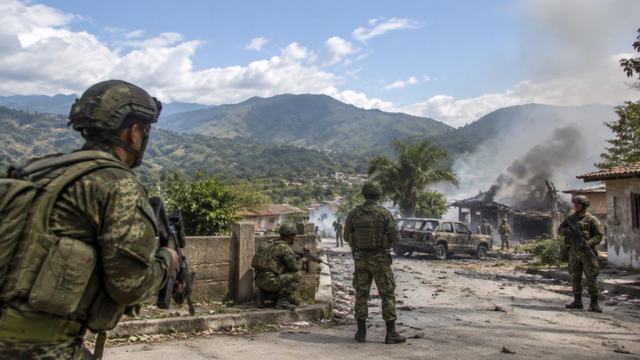
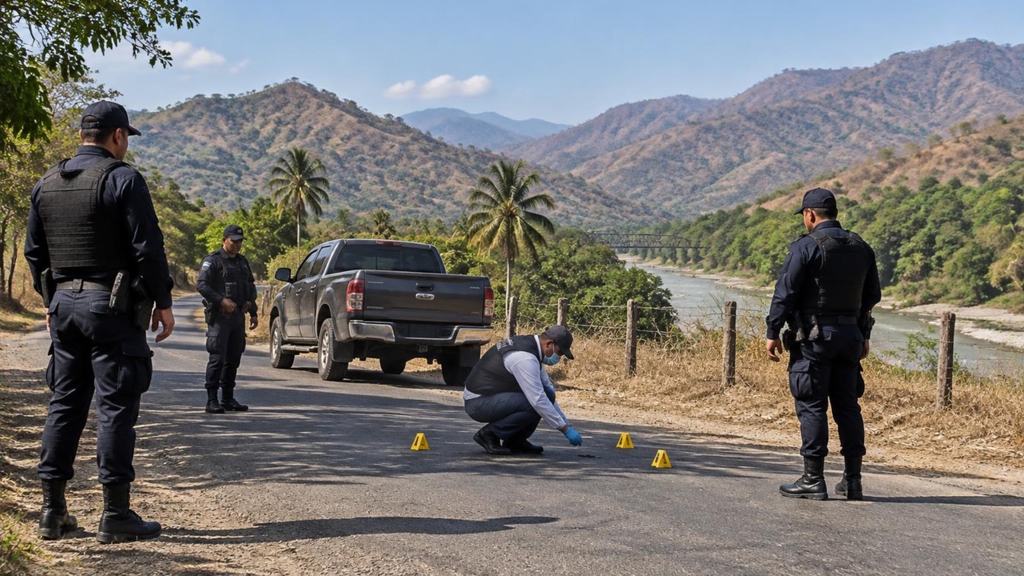
The Guatemala armed attack that killed congressman Julio César Portillo Paz and three National Civil Police officers has raised fresh concerns about security and political violence in the Central American country.A Deadly Attack Raises New Questions About Security in Guatemala
READ: Kraków Shooting Kills Six and Injures 15 as Police Investigate
When I look at the latest violence in Guatemala, I see a tragedy that reaches far beyond the loss of four lives. The killing of a sitting lawmaker and three police officers raises serious questions about public safety, political security and the ability of authorities to protect people in a country still struggling with organised crime.
Read: Do you need a professional writer in 72 hours? Contact Auxi Chat
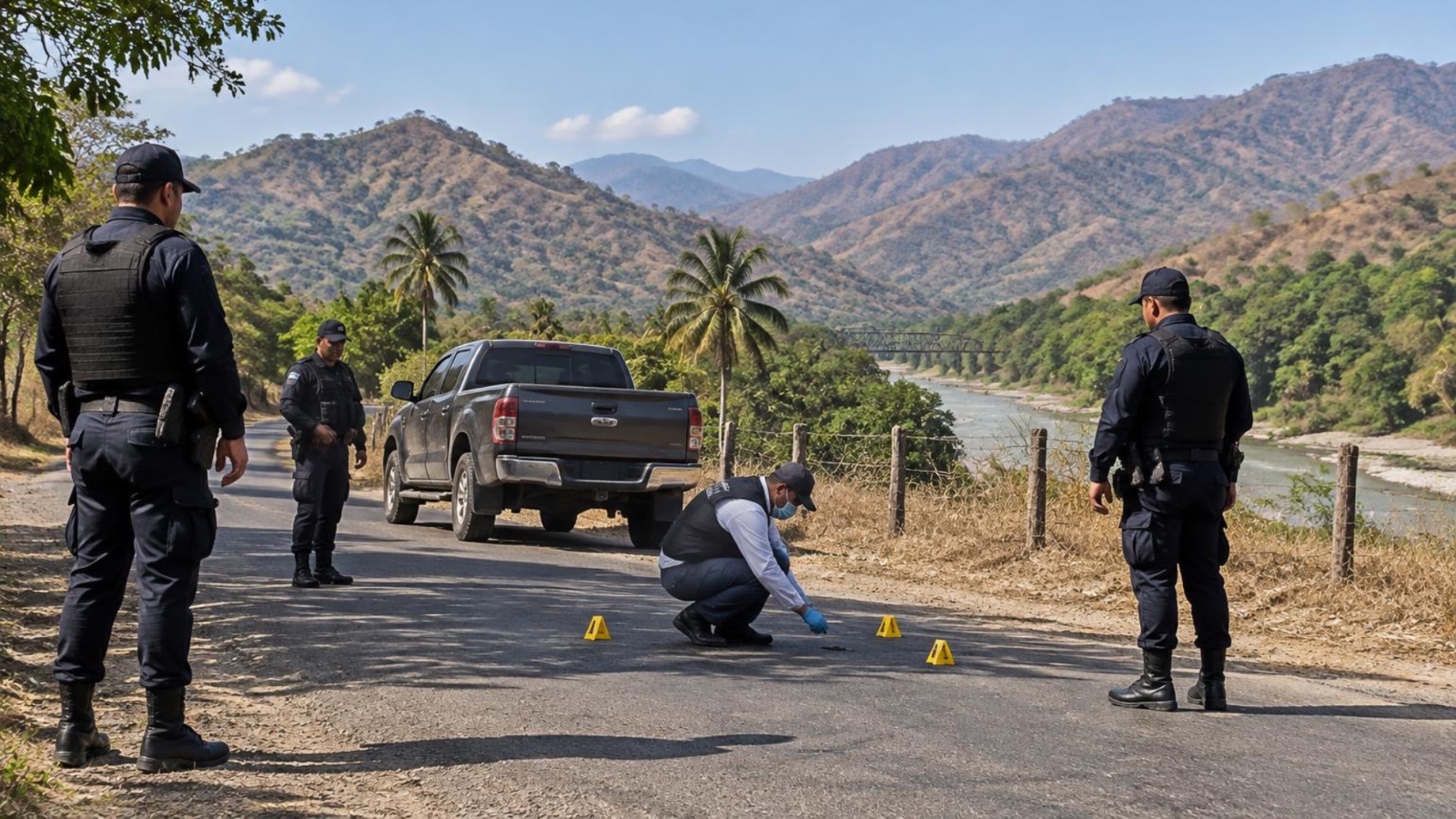
The attack happened on Friday, November 6, 2026, in Río Hondo, a town in the eastern department of Zacapa. Congressman Julio César Portillo Paz was seriously injured and taken to hospital, where his death was later confirmed by his political party, the National Unity of Hope, known by its Spanish initials, UNE. Three officers of Guatemala's National Civil Police also died in the attack.
READ: Yemen Airstrikes Near Sanaa Leave Dozens Dead
As the news spread on Saturday, November 7, the killings drew attention to the dangers faced by public officials and the officers assigned to protect them. President Bernardo Arévalo condemned the violence and ordered security forces to cooperate with prosecutors investigating the deaths.
The most important question remains unanswered: who carried out the attack, and why?
Read: Need a professional website in 72 hours? Contact Auxi Chat
Authorities have not announced a confirmed motive or identified the people responsible. Although the attack occurred in a region associated with drug-trafficking activity, officials have not established that a criminal organisation was behind the killings. That distinction matters. A serious investigation must follow evidence rather than allow suspicion to become a conclusion.
For the families of the four men who died, however, the consequences are already clear. Their loved ones are gone, and the country is waiting for answers.
What Happened in the Guatemala Armed Attack?
The Guatemala armed attack took place in Río Hondo, in the department of Zacapa, on Friday, November 6.
According to Reuters, Portillo Paz was attacked and suffered serious injuries. He was taken to hospital, but his death was later confirmed by UNE, the political party to which he belonged. President Arévalo separately confirmed that three National Civil Police officers had been killed while performing their duties.
The deaths turned what was initially reported as an attack on a congressman into a tragedy involving four people, including members of the country's police force.
The officers were part of the security response surrounding the lawmaker. Their deaths highlight the dangers that can arise when armed attackers target people protected by law enforcement.
The precise sequence of events, including the identities of the attackers and how the violence unfolded, must be established by investigators. Authorities have not publicly confirmed a motive or named those responsible.
In breaking news, early information can be incomplete. Reports may change as hospitals, police agencies, government officials and political parties confirm details. Portillo Paz's death was confirmed after he had initially been taken to hospital with serious injuries.
That is why the distinction between early reports and confirmed information is important. The public deserves a clear account of the tragedy, but the facts must be established carefully.
Who Was Julio César Portillo Paz?
Julio César Portillo Paz was a member of Guatemala's Congress representing the department of Zacapa.
He entered Congress after winning a seat in the 2023 election under the Cabal party. He later moved to the National Unity of Hope party, known as UNE, which is led by former first lady Sandra Torres. His death was confirmed by the party and acknowledged in a statement from Guatemala's Congress.
A lawmaker's death affects more than the person's immediate family. It also affects colleagues, constituents and the institutions responsible for representing the public.
People elect lawmakers to debate laws, raise local concerns and take part in decisions that shape the country's future. When a serving representative is killed in an armed attack, questions naturally arise about the safety of public officials and whether political work can be carried out without fear.
However, the fact that Portillo Paz was a politician does not, by itself, prove that the attack was politically motivated. Investigators must establish whether the attackers targeted him because of his public position, personal circumstances, political activities or another reason.
That question is especially important in a country where concerns about organised crime and political violence have repeatedly drawn public attention.
Until investigators provide evidence, it would be irresponsible to present any particular explanation as the confirmed reason for his death.
For his family and colleagues, the immediate reality is one of loss. For his constituents, it is also a moment of uncertainty as they consider what his death means for their political representation.
Three Police Officers Also Lost Their Lives
The killing of three National Civil Police officers adds another serious dimension to the Guatemala armed attack.
President Arévalo said the officers died in the line of duty and directed security forces to cooperate with prosecutors investigating the killings.
Police officers accept responsibilities that can expose them to danger, particularly when they are protecting public officials or responding to armed violence. Yet their deaths are not simply statistics in a crime report. Each officer was a person with family members, friends and a life outside the uniform.
Their deaths also create practical questions for the country's security services. Investigators will need to establish exactly what happened, what the officers encountered and what evidence can help identify those responsible.
It is too early to determine whether any security failures contributed to the attack. That assessment must depend on the facts established by the investigation.
If evidence reveals weaknesses in protective arrangements, authorities will need to examine what can be improved. If the attack involved circumstances that could not reasonably have been anticipated, officials should explain that conclusion as well.
The purpose of such an inquiry should be to establish accountability and prevent similar tragedies where possible, not to assign blame before the evidence is available.
For the families of the officers, recognition of their service must be accompanied by practical support, accurate information and a serious effort to establish what happened.
President Bernardo Arévalo Condemns the Killings
President Bernardo Arévalo condemned the attack and called on security forces to assist prosecutors in identifying those responsible.
In a statement reported by Reuters, Arévalo stressed that criminal violence would not be allowed to overcome the lives and safety of Guatemalans. He also said the three police officers had died while carrying out their duties.
The president's response reflects the government's responsibility to protect citizens and support the investigation.
After an attack involving a public official and police officers, a government must do more than express sadness. It must ensure that investigators have the support they need, that evidence is protected and that the public receives reliable updates.
There is also a responsibility to avoid making promises that cannot yet be fulfilled. The public wants to know who carried out the killings, whether the attackers acted on behalf of others and what motivated them. But answers to those questions must come from the investigation.
The government will face pressure to demonstrate that the attack will not go unanswered. That pressure is understandable, especially when the victims include a serving congressman and members of the police force.
Still, a successful investigation is not measured by how quickly officials announce a suspect. It is measured by the quality of the evidence, the identification of those responsible and the ability of the justice system to act lawfully.
The victims' families and the wider public deserve an investigation that is both thorough and credible.
Why Zacapa Matters in Guatemala's Security Debate
Zacapa is an eastern department of Guatemala that has been associated in reporting by international news organisations with drug-trafficking activity.
The location has therefore attracted attention following the attack. However, the presence of criminal activity in a region does not establish who committed a particular crime or why. Authorities have not announced a confirmed connection between a drug-trafficking organisation and the killings of Portillo Paz and the three police officers.
This is an important distinction because major violent incidents often trigger immediate speculation about organised crime.
When an attack happens in an area known for criminal activity, people may assume that the violence must be connected to a particular group. But assumptions can misdirect public attention, damage innocent people and make it harder to understand what really happened.
Investigators must examine the available evidence, including witness accounts, forensic findings, the circumstances of the attack and any information that could establish a motive.
If evidence eventually points to a criminal organisation, authorities will need to explain the basis for that conclusion. If it points somewhere else, the public should receive that information as well.
The investigation must remain focused on the people who carried out the attack and anyone else who may have been involved.
Guatemala's wider security challenges make the case important, but they should not be used to fill gaps in the evidence.
Could Organised Crime Be Connected to the Attack?
The possibility of a connection to organised crime is likely to remain a subject of public interest because of Zacapa's reported links to drug trafficking.
International reporting has described the Lorenzana family cartel as operating in the region and having links to Mexico's Sinaloa cartel. However, neither the presence of organised crime in Zacapa nor those reported connections prove that either group was involved in this particular attack.
Authorities have not disclosed a confirmed motive or identified the attackers. It would therefore be premature to describe the killings as a cartel operation or to claim that a criminal organisation ordered them.
There are several questions investigators may need to answer. Was the lawmaker specifically targeted? Was the attack connected to a personal, political or criminal dispute? Did the attackers intend to harm the officers as well? Is there evidence that other people planned or supported the violence?
These are questions for investigators, not conclusions that can be drawn from the location alone.
The distinction matters because inaccurate claims about organised crime can spread quickly, particularly when people are frightened or angry. Once a theory is repeated widely, it can be mistaken for a proven fact.
Responsible reporting should explain the wider security context without presenting an unconfirmed link as established truth.
For now, the safest and most accurate conclusion is that four people were killed in an armed attack and the motive remains unknown.
A Recent Political Killing Has Raised Further Concerns
The deaths in Zacapa have occurred against a wider backdrop of concern about violence in Guatemala.
Reuters reported that former anti-corruption prosecutor Juan Francisco Solórzano Foppa was shot dead in Guatemala City about three weeks before the attack on Portillo Paz. That earlier killing raised concerns about organised crime's influence and the possible return of politically motivated assassinations. However, authorities have not established a connection between the two cases.
The timing has increased the importance of the investigation into the lawmaker's death. When serious attacks occur within a short period, people naturally ask whether they form part of a wider pattern.
But timing alone cannot establish a link.
Two killings may share similarities without having the same motive or perpetrators. Investigators must look for evidence that connects the people involved, the planning, the weapons, the communications or other relevant circumstances.
It is important to preserve that distinction. Treating separate cases as part of one organised campaign without evidence could lead the public toward a false understanding of events.
At the same time, authorities should take legitimate public concerns seriously. If there are indications of a broader threat to public officials, witnesses or law enforcement officers, those concerns deserve careful assessment.
The challenge is to investigate possible patterns without assuming that a connection already exists.
Guatemalans need answers about both the individual killings and the wider security environment, but those answers must be built on evidence.
What the Attack Means for Political Security in Guatemala
The death of a sitting congressman raises questions about the security available to elected officials in Guatemala.
Public representatives may face threats because of their political decisions, public statements, personal disputes or the interests affected by their work. However, no specific explanation has been confirmed in Portillo Paz's case.
The investigation will need to establish whether the attack was directed at him personally and, if so, why.
There is a wider public interest in those answers. A political system depends on representatives being able to carry out their responsibilities without violence determining who can participate in public life.
When an elected official is killed, constituents can also be left wondering whether their concerns will continue to receive attention and how the political institution will respond.
Security arrangements must balance the protection of public officials with the need for them to remain accessible to the people they represent. Excessive restrictions can distance representatives from communities, while inadequate protection may leave them exposed to preventable dangers.
The appropriate response depends on the risks identified in each case. Authorities should examine whether the attack revealed weaknesses in protective arrangements and whether any changes are necessary.
At the same time, the government must ensure that security measures do not become a substitute for investigating the crime itself.
Protecting public officials is important, but so is ensuring that the people responsible for violence are identified and brought before the justice system.
The Importance of an Independent and Thorough Investigation
The next stage of the Guatemala armed attack investigation will be crucial.
Prosecutors and investigators must establish the sequence of events, examine the available evidence and work to identify the attackers. They will also need to determine whether anyone else planned, financed or assisted the attack, if the evidence supports such a possibility.
READ: US Military Cargo Ship Incident Disables Cargo Ship in Gulf of Oman
Authorities have said they are working to identify those responsible, but no confirmed motive or publicly identified perpetrators had been announced in the reports available on November 7, 2026.
A thorough investigation takes time. Evidence must be collected and assessed carefully, witnesses must be interviewed and competing explanations must be tested.
The public may want immediate answers, but a rushed conclusion can damage a case. If investigators make claims that are not supported by evidence, those claims may later have to be withdrawn, potentially weakening public trust.
Transparency is also important. Authorities should provide meaningful updates when they can do so without compromising the investigation or putting people at risk.
If suspects are identified, their alleged roles must be established through evidence and the proper legal process. Being accused of a crime is not the same as being convicted.
The goal should be to establish the truth, secure justice for the victims and help prevent further violence.
For the families of Portillo Paz and the officers, the investigation is more than a legal procedure. It is an essential part of understanding how their loved ones died and whether those responsible will face justice.
What Happens Next?
Several questions remain unanswered following the attack in Río Hondo.
First, investigators must identify the people who carried out the violence. Second, they must establish the motive and determine whether the attackers acted alone or received assistance from others. Third, they must establish whether the attack was connected to any wider criminal or political activity.
These are open questions, not confirmed findings.
The government has called for cooperation with prosecutors, and security agencies are expected to support the investigation. The findings may also influence discussions about the protection of public officials and the safety of police officers operating in areas affected by organised crime.
The public should look for updates from Guatemala's authorities and established news organisations rather than relying on anonymous posts or unverified claims on social media.
New information may emerge as investigators gather evidence. Any significant developments should be assessed carefully, especially claims about suspects, political motives or criminal organisations.
For now, the confirmed central facts remain that congressman Julio César Portillo Paz and three National Civil Police officers died following the armed attack in Zacapa.
The country is waiting to learn who was responsible and why.
My Reflection: When Violence Takes Public Servants, Everyone Is Affected
When I reflect on the deaths in Guatemala, I keep returning to the four lives lost and the families who must now face an absence they did not expect.
A congressman represents people who may never meet him personally but depend on the political system to make their voices heard. Police officers serve communities in ways that often go unnoticed until a crisis brings their work into focus.
When these public servants are killed in one attack, the tragedy reaches beyond their immediate circles. It raises questions about the safety of public life and the ability of institutions to protect the people who serve within them.
I also believe that moments like this demand careful language. It is easy to describe an attack as political, criminal or part of a wider conspiracy before the evidence is available. Such explanations may attract attention, but attention is not the same as truth.
The people who died deserve better than speculation. Their families deserve accurate information, and the public deserves an investigation that follows the facts wherever they lead.
The government must support the search for answers. Investigators must work carefully and independently. News organisations must distinguish confirmed information from claims that remain unproven.
There is also a longer-term question about how communities can become safer. Arresting those responsible, if and when they are identified, is essential. But authorities must also examine whether there are wider threats that require a response and whether public officials and police officers have the protection they need.
No single statement can resolve the country's security challenges. Yet a credible investigation can establish accountability and provide a foundation for further action.
For me, the central issue is not simply how shocking the attack was. It is whether the people responsible will be identified through a fair process and whether the lessons of the tragedy will help protect others.
Conclusion: Guatemala Seeks Answers After Four People Are Killed
The armed attack in Río Hondo, Zacapa, on November 6, 2026, killed Guatemalan congressman Julio César Portillo Paz and three National Civil Police officers. Portillo Paz was taken to hospital with serious injuries before his death was confirmed. President Bernardo Arévalo condemned the violence and ordered security forces to cooperate with prosecutors.
The motive remains unknown, and authorities have not publicly identified those responsible in the reporting available as of November 7. Although the attack has raised questions about organised crime and political security, no confirmed link to a particular criminal group or to another recent killing has been established.
Guatemala now faces the difficult task of securing answers while supporting the families of the dead and protecting the public. The investigation must establish what happened, who was responsible and whether any wider network was involved.
For the families, no investigation can undo the loss. But a careful and credible process can help establish accountability and prevent speculation from taking the place of truth.
What do you believe governments should do to better protect elected officials and police officers while ensuring that attacks like this are thoroughly investigated? Share your thoughts respectfully.
The writer of this article does not claim to know the individuals named personally. The information about their backgrounds, as published on Global News Arena, is based on independent online research.
Are you interested in learning how to write professionally and earning money as a writer and content creator? Contact Auxi Chat today to start your writing journey immediately.
If you have an article, opinion piece, event or news story you would like published, Global News Arena would love to hear from you.