Peter Obi has a curious problem?
He is probably one of the most accessible major politicians in Nigeria today.
And increasingly, I am beginning to wonder if that accessibility is becoming a liability.
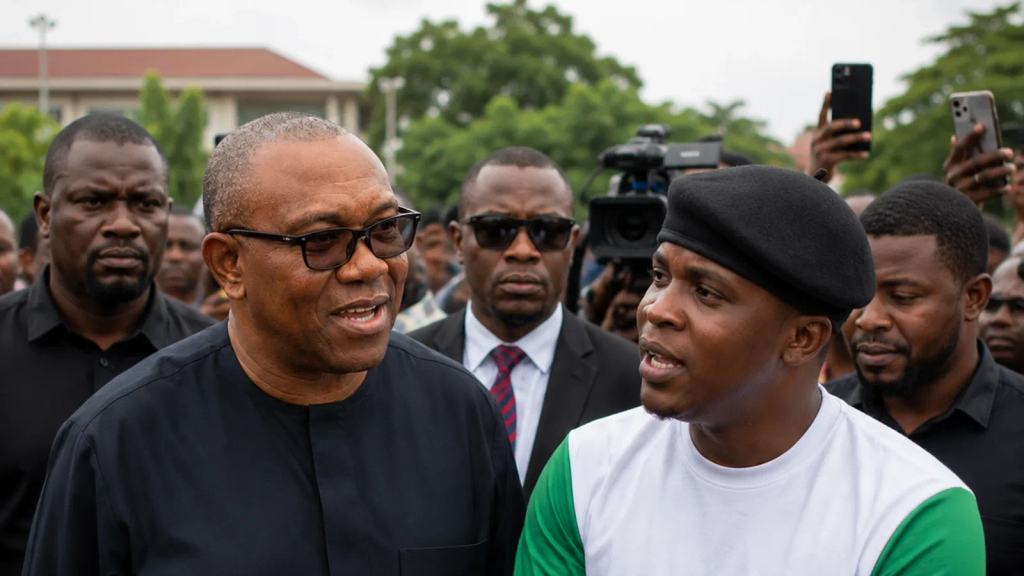
The latest example is the little drama involving activist Randy Peters. What started as a moment around Peter Obi quickly became another internet spectacle, with social media users debating whether Obi had distanced himself from Peters after a video circulated online.
I watched that video, and honestly, I was embarrassed to say the least. I cringed throughout, especially watching Randy Peters’ extremely playful behaviour around Peter Obi. This is a presidential candidate, for crying out loud. Composure seemed to have been thrown completely out of the window, and the whole display turned me off from every angle. There is a time and place for being playful, but in that setting, I expected a lot more restraint, decorum, and seriousness.
The internet was appalled, and people went on to say that Peter Obi had disowned Randy Peters.
The story, as it turned out, was not quite what the internet made it.
Obi reportedly clarified that he had not disowned Peters. His explanation was that he had simply told him to hurry up and get into the car.
Yet by then, the internet had already done what it does best: created a full political soap opera out of a few seconds of video.
And this is where my problem with Peter Obi begins.
Not with Randy Peters.
With Peter Obi.
Because why is everything around this man becoming content?
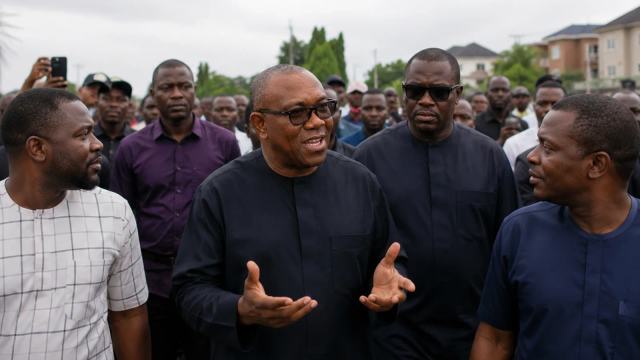
Peter Obi appears at an event, someone records it. He meets supporters, someone records it. He walks somewhere, someone records it. He says something casually, somebody puts it online. He is photographed with somebody, and suddenly Nigerians are analysing the relationship.
At this point, Peter Obi is almost too available.
And perhaps that is not entirely his fault. He has an unusually enthusiastic online following, and there are people around him who document practically everything. But politics is not only about being close to the people. It is also about knowing when to create some distance.
There is a difference between humility and overexposure.
That difference is becoming increasingly important for Obi.
The Randy Peters episode is particularly interesting because Peters himself has become a familiar figure around Obi's political ecosystem.
So there is clearly a public association there.
But social media has a funny way of turning association into ownership.
Suddenly, if Randy Peters does something people dislike, Peter Obi is dragged into it.
If Peters says something controversial, Obi's name appears.
If Peters behaves in a way people find amusing, offensive or simply too loud, the question becomes: Why is Peter Obi allowing this?
That is the danger of being too accessible.
You begin to inherit everybody's baggage.
And Peter Obi should be careful about that.
A presidential candidate is not just another popular politician. Every person standing beside him becomes part of the picture. Every informal interaction can become political material. Every viral video can become ammunition for opponents.
This is especially true in Nigeria, where politics has become deeply personalised.
People don't just scrutinise what politicians say. They scrutinise who they sit with, who they eat with, who they travel with, who they hug and who appears in their videos.
That means Obi cannot afford to behave as though every relationship is simply private.
The irony is that his accessibility is also one of the things people like about him.
Peter Obi does not generally present himself as a distant, untouchable politician. He is comfortable among ordinary Nigerians. He speaks to people directly. He takes photographs. He appears at public gatherings. He has built much of his political identity around being different from the traditional Nigerian political elite.
That is valuable.
But there comes a point where the politician needs to become bigger than the crowd around him.
There needs to be some mystery.
Some discipline.
Some sense that not every moment deserves a camera.
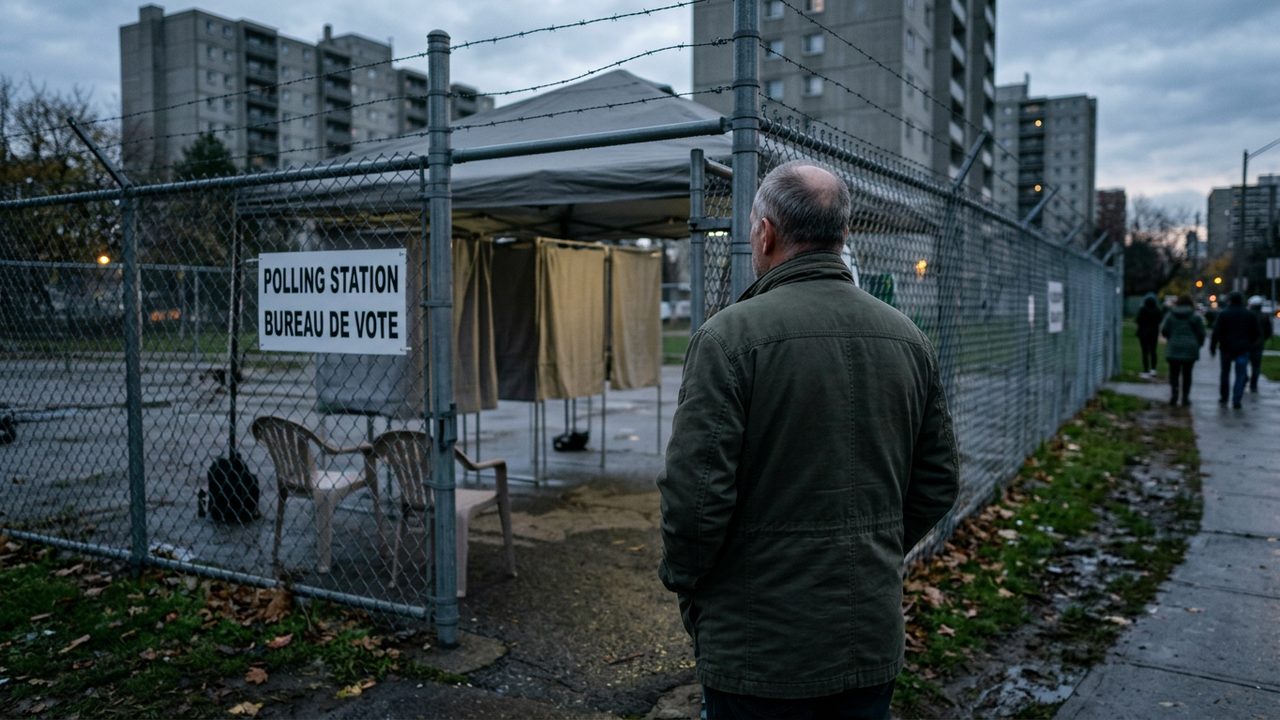
Look at what happened with Randy Peters. The substantive political conversation should have been about elections, electoral reform and whether Nigerians will be able to trust the process in 2027.
Instead, we were discussing who Peter Obi allegedly rejected, who he allegedly embraced and whether Randy Peters had become too close to him.
That is a terrible trade.
A politician should not allow the internet to determine what Nigerians are talking about every time his name trends.
And Peter Obi, of all people, should understand the importance of controlling the message.
His greatest political asset has always been his ability to make people believe that there is something serious beneath the noise.
He talks about figures. He talks about production. He talks about governance. He talks about education, healthcare, security and the economy.
Those are the conversations he needs to own.
Not every viral video.
Not every personality around him.
Not every social-media quarrel.
And certainly not every Randy Peters controversy.
To be clear, I am not suggesting that Peter Obi should suddenly become arrogant or inaccessible. Nigerians have enough politicians who cannot be approached without a convoy, a protocol officer and three layers of security.
That is not the answer.
The answer is controlled accessibility.
Be close to the people, but don't become part of every spectacle.
Listen to activists, but don't allow activists to become bigger than the message.
Engage young people, but don't let social media dictate your political identity.
Be humble, but remember that humility does not require constant availability.
There is also a lesson here for the people around Obi.
If Peter Obi is serious about 2027, somebody needs to start asking a very simple question before every appearance, every video and every association:
Does this help the Peter Obi project?
If the answer is no, perhaps it does not need to happen.
Because the presidency is not won by being everywhere.
It is won by convincing enough people that you are the person they can trust with the country.
Peter Obi already has enormous name recognition. He does not need to appear in every frame.
Sometimes, the smartest political move is to step out of the frame and let the message breathe.
The Randy Peters episode may eventually disappear into the endless Nigerian social-media cycle.
But the bigger lesson should remain.
Peter Obi's humility is an asset. His accessibility is an asset. But if he is not careful, both can become liabilities.
At some point, Nigerians need to hear less about who Peter Obi is standing beside, and more about what Peter Obi intends to do with power.