I've been thinking about a story out of Tshwane that, on the surface, has nothing to do with everyday business but underneath, has everything to do with it.
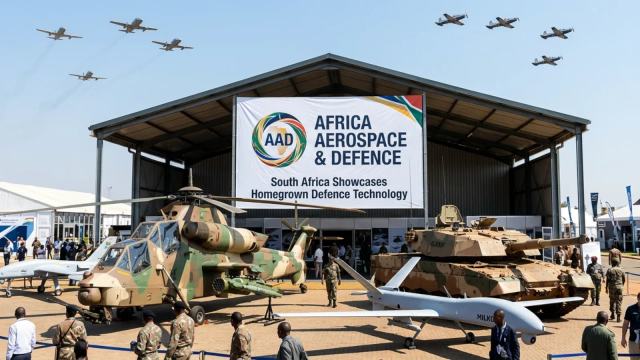
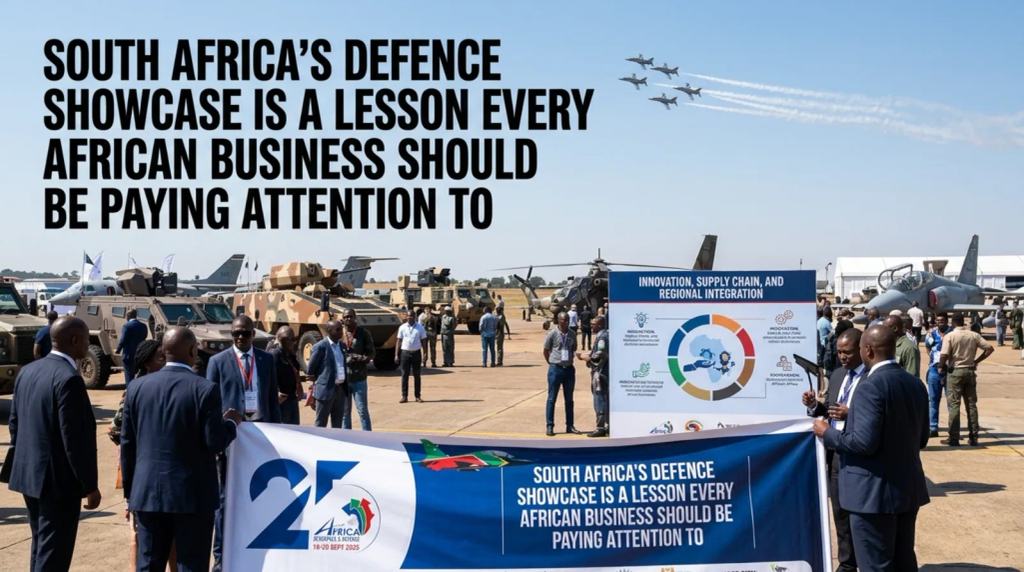
South Africa recently put its growing defense capabilities on display at an aerospace and defense exhibition, with helicopters overhead, fighter jets tearing across the sky, and crowds gathered to watch. Locally developed technologies took center stage, including mobile surveillance radar systems, alongside armored vehicles and simulated combat demonstrations. According to Kopano Peter Lebelo, Chief Director of Materiel Governance, the entire showcase was designed to challenge a specific perception: that South Africa, and Africa more broadly, lacks the capacity to build its own advanced technology.
One detail stood out to me. Lebelo pointed to a multi-role surveillance radar system, developed in partnership with Waytech Defense, capable of covering distances of 200 to 300 nautical miles built not as a theoretical exercise, but in direct response to challenges identified by military leaders. As he put it, "Chiefs tell us what difficulties they have, and we convert those difficulties into projects." Budget constraints remain real, but the capability is there. South Africa is already home to established defense players; Denel, Paramount Group, Milkor, producing everything from armored vehicles to drones and missiles, at a time when most African nations still rely heavily on imported military technology.
Now hear this; the capability existed before the exhibition. What changed was that it was finally shown to people.
That's a pattern I see constantly in African business, just at a smaller scale. A business builds something genuinely good whether a product, a service, a process refined over years and assumes the quality will speak for itself. It rarely does. Capability that isn't communicated might as well not exist to the people who need to know about it: customers, partners, investors, even your own market. Perception moves slower than reality, and it doesn't correct itself. Someone has to correct it, deliberately, the way South Africa just did on a national stage.
I think this is where a lot of businesses are quietly holding themselves back. They keep improving the product and never invest the same energy into changing how people see the business. They assume word will spread. It doesn't, not reliably, not at the pace that growth requires. Meanwhile, competitors who are actually less capable but louder about what they offer end up winning the customers, the deals, and the credibility.
Changing perception isn't something that happens by accident, it takes a deliberate strategy: knowing exactly who needs to see your capability, what story convinces them, and where to put that message so it actually lands. That's the exact gap Auxi Sherpa's Marketing Strategy service is built to help businesses stop assuming their quality is obvious and start building a real plan to be seen as capable, not just be capable.
South Africa didn't wait for the world to assume it could build advanced defense technology. It built it, then made sure people saw it. That's the part worth borrowing, whatever industry you're in.
If you have an article, opinion piece, event or news story you would like published or you are ready to begin your journey toward building a profitable online content writing business from your phone or laptop, Global News Arena would love to hear from you.
Send an email to advertise@globalnewsarena.com