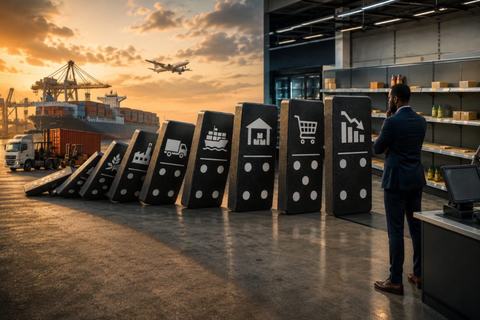

A currency becomes weaker when its value falls compared with other currencies. For businesses and individuals that buy products from other countries, this can make those products more expensive.
For example, a company that imports equipment may need more of its local currency to pay the same amount in dollars or euros. If the company cannot absorb the extra cost, it may eventually increase its prices.
The same thing can happen with everyday products.
Countries import fuel, food, medicines, electronics, machinery and many other goods.
When the cost of importing those products rises, businesses may pass some of the additional cost to customers.
Travel can also become more expensive.
Someone travelling to another country needs to exchange their local currency for the currency used at their destination. If their currency has lost value, the same amount of money may buy less than it did before.
Businesses also have to think carefully about currency movements when they operate across different countries.
A company may make strong sales in one market but receive less value when that money is converted into another currency.
However, a weaker currency does not affect everyone in exactly the same way.
Businesses that export products can sometimes benefit because their goods become cheaper for foreign customers.
The impact depends on what the business buys, what it sells and which currencies it uses.
This is why currency movements matter beyond banks and financial markets.
A change in exchange rates can influence business costs, product prices, travel, imports, exports and household spending.
Understanding these changes helps businesses and individuals make better decisions.
When currencies become unstable, knowing where money is coming from, where it is going and how much different transactions actually cost becomes increasingly important.
If you have an article, opinion piece, event or news story you would like published, Global News Arena would love to hear from you.
Visit https://globalnewsarena.com/contact to get in touch.