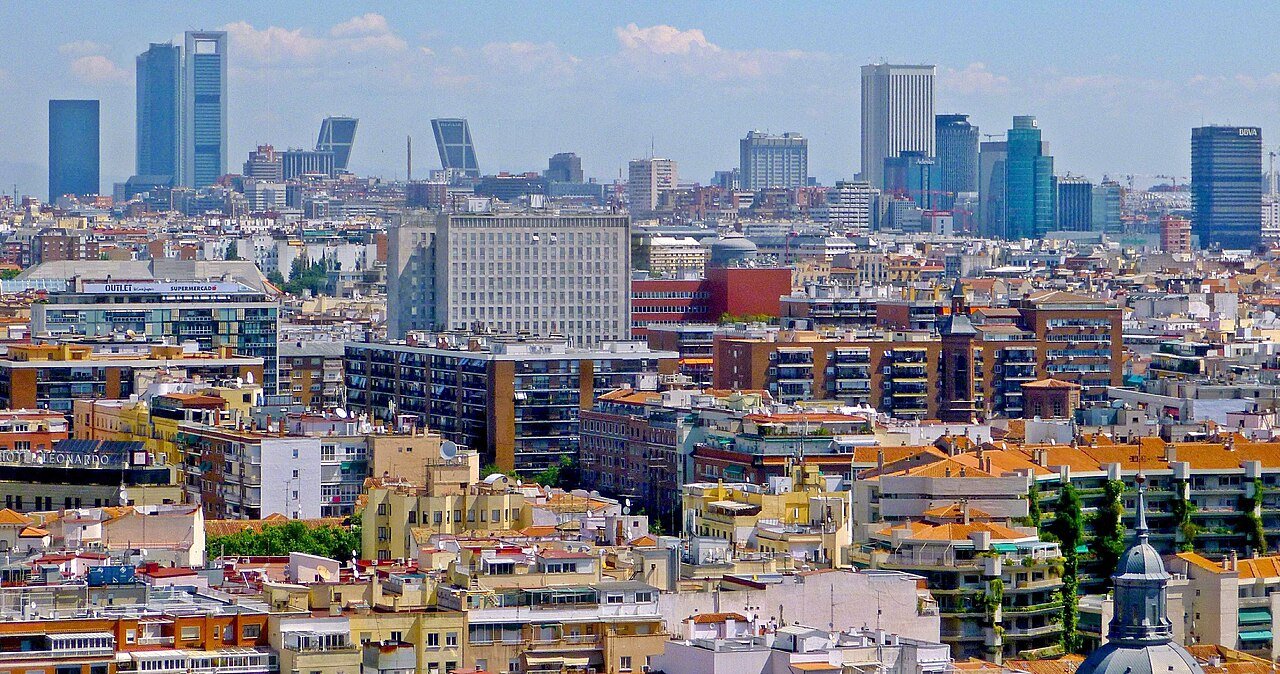
Madrid is the capital of Spain and the seat of its national government. Located near the geographical centre of the Iberian Peninsula, it stands on the elevated plateau known as the Meseta, with the Manzanares River running through its western districts.
READ: Abu Dhabi: Biography, History and Life in the UAE
The city combines the responsibilities of a political capital with the energy of a major cultural and commercial centre. Royal buildings, art museums, neighbourhood markets and football stadiums all contribute to its identity. It is also the capital of the autonomous Community of Madrid.
Read: Do you need a professional writer in 72 hours? Contact Auxi Chat
Madrid: Origins and rise as a capital
READ: Cape Town: Biography, History and Cultural Identity
Madrid’s documented urban origins are generally traced to a fortified settlement established under Muslim rule in the ninth century. Known as Mayrit, it developed around a defensive stronghold in a region where control of territory and water supplies mattered greatly.
The settlement came under Christian rule in the late eleventh century. For much of the medieval period, it remained less prominent than several other Iberian cities, although its central location gradually increased its strategic importance.
Read: Need a professional website in 72 hours? Contact Auxi Chat
A decisive change came in 1561, when King Philip II moved his court to Madrid. The presence of the monarchy helped transform the town into the administrative centre of an expanding empire and established the foundations of its enduring role as Spain’s capital.
Later rulers reshaped Madrid through palaces, public buildings and urban improvements. Under the Bourbon monarchy, broad avenues and monumental spaces became increasingly important features of the city.
Landmarks and artistic heritage
The Royal Palace is among Madrid’s best-known landmarks. Built on the site of an earlier royal fortress, it remains a setting for state ceremonies, though it is not the monarch’s everyday residence. Nearby, the Plaza Mayor reflects the city’s long tradition of public gathering and civic life.
Puerta del Sol is another symbolic centre. Its kilometre-zero marker is the reference point for Spain’s radial road network, while the square’s clock is closely associated with the country’s televised New Year celebrations.
Madrid’s art collections are central to its international reputation. The Prado Museum is especially associated with European painting, including major works by Diego Velázquez and Francisco Goya. The Reina Sofía houses Pablo Picasso’s Guernica and important collections of modern art.
The Thyssen-Bornemisza Museum adds a broad survey of Western painting. Together, these institutions anchor a museum district along and near the Paseo del Prado. The surrounding cultural landscape, including El Retiro Park, has UNESCO World Heritage status.
Neighbourhoods and everyday culture
Madrid’s character extends well beyond its monuments. Areas such as La Latina, Malasaña, Chueca and Lavapiés have distinct histories and social identities, shaped by migration, commerce, nightlife and changing generations of residents.
Public squares, cafés and markets provide settings for everyday social life. Food traditions include cocido madrileño, a substantial chickpea-based stew, and the calamari sandwich associated with bars around the Plaza Mayor.
The city has hot summers and generally cool winters, reflecting its inland position and elevation. Parks offer important outdoor space, from the formal paths of El Retiro to the much larger Casa de Campo and the landscaped Madrid Río corridor.
Football and national influence
Football is a major part of Madrid’s global profile. Real Madrid and Atlético de Madrid have large international followings, and their rivalry is woven into the city’s sporting culture.
READ: Nigeria: Biography, History and Cultural Identity
Beyond sport, Madrid is a centre for business, transport, higher education and Spanish-language media. Its rail connections and international airport reinforce its role as a gateway to Spain.
Madrid’s lasting significance lies in this combination of national authority and neighbourhood life. It is both a ceremonial capital and a lived-in city, where historic institutions share space with an evolving population and contemporary culture.
More from Global News Biography. Further reading: Madrid on Wikipedia.
Are you interested in learning how to write professionally and earn money as a writer and content creator? Contact Auxi Chat today to start your writing journey immediately.
Need a professional website in 72 hours? Contact Auxi Chat
If you have an article, opinion piece, event or news story you would like published, Global News Arena would love to hear from you.