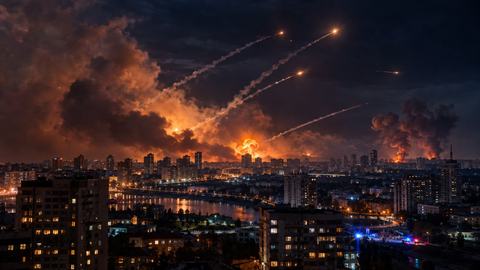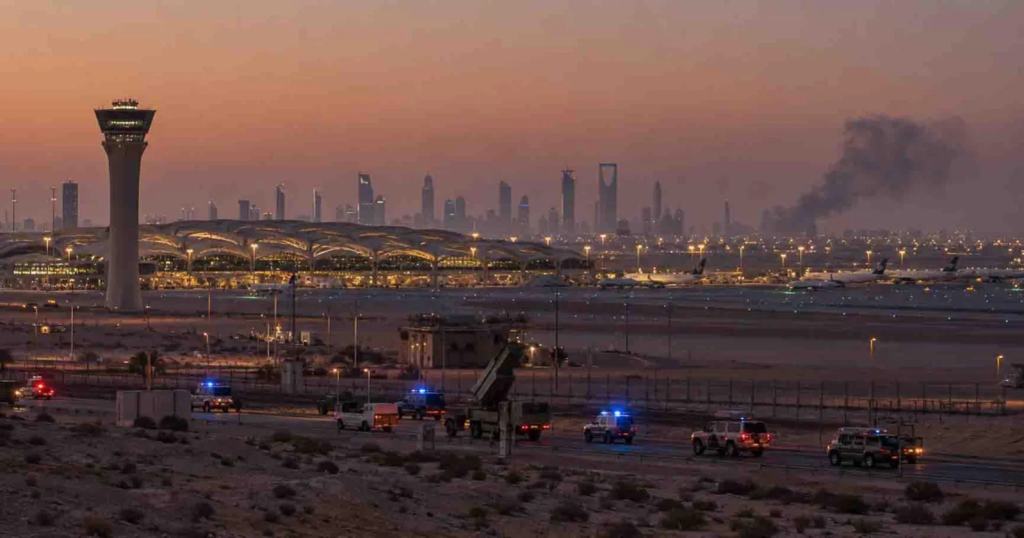
The missiles flew more than 1,000 kilometres before they reached Riyadh.
When they landed, at least 13 people were dead and more than 300 were hurt.
The target was King Khalid International Airport, the main airport of Saudi Arabia's capital.
Flights were cancelled. The airport stopped working.
Then the questions started. How did the missiles get through?
Saudi Arabia says it has opened an investigation.
Two regional officials told the Associated Press what early findings show. The answer is not simple.
Officials say the weapons were fired by the Houthis, a rebel group in Yemen that is backed by Iran.
Their plan came in two parts.
First, they sent many drones. Drones are cheaper and easier to build. The idea was to fill the sky and make the defences look the wrong way.
Then came the real punch. Cruise missiles and ballistic missiles, mixed together, flying towards the airport.
One official said the investigation is also looking at something more worrying. Why did the air defences give no early warning at all?
The weapons travelled over 1,000 kilometres, about 621 miles, all the way from Yemen.
The Houthis, officials said, now have missiles with warheads that can change direction while flying. Patriots and other defence systems find those much harder to stop.
This was not a single attack. It was one of several on Saudi airports in the past week.
Saudi Arabia's energy minister, Prince Abdul Aziz bin Salman, did not hide his anger.
He told a conference in Riyadh that the events of recent weeks are serious, and that the response must be equally serious.
The next day, Saudi state media said the military was answering another attack of drones and cruise missiles.
Now the country wants help.
Saudi Arabia is asking the United States to get more involved. America has been sharing intelligence and helping to plan a Saudi-led offensive, but it has not carried out its own strikes on the Houthis.
That is a big decision.
If America joins in, the Houthis could try to close the Bab el-Mandeb Strait. That is a narrow waterway at the bottom of the Red Sea, and a lot of the world's oil passes through it.
Oil has already become harder to move. Iran has been putting pressure on another waterway, the Strait of Hormuz. Before the war with Iran started in late February, about one fifth of the world's oil went through it.
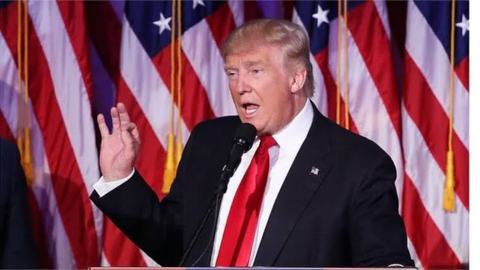
President Donald Trump said on Saturday that he was looking at the possibility of American attacks on the Houthis.
But the timing is difficult. American midterm elections are only weeks away. Prices are high at home, and many Americans are unhappy about the war with Iran.
There is a second side to the fighting too.
The Houthi-run health ministry said on Monday that airstrikes on a government building and a house in northern Yemen killed nine people, including five children and a woman. Seven others were hurt.
Iran, which is close to the Houthis, said it is worried about what is happening in the Arabian Peninsula. Its foreign ministry said it is ready to help the two sides talk.
For now, the airport in Riyadh is at the centre of attention.
Saudi Arabia has promised answers. The world is waiting to hear what it says.
If you have an article, opinion piece, event or news story you would like published, Global News Arena would love to hear from you.
Send a message to Global News Arena contact to get in touch.