There is something about Peter Obi.
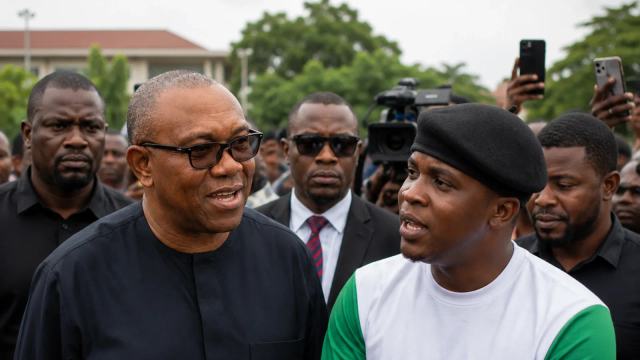
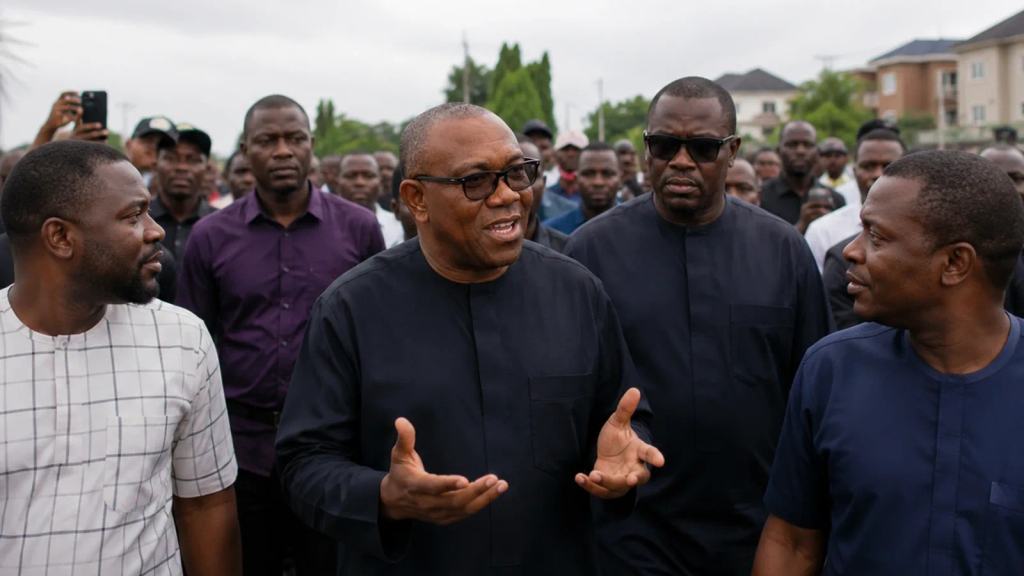
He does not carry himself like the typical Nigerian politician. He is rarely surrounded by an army of security men. He does not always behave as though stepping out of a vehicle is a state occasion. He appears comfortable talking to ordinary people, shaking hands, stopping for pictures and walking into places where many Nigerian politicians would probably send three aides ahead to inspect the environment.
For a politician, that kind of humility can be powerful.
But I have started wondering whether Peter Obi may have taken it a little too far.
At some point, accessibility stops being humility and begins to look like overexposure.
And Peter Obi, in my opinion, is everywhere.
He is at political meetings. He is at public events. He is appearing in videos. He is meeting supporters. He is responding to conversations. He is being filmed in casual moments. He is constantly available for the internet to consume.
That may sound like a compliment.
But for me it isn't.
Politics, especially presidential politics, is partly about presence. But it is also about mystique, discipline and knowing when to step back. A serious political figure cannot always be available for every camera, every conversation and every passing controversy.
The recent episode involving Randy Peters is a good example.
The video went viral, and suddenly the conversation was not primarily about Nigeria's economy, electoral reform, unemployment, insecurity or the opposition's political strategy. It became about Peter Obi, Randy Peters and the spectacle surrounding them.
That is the danger.
Once you become too accessible, people begin to consume you as content rather than as a political leader.
And social media has a brutal appetite for that kind of content.
One minute, a politician is discussing the future of Nigeria. The next, Nigerians are dissecting a handshake, a facial expression, a joke, who stood beside whom or what somebody said in a viral video.
Peter Obi's supporters may argue that this is precisely what makes him different. Perhaps they are right. His willingness to mingle with ordinary Nigerians is part of the image that helped distinguish him from the traditional political class.
But there is a difference between being accessible and being constantly available.
That distinction matters.
A president cannot be everybody's friend. A presidential candidate should certainly be approachable, but he must also command a certain seriousness. There has to be a sense that when he speaks, the noise around him stops.
Obi once benefited enormously from being the politician who looked different from the establishment. The simple clothes, the direct manner, the habit of speaking about figures and accountability, the willingness to engage ordinary Nigerians, all of it fitted neatly into the image of the “different politician.”
But political movements evolve.
The Peter Obi of 2026 is not the relatively fresh Peter Obi Nigerians discovered during the 2022 campaign. He has been around long enough for people to know him, study him, criticise him and, importantly, become comfortable with him.
Perhaps too comfortable.
And that is where humility can go wrong.
There is a strange thing about leadership: sometimes, you have to create distance in order to create authority.
Not arrogance. Not aloofness. Distance.
The kind of distance that tells people: I am accessible when it matters, but I am not available for every distraction.
Think about the most successful political brands around the world. Their leaders do not necessarily speak less because they have nothing to say. They speak selectively because they understand that attention is a currency.
Peter Obi sometimes seems willing to spend all of his.
And there is another problem.
His supporters have built an enormous emotional ecosystem around him. Every appearance can become an event. Every statement can become a campaign slogan. Every encounter can become evidence that “the people” love him.
That can be intoxicating.
But it can also become a trap.
A politician who is constantly surrounded by enthusiastic supporters can lose the ability to hear the quieter questions coming from outside his political bubble.
That is why I think Obi needs less of the “Peter Obi is everywhere” strategy and more of the “Peter Obi is preparing” strategy.
Let Nigerians miss him a little.
Let people wonder what he is doing.
Let the next major appearance feel like an occasion because it actually has something important to say.
There is nothing wrong with humility. In fact, Nigerian politics desperately needs more of it.
But humility should never mean surrendering the dignity of the office you are seeking.
And accessibility should never mean becoming so available that every random encounter becomes political content.
Peter Obi has something many politicians would pay millions to manufacture: a recognisable personal brand built around competence, frugality, humility and a reputation for being different.
He should protect it.
Because the internet does not respect heroes for very long.
Today it celebrates you. Tomorrow it turns you into a meme. The day after, it moves on to somebody else.
The politician's job is not to win every viral moment.
It is to win the larger argument.
And perhaps that is the lesson Peter Obi needs to take from the Randy Peters episode and the many other moments in which his accessibility has become the story itself.
Sometimes, the most powerful thing a leader can do is simply step back.
Not because he is arrogant.
But because his message should be bigger than his presence.