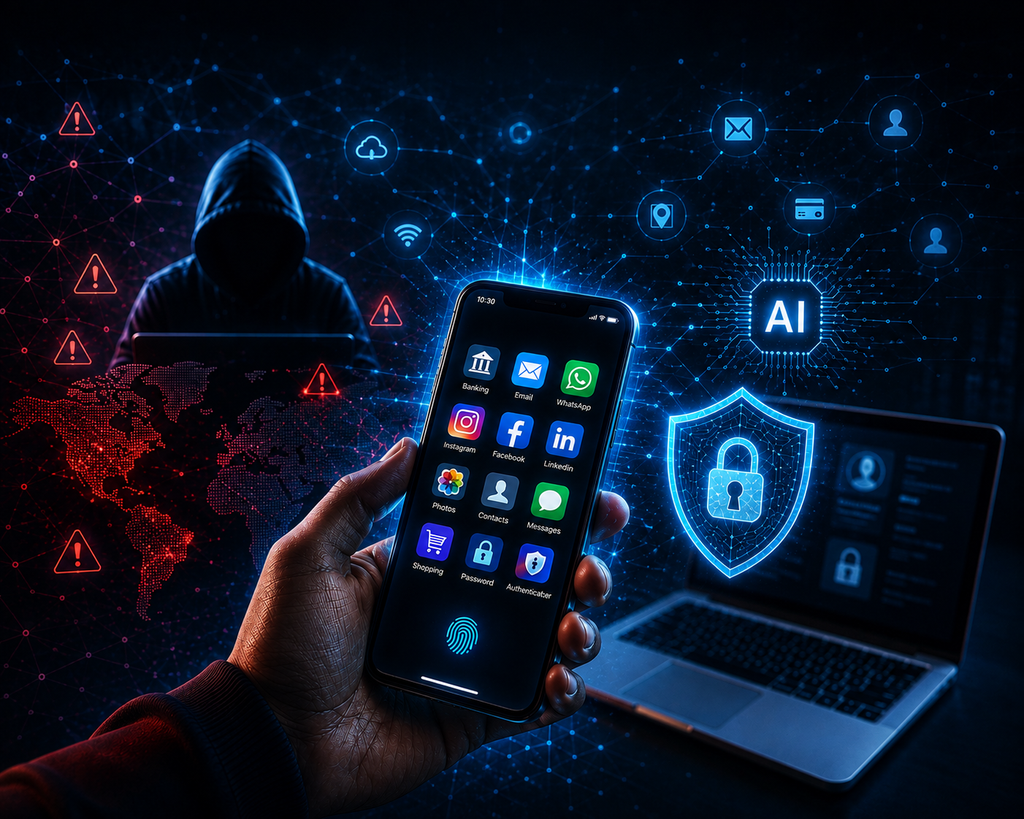
For the longest time, I thought my laptop was the most important piece of technology I owned. It was where I wrote documents, managed projects, stored files, and sent emails. If someone had asked me which device I would protect first, I wouldn't have hesitated: my laptop. But somewhere along the way, something changed quietly, almost without me noticing. My smartphone became my office. It became my bank, my diary, my camera, my filing cabinet, my meeting room, my wallet, my entertainment centre and, in many ways, even my identity. That's when I realised something that many of us still haven't fully appreciated: hackers have noticed this too.
Think about your own phone for a moment. How many apps are installed on it? Your banking app, email, WhatsApp, Instagram, Facebook, LinkedIn, online shopping accounts, password reset messages, photos, contacts, location history, business conversations and authentication codes. If someone gained access to your phone today, they probably wouldn't just gain access to one account. They could potentially gain access to your entire digital life. That's why I believe smartphones have quietly become one of the most valuable targets for cybercriminals. Not necessarily because they're easier to steal, but because they hold so much of what matters to us.
The more I thought about it, the more I realised that many of us still treat our phones like simple communication devices. They're not. For millions of entrepreneurs, freelancers and creators, the smartphone is now the business. People create videos, respond to customers, receive payments, approve bank transfers, run advertising campaigns, edit content, attend meetings and manage entire companies without ever opening a laptop. That's incredible, but it also means that protecting your phone has become one of the most important business decisions you can make.
The worrying part isn't that hackers exist. They always have. What's changing is how intelligent and convincing the attacks are becoming. Artificial intelligence is helping criminals create more believable phishing messages, fake websites, and social engineering attacks than ever before. Messages that once looked suspicious can now appear surprisingly authentic. Sometimes the only difference is one tiny detail: a slightly different web address, an unexpected login request, or a message urging you to act immediately. That's why I no longer believe cybersecurity is simply an IT problem. I think it's a life skill. It's something every smartphone user needs to understand, whether they own a business or not.
The good news is that protecting yourself doesn't always require expensive software. Often, it begins with simple habits: use strong passwords, turn on two-factor authentication, keep your phone updated, download apps only from trusted sources, think twice before clicking unfamiliar links and back up your important files regularly. Those decisions may never feel exciting, but they can prevent problems that could take years to recover from.
As I reflected on this, another thought crossed my mind.
Perhaps we've been teaching people the wrong thing. We've spent years teaching people how to use smartphones. Maybe it's time we started teaching people how to live safely with them. That's one of the reasons I believe digital literacy deserves far more attention than it currently receives.
Knowing how to use technology is only half the journey. Understanding how to use it responsibly, safely and confidently is what prepares people for long-term success. Platforms like Happy Face Academy recognise this by combining digital literacy, AI, entrepreneurship and practical online skills that help people thrive in today's digital economy. If you're serious about building those foundations, you can learn more.
As your digital life grows, so will the number of tools you rely on: AI writing assistants, research tools, productivity apps and automation platforms. I've learnt that the goal shouldn't be collecting as many tools as possible. It should be creating a workflow that's simple enough to stay secure.
That's why I appreciate Auxi Sherpa. Instead of asking entrepreneurs to manage a growing collection of disconnected AI applications, it brings together research, writing, organisation and automation into one streamlined environment. Fewer platforms can mean fewer opportunities for mistakes, better organisation and more time to focus on building your business.
I still use my laptop, and probably always will. But if someone asked me today which device I'd protect first, my answer would be very different. Without hesitation, my smartphone. Because these days, it isn't just another gadget in my pocket. It's where my business lives. It's where my relationships live. It's where my opportunities live. And that's exactly why it's worth protecting.
If you have an article, opinion piece, event, or news story you would like published on Global News Arena, or you are ready to begin your journey toward building a profitable online content writing business from your phone or laptop, Global News Arena would love to hear from you.
Send an email to advertise@globalnewsarena.com.