Pope Leo South American Tour Opens in Uruguay
READ: Congo Ebola Patients Flee After Islamist Attack Kills Dozens
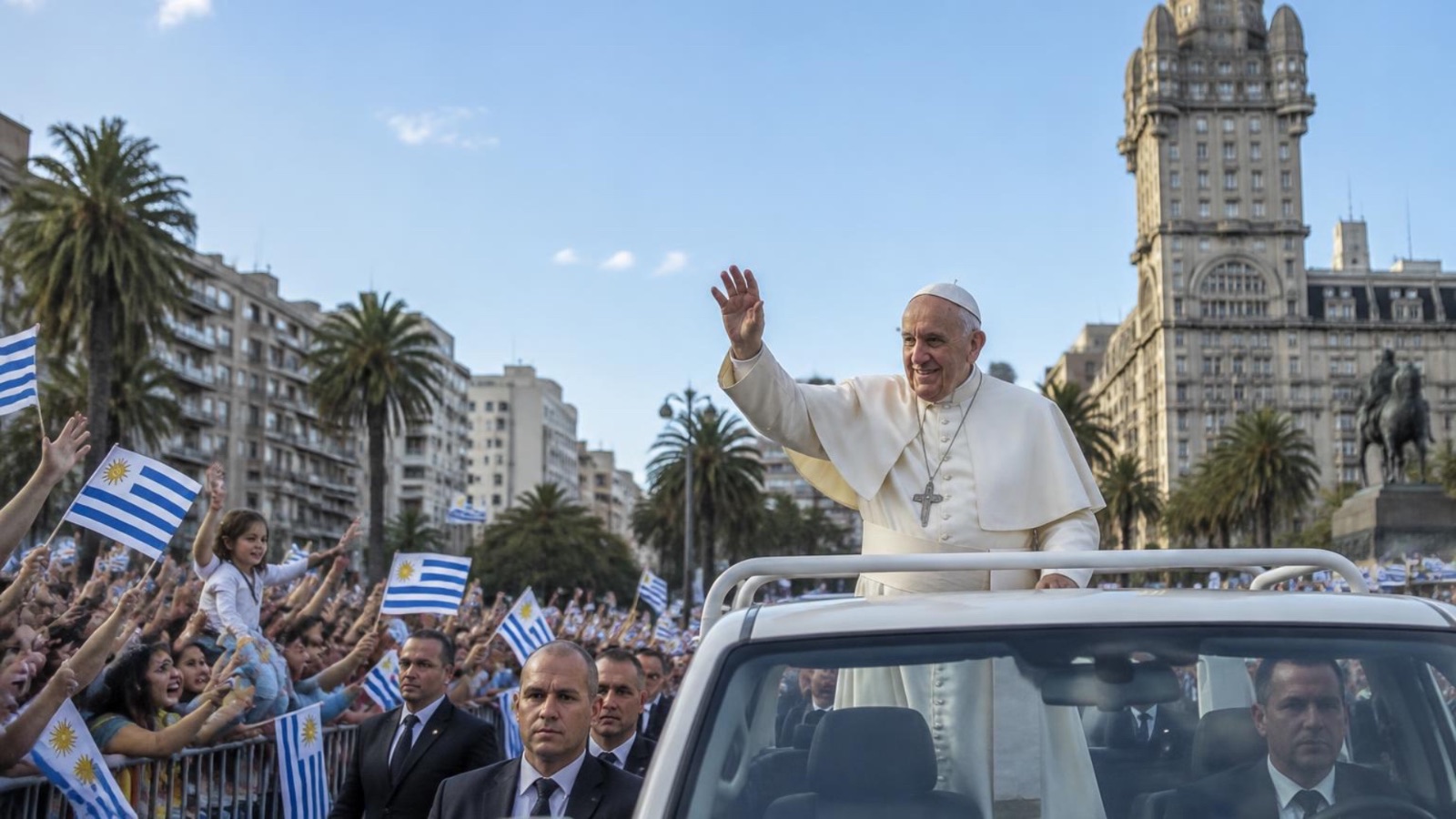
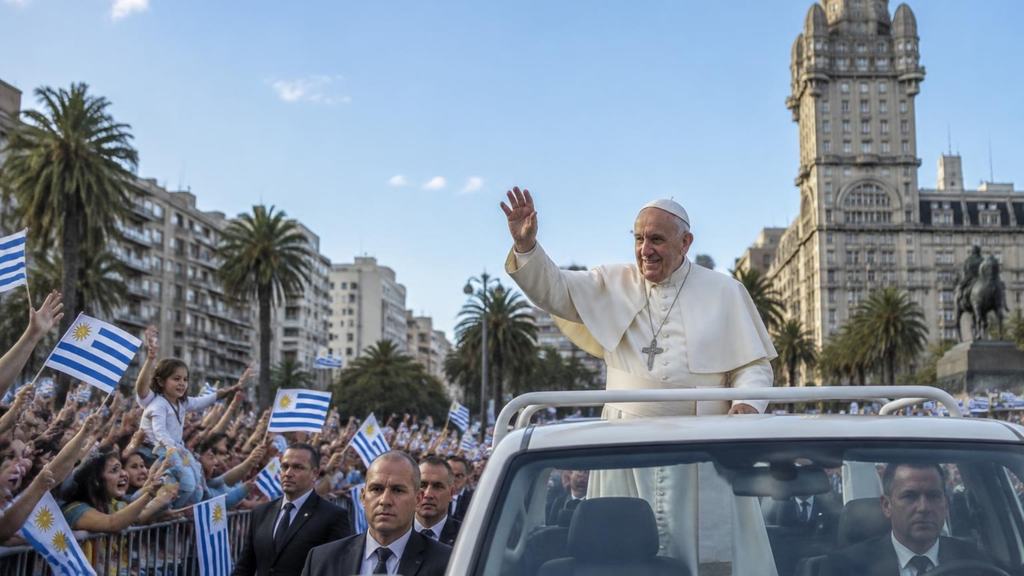
Pope Leo XIV began his South American tour on Friday, November 6, 2026, with a call for unity and cooperation as he arrived in Uruguay for the first stage of a major visit to three Latin American countries.
Read: Do you need a professional writer in 72 hours? Contact Auxi Chat
The pontiff, who was welcomed in Montevideo by Uruguayan President Yamandú Orsi, urged South American nations to demonstrate that political differences do not have to prevent countries from working together. His message came as the region faces ideological disagreements, economic pressures and political uncertainty.
READ: Iran Executes Baluch Man Over Police Station Attack
Speaking at Plaza Independencia in Montevideo, where the Vatican estimated that at least 30,000 people had gathered, Pope Leo emphasised the importance of respecting the law, negotiating disagreements and patiently seeking common ground.
The visit will take him to Uruguay, Argentina and Peru over 12 days, with planned events across 10 cities. The programme includes public Masses, meetings with political leaders, encounters with Catholic communities and discussions about the social and political challenges facing the region.
Read: Need a professional website in 72 hours? Contact Auxi Chat
For the first US-born pope, the journey carries personal as well as religious significance. Although born in Chicago, Leo spent decades working in Peru as a missionary and church leader before becoming pontiff.
His return to a region where he has deep personal connections comes at a time when the Catholic Church is seeking to strengthen its influence and reconnect with communities amid changing religious attitudes.
Pope Leo Calls for Unity Amid Political Divisions
The central message of Pope Leo's South American tour is that countries must find ways to cooperate even when their governments disagree.
Addressing the gathering in Uruguay, the pope encouraged leaders to preserve respect for the law, pursue negotiations and seek agreements rather than allow differences to become sources of conflict.
His appeal comes as political tensions affect relations between several countries in the region. Ideological disagreements among leaders have complicated cooperation on issues ranging from economic policy to regional diplomacy.
Argentina, the pope's next major destination, is led by President Javier Milei, a libertarian politician whose political outlook differs sharply from that of several other South American leaders. Relations between Argentina and Brazil have also experienced strain amid disagreements over political developments.
Peru, meanwhile, has faced prolonged political instability, with repeated presidential changes, impeachments, resignations and social unrest over recent years.
Against this backdrop, Pope Leo's call for unity carries significance beyond the Catholic Church. His message presents dialogue and negotiation as practical tools for managing disagreements without allowing them to undermine democratic institutions or regional relationships.
The pope is expected to address political authorities in each country during the trip, giving him opportunities to reinforce his appeal for cooperation.
Why Pope Leo Chose South America for His First Major Regional Tour
The tour is significant because Latin America has a longstanding and substantial Catholic population, making the region central to the Church's global mission.
For decades, Catholicism has shaped religious life, education, social services and cultural traditions across much of South America. Churches and Catholic institutions continue to provide spiritual guidance and community support in cities, towns and remote areas.
However, the religious landscape is changing. Evangelical Christian denominations have expanded in several countries, while some people have become less connected to organised religion. The Catholic Church has also faced questions about its response to modern social attitudes and the consequences of abuse scandals involving clergy.
Church leaders hope Pope Leo's visit will renew interest in Catholic life, strengthen local communities and encourage people to reconnect with their faith.
His itinerary combines major public religious events with meetings intended to address social realities. Rather than focusing only on ceremonies, the programme offers opportunities for the pope to hear from communities, engage with political leaders and discuss the challenges facing ordinary people.
The journey also allows him to draw on his personal experience in the region. Having spent many years in Peru, he is returning to places and communities with which he has longstanding connections.
Uruguay Welcomes the Pope After Nearly Four Decades
Uruguay is the first stop on the pope's South American tour, with his visit marking the first papal trip to the country since Pope John Paul II visited in 1988.
The country is often regarded as one of Latin America's more stable democracies, with a strong tradition of secular public life. Its place on the itinerary demonstrates the Vatican's intention to engage with societies where Catholic religious practice does not necessarily occupy the same central position it holds elsewhere in the region.
Upon arriving in Montevideo, Pope Leo received an official welcome before meeting government representatives and addressing civil society and the diplomatic corps.
His programme also includes travel to Paysandú and Florida, where he is scheduled to celebrate Mass and meet members of local communities.
The visit gives the Church an opportunity to strengthen its relationship with Uruguayan Catholics while addressing broader questions about faith, social responsibility and cooperation.
The pope's appeal for unity may also resonate with people beyond the Catholic community, particularly those concerned about political polarisation and the ability of public institutions to serve the common good.
Argentina Visit Will Carry Special Significance
After Uruguay, Pope Leo is scheduled to travel to Argentina, where he will remain from November 8 to November 11.
Argentina holds a special place in the history of the modern papacy because it was the birthplace of Pope Francis, Leo's predecessor. Francis became the first pope from Latin America and maintained a close connection with the region throughout his papacy.
The country has not received a papal visit since John Paul II travelled there in 1987. Leo's arrival will therefore be a major event for Argentine Catholics and the wider public.
His programme includes visits to Buenos Aires, Córdoba and Luján, along with meetings involving government officials, religious leaders, young people and members of the community.
The pope is also scheduled to visit a prison in Argentina, reflecting the Church's emphasis on the dignity of people who are incarcerated and the importance of social reintegration.
A planned meeting with President Javier Milei will attract particular attention. The two leaders have different public profiles and approaches to several political and economic questions, making their encounter significant in the context of the pope's broader message about dialogue.
The visit will offer Leo an opportunity to emphasise that political disagreements need not prevent constructive engagement between institutions and individuals.
Peru Offers Pope Leo a Personal Homecoming
Peru is the final country on the pope's itinerary, and his visit there is expected to be especially meaningful.
Before becoming pope, Leo spent decades in Peru as a missionary and church leader. He also served as Bishop of Chiclayo and acquired Peruvian citizenship, giving him a direct connection to the country's religious and social life.
The Vatican has described the journey as a return to places where he spent a significant part of his life.
During the Peruvian leg, scheduled from November 11 to November 17, the pope is expected to visit Lima, Chiclayo, Cusco and Pucallpa, among other locations listed in the programme.
The itinerary includes encounters with bishops, young people, university communities, missionaries and representatives of Indigenous and Amazonian communities.
These meetings will bring attention to issues that affect different parts of the country, including social inequality, the future of local communities and the challenges facing people in remote regions.
The planned visit to communities in the Andes and Amazonian areas also highlights the Church's interest in reaching people beyond major urban centres.
For Leo, the journey offers an opportunity to reconnect with a country that shaped his religious service long before he became leader of the worldwide Catholic Church.
Pope Leo to Address Environmental and Social Challenges
Beyond calls for unity, Pope Leo is expected to address environmental destruction, arms trafficking and political instability during meetings and speeches across the three countries.
These issues affect communities throughout Latin America in different ways. Environmental damage can threaten livelihoods and ecosystems, while organised crime and weapons trafficking can contribute to insecurity and violence.
Political instability can also make it more difficult for governments to maintain consistent policies, deliver public services and build confidence in democratic institutions.
The pope's planned encounters with political leaders and civil society groups provide a platform for raising these concerns.
His message is expected to emphasise the responsibilities of governments and communities to protect human dignity and pursue policies that benefit people across society.
The visit also comes as debates continue about economic inequality and the distribution of opportunities in Latin America. While the region contains major natural resources and important economies, many communities continue to face poverty, limited access to services and uneven development.
By placing these issues within a wider discussion about unity and social responsibility, Leo is positioning the Church as a participant in conversations about the region's future.
The extent to which his message influences political decisions remains uncertain, but the visit provides an opportunity to draw international attention to these challenges.
The Catholic Church Hopes to Renew Its Influence
READ: Malaysia King Najib House Arrest Dispute Sparks Royal Warning
Pope Leo's South American tour comes at a time when the Catholic Church is working to respond to changes in religious affiliation and public expectations.
Latin America remains one of the world's most important regions for Catholicism, but the Church has faced growing competition from evangelical denominations and a decline in participation in some communities.
Scandals involving sexual abuse by clergy have also damaged trust and prompted demands for accountability and stronger protection for vulnerable people.
The Vatican has confirmed that Pope Leo will meet with survivors of clerical sexual abuse during the journey, although detailed arrangements have not been publicly provided.
Such meetings are significant because they place the experiences of survivors within the broader pastoral programme of the visit. They also underline the continuing importance of accountability and support for people harmed by members of the Church.
Religious leaders hope the tour will strengthen local Catholic communities, encourage renewed participation and demonstrate that the Church remains engaged with the concerns of ordinary people.
Public Masses and large gatherings may draw considerable attention, but the longer-term impact will depend on how local churches respond to the social, spiritual and institutional challenges confronting them.
A Demanding 12-Day Journey Across Three Countries
The scale of the visit makes it one of the more demanding international journeys undertaken by a pope in recent decades.
According to the Vatican's programme, Leo will travel approximately 31,000 kilometres across 10 cities and deliver dozens of addresses during the 12-day trip.
The schedule combines flights between countries and cities with public ceremonies, religious services and meetings involving political and community representatives.
The demanding itinerary is particularly noteworthy because the 71-year-old pope underwent surgery for localised lung cancer in October. The Vatican said he had recovered and that no special medical precautions were required for the journey.
Nevertheless, the length of the trip and planned visits to high-altitude locations in Peru make the schedule physically challenging.
The programme reflects the importance the Vatican places on direct engagement with communities across the region. By travelling beyond national capitals, the pope will have opportunities to meet people whose experiences differ significantly from those living in major cities.
The journey also allows the Church to communicate its priorities through a series of public events rather than relying solely on formal statements from the Vatican.
Conclusion: Pope Leo's South American Tour Puts Unity First
Pope Leo XIV began his South American tour in Uruguay with a message that political differences should not prevent countries from working together.
His appeal for dialogue, respect for the law and peaceful cooperation comes as the region faces ideological divisions, political instability and social challenges. The visit will take him to Argentina and Peru, where he is expected to meet government leaders, religious communities, young people and people affected by difficult social circumstances.
The journey also has a personal dimension, particularly in Peru, where Leo spent decades serving as a missionary and church leader.
For the Catholic Church, the tour offers an opportunity to strengthen relationships with communities, address concerns about its reputation and renew its presence across a region that remains central to global Catholicism.
The writer of this article does not claim to know the individuals named personally. The information about their backgrounds, as published on Global News Arena, is based on independent online research.
Are you interested in learning how to write professionally and earning money as a writer and content creator? Contact Auxi Chat today to start your writing journey immediately.
If you have an article, opinion piece, event or news story you would like published, Global News Arena would love to hear from you.