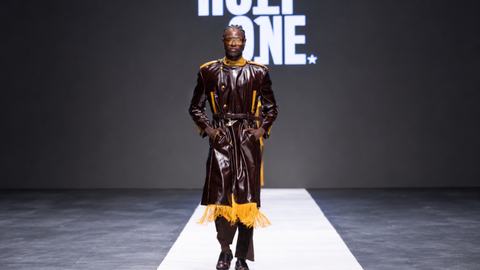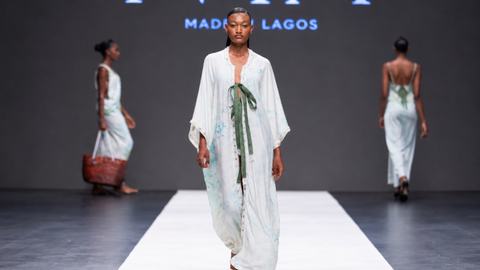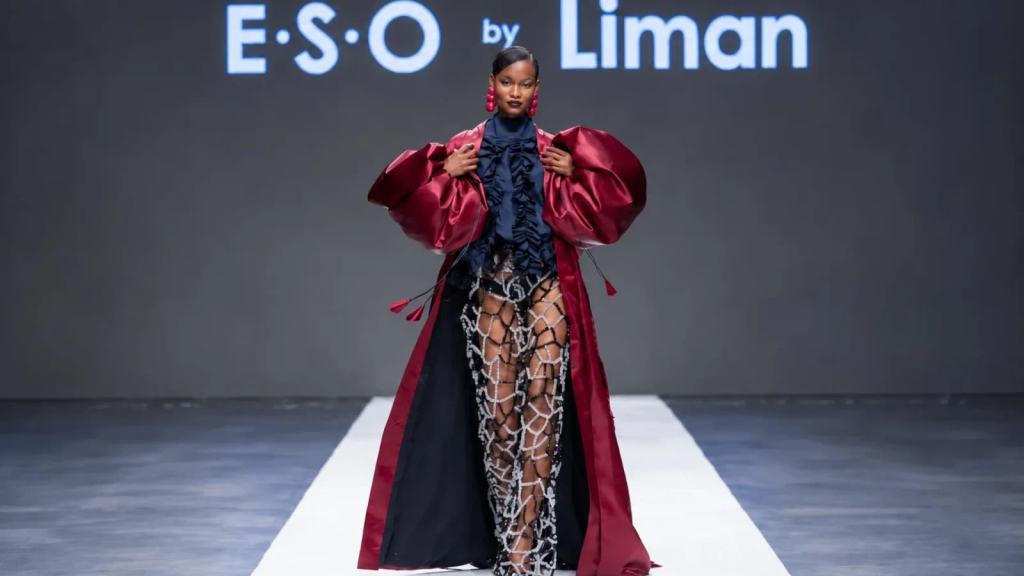
E.S.O by Liman Fashion and the Stories Carried by Cloth
READ: Dimeji Ilori Fashion: African Heritage Meets Wearable Art
E.S.O by Liman fashion begins with an idea that reaches beyond the appearance of a garment: clothing can preserve stories. Fabric can carry memories of the people who made it, the techniques used to produce it and the cultural experiences that influence its meaning. When designers pay attention to these connections, fashion becomes a way to bring heritage into contemporary life.
Founded in Lagos in 2021 by Tunde Shoremekun Liman, E.S.O by Liman is a Nigerian womenswear label that draws on memory, ritual, everyday experiences and inherited knowledge. Its approach places particular emphasis on locally made textiles, hand-dyed fabrics and collaboration with artisans whose skills contribute to the finished garments.
READ: Abiola Olusola fashion Brings Modern Femininity and Yoruba Heritage Together Through Fashion
This philosophy offers a distinctive perspective on contemporary African fashion. Rather than treating textiles as a background for a design, the label considers fabric development an important part of the creative process. The material and the silhouette work together, allowing the surface of a garment to contribute to its overall expression.
The idea of clothing as a record of experience also challenges the assumption that fashion is concerned only with novelty. Trends change, but the stories attached to materials and craft techniques can connect different generations. By bringing these elements into contemporary womenswear, E.S.O by Liman explores how clothing can be modern while remaining attentive to the knowledge that informs its making.
Tunde Shoremekun Liman and the Label's Creative Direction
Tunde Shoremekun Liman founded E.S.O by Liman in Lagos in 2021. The label's design philosophy centres on craftsmanship, cultural memory and the relationship between textiles and identity. Its approach reflects an interest in how locally produced materials and traditional skills can contribute to contemporary clothing.
Building a fashion identity around these principles requires decisions that go beyond the finished silhouette. Designers must consider where materials come from, how they are developed and how their properties influence the construction of a garment. When textiles are created or dyed through artisanal processes, their qualities can become an active part of the design rather than a detail added at the end.
This approach also places the work of makers within the larger story of fashion. A garment may be presented under a designer's name, but its production can involve the knowledge and labour of people whose skills have developed over many years. Recognising these contributions provides a more complete understanding of how clothing comes into existence.
E.S.O by Liman's emphasis on collaboration and locally made textiles connects the label's creative identity with these wider considerations. The resulting philosophy places value on both the designer's vision and the processes through which materials are transformed into garments.
Fabric as a Living Archive
The expression “living archive” suggests that history is not confined to documents or objects kept in museums. Knowledge can also survive through practices that people continue to use, adapt and teach. Textile production is one example because the skills involved may be passed between generations through observation, repetition and shared work.
Hand-dyeing and other traditional textile techniques can preserve knowledge about materials, colour and the practical decisions required to produce a finished fabric. Each process involves choices that affect the final result, from how a material accepts colour to the way the textile behaves when it is cut and sewn.
When designers work with these materials, they bring the results of that knowledge into a contemporary setting. The garment becomes a point of connection between the person who developed the design, the people who made or prepared the textile and the person who eventually wears it.
E.S.O by Liman's focus on fabric development reflects this understanding. Material is not simply a surface on which a design appears. It contributes to the character of the finished piece and helps establish its relationship with the wider history of craft.
This approach also encourages audiences to look more closely at clothing. Instead of asking only whether a garment is attractive, they can consider how the textile was produced, what skills were involved and how its properties influenced the designer's choices.
Traditional Craft in Contemporary Womenswear
The relationship between tradition and modern design is not necessarily a choice between preserving the past and embracing the present. Traditional techniques can continue to develop when designers find new ways to use them, while contemporary construction can benefit from the knowledge accumulated through established craft practices.
For womenswear, this relationship can be expressed through the balance between textile character and silhouette. A hand-dyed fabric may have a distinctive surface, while the cut of a garment determines how that surface appears in movement. The two elements can complement one another, creating a piece in which neither material nor shape overwhelms the other.
This requires careful design decisions. A textile with strong visual character may need a simpler silhouette, while a restrained fabric may allow a more complex cut. The designer must consider how the different elements work together and whether the result communicates the intended idea.
E.S.O by Liman's approach to craftsmanship and contemporary expression places these questions at the centre of its design philosophy. It demonstrates how a label can consider traditional skills as an active resource for modern fashion rather than treating them as references belonging only to the past.
Sustainability Through Thoughtful Production
Sustainability in fashion involves several interconnected questions, including material sourcing, production methods, working relationships, waste and the useful life of garments. There is no single practice that resolves every challenge, but designers can make decisions that encourage more responsible production.
E.S.O by Liman's emphasis on local textiles and collaboration with artisans forms part of its approach to more considered making. Working with locally produced materials can help maintain connections with skilled makers and bring attention to the processes involved in textile production. It can also encourage designers to think carefully about the relationship between material availability and the garments they create.
However, sustainability should not be reduced to a label or a single production choice. The broader picture includes how much is produced, how well garments are made, whether materials are used efficiently and how long pieces remain useful to their owners. These considerations require ongoing attention rather than one-time decisions.
A slower, deliberate approach to production can create space for this reflection. When designers pay close attention to materials and construction, they have an opportunity to make more informed choices about how a garment should be developed.
The connection between sustainability and craftsmanship is therefore important. Both involve understanding the resources, skills and time required to make clothing, while recognising that the finished garment is part of a larger production process.
African Fashion and the Value of Artisanal Knowledge
Across Africa, textile traditions and craft practices form part of a wide and varied creative landscape. Different communities have developed distinct ways of producing, dyeing, weaving and decorating materials. These traditions are not interchangeable, and each has its own history and body of knowledge.
Contemporary designers can help maintain attention on these practices by creating opportunities for traditional techniques to be used in new contexts. This does not mean every designer must work with heritage textiles. Rather, it recognises that artisanal knowledge can remain relevant when there are meaningful opportunities for skilled makers to continue their work.
E.S.O by Liman's focus on locally made textiles and collaboration offers one perspective on this relationship. The label's approach connects contemporary womenswear with the people and processes that contribute to its materials.
Readers interested in another dimension of this discussion can explore Global News Arena's coverage of NKWO and sustainable African design. The feature provides a related perspective on the relationship between fashion, material choices and responsible production.
These different approaches illustrate why African fashion is best understood through the work of individual designers. Some focus on textile preservation, others on material reuse, and others explore entirely different creative directions. Their shared contribution lies in expanding the possibilities of contemporary design.
The Importance of Construction and Finishing
A textile's cultural or material significance does not remove the need for strong garment construction. The finished piece must still be considered in terms of fit, movement, durability and how its different components work together.
READ: Irapada fashion Explores Nigerian Fashion Through Creative Reuse
Pattern development determines how fabric is shaped around the body. Seam placement affects the garment's structure, while lining, closures and finishing influence the way it feels and performs. These decisions are especially important when a design relies on the natural qualities of a particular textile.
A material may have an irregular texture or respond differently from one section to another. The designer and maker must understand these properties to use the fabric effectively. Working with artisanal materials can therefore require both creative sensitivity and technical skill.
The result is a relationship between material and construction in which the garment's quality depends on more than its appearance. A thoughtful design considers how the textile behaves and how the wearer will experience the finished piece.
This technical foundation allows the creative philosophy to be expressed through clothing that can be worn, appreciated and kept over time.
Why E.S.O by Liman Fashion Matters
E.S.O by Liman fashion offers a perspective on contemporary Nigerian womenswear that places memory, craftsmanship and locally made textiles at the centre of the design conversation. Its approach encourages audiences to consider clothing not simply as a product, but as the result of relationships between designers, materials, artisans and cultural knowledge.
This perspective is particularly relevant at a time when the fashion industry is examining the environmental and social consequences of production. Questions about material sourcing, waste and the value of skilled labour have become important to discussions about how clothing should be made and used.
The label's emphasis on fabric development and artisanal collaboration creates an opportunity to consider these questions through the actual process of design. Materials carry practical properties as well as histories, and the way they are transformed into garments can influence both the visual result and the broader meaning of the work.
Ultimately, fashion can be contemporary without abandoning the knowledge that came before it. By bringing craft and cultural memory into a modern design context, E.S.O by Liman contributes to a wider conversation about how African designers can interpret heritage with care while continuing to create clothing for the present.
The writer of this article does not claim to know the individuals named personally. The information about their backgrounds, as published on Global News Arena, is based on independent online research.
Are you interested in learning how to write professionally and earn money as a writer and content creator? Contact Auxi Chat today to start your writing journey immediately.
Need a professional website in 72 hours? Contact Auxi Chat
If you have an article, opinion piece, event or news story you would like published, Global News Arena would love to hear from you.