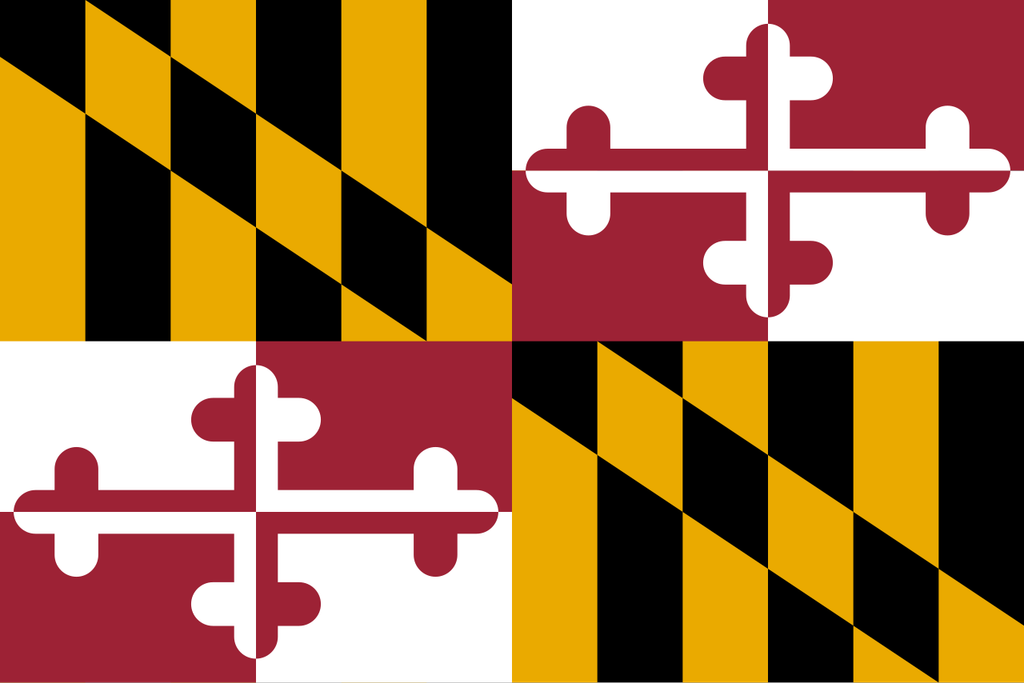
Maryland is a Mid-Atlantic state whose influence extends well beyond its relatively small size. Anchored by the Chesapeake Bay, it brings together the port city of Baltimore, the state capital of Annapolis, Washington suburbs, agricultural communities and Appalachian landscapes.
READ: Montgomery County, Maryland: Biography, History and Civic Life
Known as the Old Line State and the Free State, Maryland occupies a meeting point between Northern and Southern traditions. Its identity rests on maritime heritage, a diverse population and a strong connection to public service, research and education.
Maryland: Colonial origins and statehood
READ: Kai Cenat: Biography, Career and Streaming Influence
Maryland began as an English colony under a charter granted by King Charles I in 1632 to Cecilius Calvert, the second Lord Baltimore. Named in honor of Queen Henrietta Maria, the colony was intended partly as a refuge for English Catholics, although its population included many Protestants.
English settlers established St. Mary’s City in 1634. Religious freedom became an important but contested part of the colony’s story. The Maryland Toleration Act of 1649 offered protection to Christians who accepted the Trinity, rather than universal freedom of belief.
Tobacco shaped the colonial economy, supported first by indentured labor and increasingly by enslaved Africans and their descendants. Maryland joined the American Revolution and became the seventh state to ratify the United States Constitution in 1788.
During the Civil War, Maryland remained in the Union despite deep internal divisions and its status as a slaveholding state. It abolished slavery through a new state constitution in 1864. Frederick Douglass and Harriet Tubman, both born enslaved in Maryland, became central figures in the struggle against slavery.
Geography and regional character
The Chesapeake Bay is Maryland’s defining natural feature. Its tidal waters and tributaries have supported fishing, shipping and settlement for centuries. Blue crabs, oysters and watermen’s traditions remain closely associated with the state.
The Eastern Shore contains farms, small towns and wetlands, while the Atlantic coast includes the resort community of Ocean City. Western Maryland rises into the Appalachian Mountains, offering a different landscape of forests, valleys and former coal communities.
Baltimore is the state’s largest city and an independent jurisdiction, separate from Baltimore County. Annapolis serves as the seat of state government and home of the United States Naval Academy. Montgomery and Prince George’s counties form a substantial part of suburban Washington, linking Maryland closely to the federal capital.
Government, work and education
Maryland’s government is led by a governor and a two-chamber legislature, the General Assembly. Local government also matters strongly, with counties responsible for many services that shape daily life. Montgomery County, where Will Jawando has served on the County Council, is one of the state’s major population and employment centers.
The economy combines federal employment, health care, biotechnology, higher education, logistics and other service industries. The National Institutes of Health in Bethesda and NASA’s Goddard Space Flight Center in Greenbelt illustrate the state’s importance to scientific research.
Johns Hopkins University in Baltimore and the University of Maryland, College Park, are prominent educational institutions. The Port of Baltimore connects Maryland to international trade, while agriculture remains important in rural areas.
Culture and lasting identity
Maryland’s culture mixes urban creativity with regional food and waterfront traditions. Crab feasts and seafood cooking are familiar expressions of local identity. Baltimore has a distinctive literary and artistic heritage, including its association with Edgar Allan Poe.
READ: Will Jawando: Biography, Career and Public Service
The state also holds a notable place in national symbolism. Francis Scott Key wrote the words that became The Star-Spangled Banner after witnessing the British bombardment of Fort McHenry during the War of 1812.
Maryland’s enduring character lies in its contrasts: coastal and mountainous, metropolitan and rural, historically divided yet closely connected. Protecting the Chesapeake Bay remains a shared concern across these communities.
More from Global News Biography. Further reading: Maryland on Wikipedia.
Are you interested in learning how to write professionally and earn money as a writer and content creator? Contact Auxi Chat today to start your writing journey immediately.
Need a professional website in 72 hours? Contact Auxi Chat
If you have an article, opinion piece, event or news story you would like published, Global News Arena would love to hear from you.