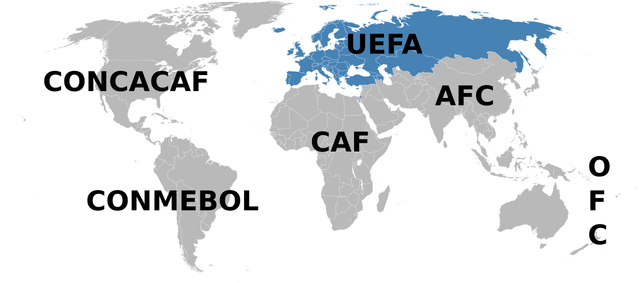
The European Championship, commonly called the Euros, is the leading continental competition for senior men’s national football teams in Europe. Organised by UEFA, European football’s governing body, it brings together national sides competing for one of the sport’s most prestigious trophies.
READ: Euro 2004: Biography, History and Portugal's Final
Normally held every four years, the championship combines a qualification campaign with a final tournament staged by one or more host countries. It is separate from both the FIFA World Cup, which has a global field, and the UEFA Nations League, another competition for European national teams.
Read: Do you need a professional writer in 72 hours? Contact Auxi Chat
European Championship: Origins and early history
READ: Euro 2016: Biography, History and Portugal's Triumph
The idea of a European national-team championship was championed by French football administrator Henri Delaunay. He died before the first tournament took place, but his contribution is commemorated in the Henri Delaunay Trophy, awarded to the champions.
The inaugural competition concluded in France in 1960 under the name European Nations’ Cup. Only four teams reached the final tournament, following earlier knockout rounds. The Soviet Union became the first champions by defeating Yugoslavia in the final in Paris.
Read: Need a professional website in 72 hours? Contact Auxi Chat
The early editions were considerably smaller than the modern event. Nevertheless, they established a lasting framework: national teams progressing through preliminary competition before meeting to decide the continental title. The competition adopted the European Championship name in 1968.
Expansion and tournament format
As participation and public interest increased, UEFA expanded the finals. The tournament grew to eight teams in 1980, 16 in 1996 and 24 in 2016. These changes gave more countries access to the final stage and increased the number of matches.
Under the 24-team format, the finalists are divided into six groups of four. The top two teams in each group advance, alongside the four best third-placed teams. A knockout phase then runs from the round of 16 to the final, with extra time and penalty shootouts available to settle drawn knockout matches.
Most teams earn their places through qualifying competition. The precise arrangements, including host qualification and playoff routes, can vary between editions. Hosting has also evolved, with tournaments staged by individual nations, joint hosts and, for the edition designated Euro 2020, cities across several countries.
Champions and defining achievements
The championship’s history includes both sustained excellence and unexpected winners. Spain became the first country to win consecutive editions in 2008 and 2012, with a World Cup victory between those European titles. Germany, including its record as West Germany, has also been a central force in the competition’s history.
Other champions have demonstrated the tournament’s capacity for surprises. Denmark won in 1992 after entering the finals as a replacement for Yugoslavia. Greece claimed the title in 2004, defeating host nation Portugal in the final.
The Euros have also provided a stage for outstanding individual performances. Michel Platini’s scoring in France’s 1984 triumph and Marco van Basten’s volley in the Netherlands’ 1988 final victory remain celebrated parts of European football history.
Identity and lasting significance
The European Championship should not be confused with the UEFA Nations League. Introduced in 2018, the Nations League organises national teams into leagues and groups and awards its own title. Although Nations League results can influence routes into European Championship playoffs, the two competitions remain distinct.
READ: UEFA Nations League: Biography, History and Format
The Euros occupy a prominent place in football culture because they combine national identity, established rivalries and the uncertainty of tournament play. For players, success can become a defining career achievement. For supporters, participation can create shared memories that endure well beyond the final.
From its four-team beginnings to its expanded modern format, the European Championship has become both a showcase for elite football and a record of the game’s changing competitive landscape.
More from Global News Biography. Further reading: European Championship on Wikipedia.
Are you interested in learning how to write professionally and earn money as a writer and content creator? Contact Auxi Chat today to start your writing journey immediately.
Need a professional website in 72 hours? Contact Auxi Chat
If you have an article, opinion piece, event or news story you would like published, Global News Arena would love to hear from you.