When news breaks that Ebola has been confirmed in Nigeria, it is understandable that people become worried. The name carries memories of the devastating West African outbreak of 2014-2016, when thousands of people died and health systems across the region came under extraordinary pressure.
But this is exactly the moment when we need clear information rather than panic. I want to look at what authorities have confirmed, what remains under investigation, and what Nigerians should understand about the virus and the response now underway.
On October 20, 2026, Nigeria’s Federal Ministry of Health and Social Welfare confirmed one case of Ebola disease in the Federal Capital Territory. According to the government’s announcement, the patient was admitted to a private hospital in Abuja, where laboratory testing confirmed the infection. The patient was placed in isolation and was receiving medical care.
Authorities said that 44 close contacts had been identified at the time of the announcement. Contact tracing had begun, with public health teams working to establish who might have been exposed and to monitor those individuals. The contacts identified included people such as healthcare workers, patients, caregivers and travel contacts who may have encountered the patient.
These details matter because an infectious disease response is not measured simply by the number of confirmed cases. It also depends on how quickly health authorities identify a case, isolate the patient, determine who may have been exposed and follow up with those people.
A confirmed case is a serious public health event. It is not, by itself, proof that an uncontrolled outbreak is spreading throughout the country.
There is also an important detail about the patient's journey. The initial announcement described the patient as having arrived in Nigeria from Uganda. The Associated Press subsequently reported that Uganda's health authorities said the woman had transited through the country after a business trip to eastern Democratic Republic of the Congo, and that the location where she was exposed remained under investigation. Travel through a country does not automatically mean infection was acquired there.
That distinction is important. In an international health emergency, the journey a patient takes, the location where exposure may have occurred and the place where the diagnosis is made are three different things. They should not be confused.
The virus involved in the wider regional outbreak is the Bundibugyo species of Ebola virus. Ebola is a severe disease that can cause fever, weakness, muscle pain, headache, sore throat, vomiting, diarrhoea and, in some cases, bleeding and organ complications. Early symptoms can resemble those of other illnesses, which is why people should not attempt to diagnose themselves based on a list they read online.
The virus is primarily transmitted through direct contact with the blood or other bodily fluids of a person who is sick with or has died from Ebola, or through contaminated objects and materials. Exposure can also occur when people handle infected animals or animal products in certain circumstances. Traditional burial practices involving contact with a deceased infected person can carry risk as well.
One point deserves particular emphasis: Ebola does not spread in the same way as measles or other infections that can be transmitted through the air over ordinary casual contact. The nature of the exposure matters. That does not make the disease harmless; it means public health advice should be based on the actual routes of transmission rather than frightening assumptions.
The risk to an individual depends on the circumstances of their exposure. Someone who has had direct contact with an infected person's bodily fluids requires a different assessment from someone who merely heard about the case or passed the person in a public place. Health authorities are responsible for assessing those circumstances and giving appropriate instructions.
This is where contact tracing becomes central to the response.
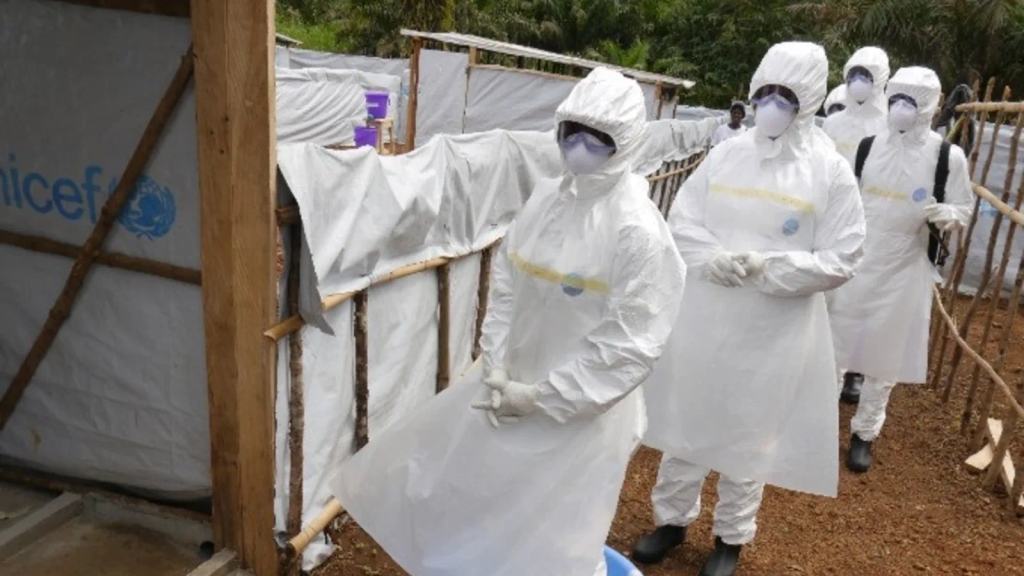
When a person is confirmed to have Ebola, trained public health teams work backwards through the relevant period to identify people who may have been exposed. They assess the nature of each contact, record information, provide guidance and monitor people for symptoms during the period specified by health authorities. If someone develops symptoms, the response team can arrange prompt assessment and appropriate isolation.
Contact tracing is not a declaration that every person on the list is infected. It is a way of identifying possible exposure early, before a chain of transmission can grow unnoticed.
The public should also understand that the initial figure of 44 contacts is a snapshot from the government's announcement, not necessarily the final number of people authorities may identify. Investigations can reveal additional contacts as teams gather more information. Any updated figures should be taken from official announcements rather than social media speculation.
So what should Nigerians do?
First, stay informed through the Federal Ministry of Health and Social Welfare, the Nigeria Centre for Disease Control and Prevention, and credible health reporting. Avoid forwarding unverified claims about supposed cases, hospitals or affected communities. False information can cause unnecessary fear, stigmatise people and make it harder for health workers to do their jobs.
Second, do not attempt to manage a suspected Ebola exposure on your own. If you believe you have had direct contact with someone confirmed or suspected to have Ebola, contact public health authorities or a healthcare provider for instructions. Tell them about the possible exposure and follow their advice about assessment and movement. Do not arrive unannounced at a crowded facility without explaining the concern.
Third, if you develop symptoms after a known or suspected exposure, seek urgent medical guidance and explain the exposure clearly. Symptoms alone do not establish that a person has Ebola, but a possible exposure must be taken seriously so that health workers can make the appropriate assessment.
Fourth, practise sensible hygiene. Wash your hands with soap and water, avoid contact with the bodily fluids of anyone who is seriously ill, and do not handle the body or personal belongings of a suspected Ebola patient without appropriate professional guidance. Healthcare workers should follow the infection-prevention and control measures established by their facilities and public health authorities.
Finally, resist the urge to stigmatise travellers, people returning from abroad or people from particular communities. A person's nationality or travel route does not, by itself, establish where an infection occurred or whether someone poses a risk. Health investigations require evidence.
Nigeria has experience responding to Ebola. During the 2014 outbreak, a case involving an infected traveller led to a major response that eventually contained transmission in the country. That history demonstrates the importance of early detection, effective contact tracing, infection prevention and cooperation between public health teams and the public. It should not be used to assume that the current situation will automatically follow the same course, but it does show why preparedness matters.
The work now is to contain the confirmed case, identify any possible transmission promptly and communicate clearly as the investigation progresses. Those responsibilities belong to health authorities, healthcare providers and the public in different ways.
I believe we owe one another two things during a moment like this: seriousness about a potentially dangerous disease and discipline about the information we share. Panic is not preparedness. Rumour is not evidence. And reassurance should never mean ignoring a real public health threat.
The right response is to pay attention, follow verified guidance and allow the people responsible for the investigation to do their work. As new information becomes available, the public deserves updates that explain what has changed, what remains unknown and what action is required.
For the latest guidance, consult the Federal Ministry of Health and Social Welfare and the Nigeria Centre for Disease Control and Prevention.
If you have an article, opinion piece, or news story you'd like published on Global News Arena, or you're ready to begin your journey toward building a profitable digital business from your phone, I'd love to hear from you.
Read more at Global News Arena and Advertise with us