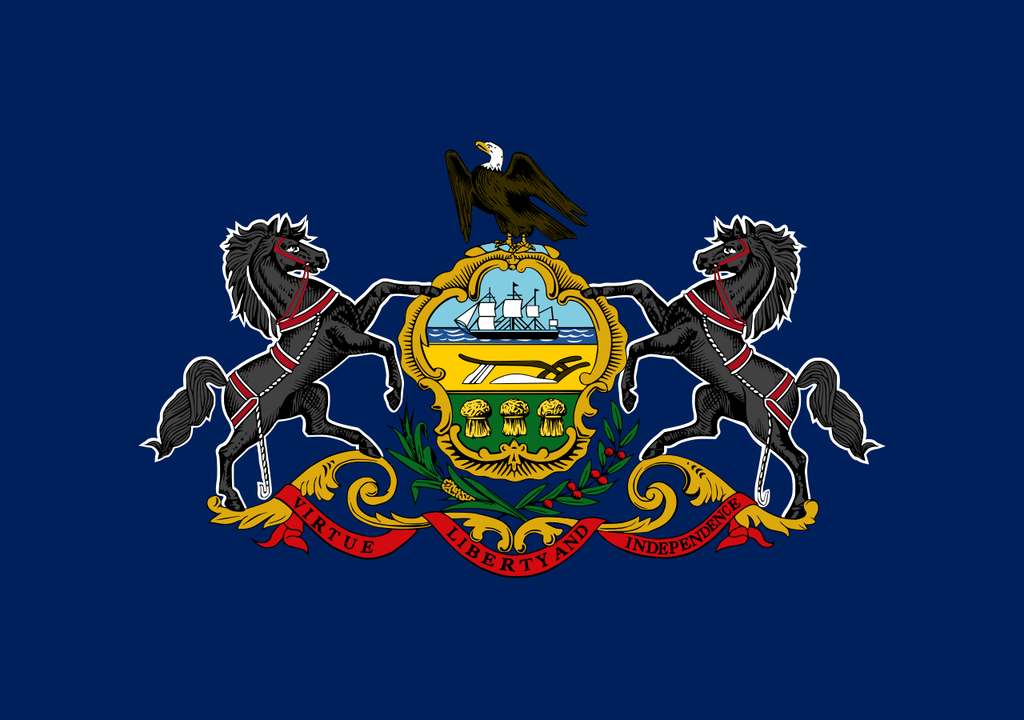
Pennsylvania occupies a central place in the American story. Known as the Keystone State, it served as a meeting ground for the nation's founders and later became a major center of manufacturing, transportation and organized labor.
READ: Texas: Biography, History and Cultural Identity
Officially the Commonwealth of Pennsylvania, it is one of four U.S. states that use the commonwealth designation. Harrisburg is its capital, while Philadelphia and Pittsburgh are its largest cities and two of its most recognizable cultural centers.
Pennsylvania: Origins and Founding History
READ: United States: Biography, History and National Identity
Long before European settlement, the region was home to Indigenous peoples, including the Lenape and Susquehannock. Their communities maintained trade networks and relationships with the rivers, forests and farmland that shaped the territory.
In 1681, King Charles II granted William Penn a colonial charter. Penn, an English Quaker, envisioned a settlement associated with religious toleration. Pennsylvania attracted people from different religious and cultural backgrounds, although its development also involved conflict and the dispossession of Indigenous communities.
Philadelphia became a leading colonial city and an important gathering place during the American Revolution. The Declaration of Independence was adopted there in 1776, and the Constitutional Convention met there in 1787. Pennsylvania became the second state to ratify the U.S. Constitution.
The state also holds a prominent place in Civil War history. The Battle of Gettysburg and Abraham Lincoln's Gettysburg Address made the town an enduring site of national remembrance.
Geography and Regional Character
Pennsylvania lies in the northeastern United States, with strong connections to both the Mid-Atlantic region and the Appalachian interior. It borders New York, New Jersey, Delaware, Maryland, West Virginia and Ohio, and has a shoreline on Lake Erie.
The Appalachian Mountains cross the state, creating ridges and valleys that have influenced settlement and transportation. The Delaware, Susquehanna and Ohio river systems have supported commerce, industry and community life.
Its regions have distinct identities. Southeastern Pennsylvania is closely associated with Philadelphia and its suburbs. Western Pennsylvania centers on Pittsburgh and surrounding communities, while central and northern areas include agricultural valleys, forests and smaller towns.
Lancaster County is widely known for its Amish communities. Pennsylvania Dutch heritage, rooted largely in German-speaking settlement, remains visible in food, language, crafts and religious traditions.
Industry, Work and Education
Pennsylvania played a major role in America's industrial expansion. Coal mining, iron production, steelmaking and railroads connected its natural resources with growing national markets. Pittsburgh became especially associated with steel, while northeastern Pennsylvania developed around anthracite coal.
Industrial growth brought immigration, urban expansion and labor organizing. It also left environmental damage and communities vulnerable to changes in manufacturing. The decline of heavy industry reshaped many towns and cities, making economic adaptation a lasting part of the state's story.
Pennsylvania's economy now includes healthcare, education, finance, logistics, agriculture and advanced manufacturing. Farming remains important, particularly dairy production and other livestock and crop enterprises.
Its universities include the University of Pennsylvania, Pennsylvania State University, Carnegie Mellon University and the University of Pittsburgh. These institutions contribute to research, medical care, technology and the state's wider cultural life.
Government, Culture and Civic Identity
READ: Washington, D.C.: Biography, History and Civic Life
Pennsylvania has an elected governor and a two-chamber legislature called the General Assembly. Local government includes counties, cities, boroughs and townships, reflecting a varied pattern of settlement and administration.
The state's political character combines large metropolitan populations, suburbs, smaller industrial communities and rural areas. That diversity has helped make Pennsylvania an important battleground in presidential elections.
Its cultural identity includes major museums, professional sports, regional foods and historic landmarks. From Philadelphia's founding-era sites to Pittsburgh's bridges and the trails of its state parks, Pennsylvania connects national history with distinctive local traditions.
More from Global News Biography. Further reading: Pennsylvania on Wikipedia.
Are you interested in learning how to write professionally and earn money as a writer and content creator? Contact Auxi Chat today to start your writing journey immediately.
Need a professional website in 72 hours? Contact Auxi Chat
If you have an article, opinion piece, event or news story you would like published, Global News Arena would love to hear from you.