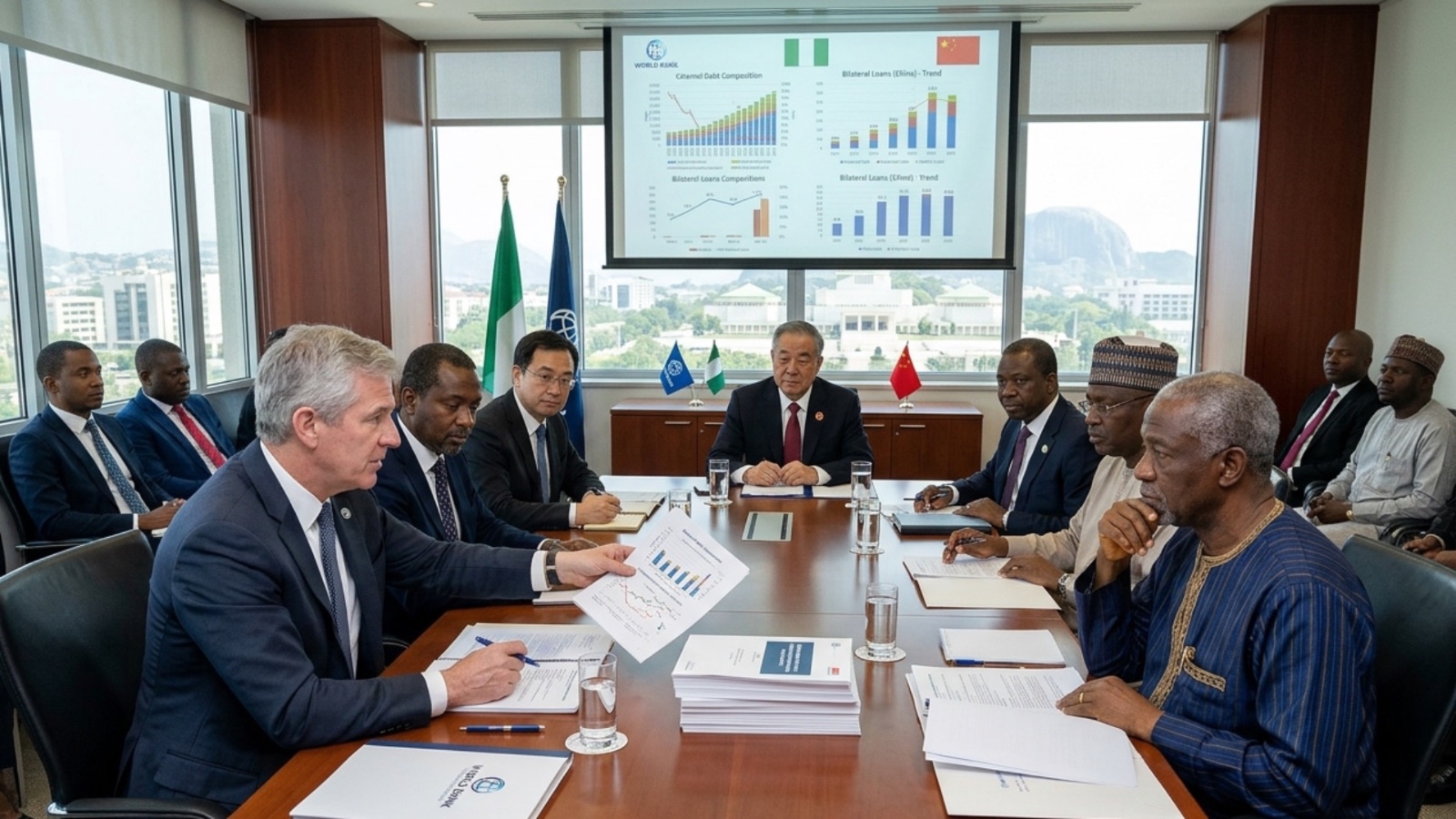
Nigeria external debt and China loansn
READ: Federal Government Revenue in Nigeria Reaches ₦33 Trillion
Nigeria’s external debt reached $145.02 billion in 2025, according to a new report from the World Bank. The report also shows that Nigeria owed China about $5.67 billion in government-to-government loans at the end of 2025.
Read: Do you need a professional writer in 72 hours? Contact Auxi Chat
The figures were published in the World Bank’s International Debt Report 2026. They show how much Nigeria owes foreign lenders and why the country needs to manage its loans carefully.
READ: High Business Costs in Nigeria Put Jobs at Risk
Nigeria’s total external debt increased from about $136.05 billion in 2024 to $145.02 billion in 2025. This means the amount owed to foreign lenders grew by around 6.6 per cent in one year.
China accounted for about 85 per cent of Nigeria’s bilateral external debt. Bilateral debt means money one government borrows from another government or through a government-backed lending agency.
Read: Need a professional website in 72 hours? Contact Auxi Chat
The report does not mean Nigeria owes all its foreign debt to China. Other lenders, including international financial institutions, private banks and investors, also hold large parts of the country’s debt.
The figures matter because Nigeria needs money to run public services, build roads, support development projects and pay its bills. However, borrowed money must eventually be repaid, often with interest.
Nigeria’s External Debt Rose to $145 Billion
The World Bank report shows that Nigeria’s external debt has grown greatly over the past decade.
In 2015, Nigeria’s total external debt stood at about $83.21 billion. By the end of 2025, it had reached approximately $145.02 billion.
This represents an increase of about 74 per cent over ten years.
External debt is money owed to lenders outside a country. A government may borrow from foreign institutions to pay for projects, while private companies may borrow from overseas lenders to support their businesses.
The World Bank’s figures cover several types of borrowing. These include government debt, private-sector debt that does not have a government guarantee and short-term foreign debt.
The report places Nigeria’s public and publicly guaranteed external debt at about $62.4 billion. This is the part that covers direct government borrowing and certain loans backed by government guarantees.
Private debt without government guarantees stood at about $54.48 billion, while short-term external debt was about $28.14 billion.
These figures show why it is important to understand what the total debt number includes. Not every dollar of Nigeria’s external debt is a loan taken directly by the Federal Government.
China Is Nigeria’s Biggest Government-to-Government Lender
China was Nigeria’s largest bilateral lender at the end of 2025, with about $5.67 billion in outstanding loans.
France was the next-largest bilateral lender, with approximately $774 million owed by Nigeria. Other bilateral lenders accounted for about $237 million.
This means China holds the largest share of the money Nigeria owes directly to foreign governments and related official lenders.
Nigeria has received loans from China for infrastructure and other development needs over the years. Such financing can help a country pay for projects that may be difficult to fund entirely from its own revenue.
However, borrowing comes with responsibilities. Loan agreements may include repayment dates, interest charges and other conditions that the borrower must follow.
The important question is not simply which country lends Nigeria money. It is also whether the projects funded by the loans provide enough value to justify the cost of borrowing.
For example, a loan used to build useful transport infrastructure may support businesses and make it easier for people to move goods. But if a project is poorly planned, costs too much or fails to deliver the expected benefits, paying back the loan can become more difficult.
Nigeria therefore needs to make sure borrowed funds are used properly and that the public can understand the terms of important loan agreements.
Where Does Nigeria Borrow Most of Its Foreign Money?
China is Nigeria’s largest bilateral lender, but government-to-government loans make up only one part of the country’s public and publicly guaranteed external debt.
The World Bank report shows that multilateral lenders accounted for the largest share of this category, with about $31.37 billion.
Multilateral lenders are organisations supported by several countries. They provide money to governments for development, economic support and other approved purposes.
The World Bank’s International Development Association accounted for about $18.53 billion of Nigeria’s public and publicly guaranteed external debt. International Monetary Fund Special Drawing Rights allocations accounted for about $5.52 billion, while other multilateral institutions held around $7.32 billion.
Private creditors accounted for approximately $24.35 billion of the same debt category. These creditors can include private financial institutions and investors.
The breakdown shows that Nigeria depends on different sources of foreign financing. Each source can have different interest rates, repayment periods and conditions.
Understanding these differences can help the government choose loans that are less expensive and easier to repay.
Why Nigeria’s Growing Debt Matters to Ordinary People
External debt may sound like a problem only for government officials and economists, but it can affect ordinary Nigerians.
When a government borrows money, it must plan how to repay the loan. Repayments can come from taxes, revenue from government-owned resources, export earnings and other sources of income.
If a large amount of money must go towards debt payments, less money may be available for other needs. These can include hospitals, schools, roads, electricity projects and public services.
This does not mean every loan is bad. Borrowing can help a country build important infrastructure and support economic growth, especially when the projects create lasting benefits.
The problem arises when the cost of borrowing becomes too high or the money does not produce enough value.
For Nigerian families, the wider concern is whether government spending can improve living conditions while the country continues to meet its financial responsibilities.
For businesses, high debt costs can also affect the government’s ability to invest in infrastructure that supports production, transport and trade.
Managing debt well is therefore important not only for government finances but also for jobs, business growth and public services.
Nigeria Must Find Money to Repay Its Foreign Loans
One major challenge with foreign debt is that Nigeria needs enough money to make payments when they are due.
The World Bank report showed that Nigeria’s external debt was equal to about 212 per cent of its exports in 2025. In simple terms, the total amount owed abroad was more than twice the value of the goods and services Nigeria exported during the year.
The report also placed external debt at about 51 per cent of Nigeria’s gross national income. Gross national income is a measure of income earned by a country’s residents and businesses, including income from abroad.
Another important figure is debt servicing. This means paying the interest and the amount of borrowed money that is due.
Nigeria’s external debt service was equal to about 19 per cent of its exports in 2025. This shows why the country must pay attention to how much foreign currency it earns and how much it needs to send abroad to meet its obligations.
Exports are important because many foreign loans are owed in currencies such as the US dollar. Nigeria needs access to enough foreign currency to make these payments.
When export earnings are weak or foreign currency becomes more expensive, paying foreign debt can become harder.
The government must therefore consider both the amount it borrows and its ability to earn enough money to repay it.
World Bank Warns About the Cost of New Loans
The World Bank report also highlights the difference between borrowing from official lenders and borrowing from private creditors.
For Nigeria’s new external loan commitments in 2025, the average interest rate from official creditors was about 1.9 per cent. For new commitments from private creditors, the average rate was about 9.6 per cent.
This difference is important because interest is the extra money a borrower pays for using a lender’s money.
A loan with a lower interest rate can cost less over time, although the full cost also depends on the repayment period, fees, currency risks and other conditions.
Private loans and international bonds can provide governments with access to money when other sources are limited. However, borrowing at higher rates can increase the amount that must be repaid.
The World Bank has warned that many developing countries are borrowing more and paying more to service their debts. This can leave less money for long-term development.
For Nigeria, the lesson is that new borrowing should be judged by its cost, its purpose and the country’s ability to repay it.
The government also needs to consider whether the money will create benefits that last longer than the debt itself.
Debt Transparency: Why Nigerians Need Clear Information
The World Bank’s report brings renewed attention to debt transparency. This means making reliable information about borrowing available so that people can understand how much is owed, who provided the money and what the loan will cost.
Clear information helps lawmakers, financial experts, journalists and citizens assess whether public borrowing is being managed responsibly.
For example, when the government takes a loan for a road project, the public should be able to understand the amount borrowed, the purpose of the loan, its repayment terms and the progress of the project.
The same principle applies to loans from China and other foreign lenders.
Transparency is especially important when loan agreements involve complex conditions, government guarantees or other financial arrangements that may not be easy for the public to understand.
The World Bank explains that full disclosure of public debt and government-related financial risks helps both borrowers and lenders make better decisions.
READ: Nigerian Stock Market Loses ₦3.28 Trillion as Heavy Selling Hits Major Shares
For Nigeria, better debt information can also help reduce confusion about which loans belong to the government, which belong to private companies and which are backed by public guarantees.
However, publishing debt figures is only one part of responsible borrowing. The government must also ensure that loans are properly approved, funds are used for their intended purposes and repayments are planned in advance.
Tinubu’s Government Faces New Borrowing Decisions
The latest debt figures come as President Bola Tinubu’s government seeks approval from the National Assembly to raise about $7.7 billion through external financing for part of the 2026 budget.
The proposed borrowing is intended to help finance the government’s spending plans. It would add to the country’s existing financial obligations if approved and drawn down.
The request places greater importance on how Nigeria chooses its lenders and manages the money it receives.
Before taking on more debt, the government must consider the cost of the loans, the projects they will support and how the country will repay them.
Lawmakers also have a role to play by examining borrowing proposals and asking questions about their purpose and likely benefits.
Nigerians, meanwhile, need clear information about how borrowed money is used and whether promised projects are completed.
New loans can help fund important work, but borrowing should not become a substitute for building a strong and reliable source of government revenue.
Improving tax collection fairly, supporting businesses, encouraging investment and growing exports can help Nigeria strengthen its ability to meet future obligations.
What Nigeria Can Do to Manage Its Debt Better
Nigeria can take several steps to make its borrowing more sustainable.
First, the government can publish clear and regular information about its loans, including the lenders, interest rates, repayment dates and projects being funded.
Second, it can give priority to projects that provide real economic value. Borrowed money should be used carefully, with proper checks to make sure projects are completed and deliver the benefits expected.
Third, the government can work to increase exports and support businesses that produce goods and services for local and international markets. Stronger export earnings can help Nigeria obtain the foreign currency needed to repay external loans.
Fourth, Nigeria can compare loan offers before borrowing. A lower interest rate and a suitable repayment period may reduce costs, although every agreement must be examined in full.
Finally, the government can improve its management of public spending and revenue. Better planning can reduce waste and help ensure that money is available for both essential services and debt payments.
These steps will not remove Nigeria’s debt overnight. However, they can help the country borrow more carefully and reduce the risk that repayments will place too much pressure on future budgets.
Conclusion: World Bank Report Puts Nigeria’s Debt Under the Spotlight
The World Bank’s latest figures show that Nigeria’s external debt reached about $145.02 billion in 2025, while the country owed China approximately $5.67 billion in bilateral loans.
China remains Nigeria’s largest government-to-government lender, but it is not the country’s only major creditor. International institutions and private lenders account for much larger portions of Nigeria’s wider public and publicly guaranteed external debt.
The figures highlight the need for careful borrowing, clear loan information and stronger planning for repayment. Foreign loans can help Nigeria build infrastructure and support development, but they can also create pressure when the cost of repayment grows faster than the country’s ability to pay.
The key issue is not simply how much Nigeria owes. It is whether the money borrowed is used wisely and whether the country can repay it without weakening essential public services.
As the government considers further foreign borrowing, Nigerians will need clear answers about how the money will be spent and how future repayments will be managed.
The writer of this article does not claim to know the individuals named personally. The information about their backgrounds, as published on Global News Arena, is based on independent online research.
Are you interested in learning how to write professionally and earning money as a writer and content creator? Contact Auxi Chat today to start your writing journey immediately.
If you have an article, opinion piece, event or news story you would like published, Global News Arena would love to hear from you.