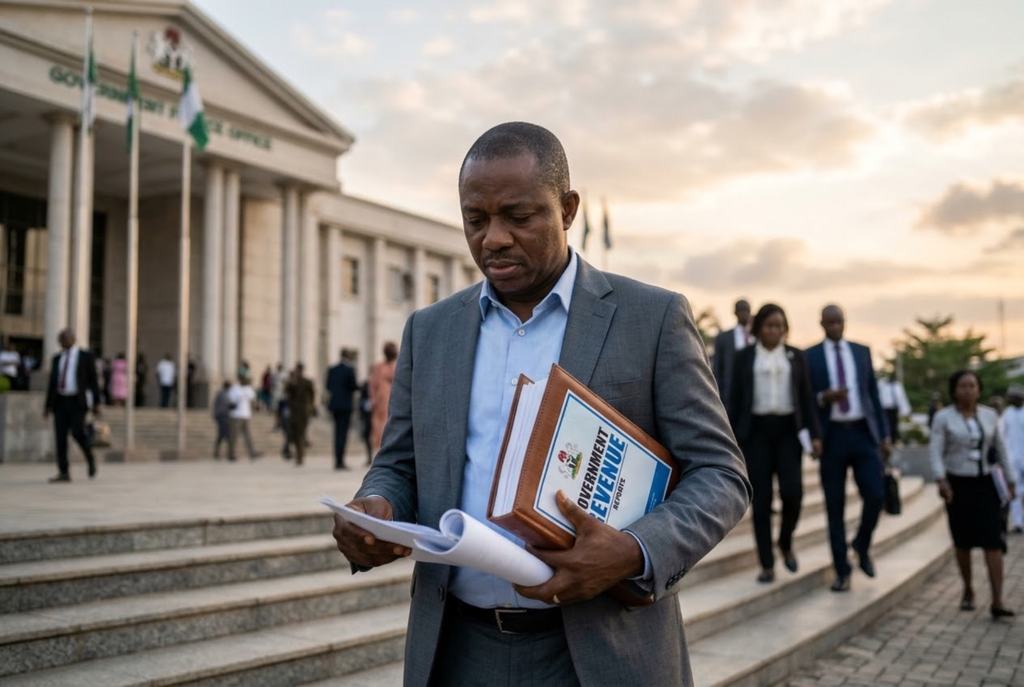
Federal Government revenue in Nigeria has reportedly reached ₦33 trillion between January and October 2026, according to figures attributed to government revenue administration. The reported total has renewed attention on how Nigeria collects public funds and whether stronger revenue generation will translate into visible improvements in public services.
READ: Nigerian Stock Market Loses ₦3.28 Trillion as Heavy Selling Hits Major Shares
When I read that Nigeria’s Federal Government generated ₦33 trillion in revenue between January and October 2026, I see more than a large financial figure. I see a question that matters to taxpayers, business owners and families alike: what does the money collected mean for the country and the people who live in it?
Read: Do you need a professional writer in 72 hours? Contact Auxi Chat
Finance Minister Taiwo Oyedele disclosed the revenue figure, according to a report published on 6 November 2026. The announcement attributed improved collection in part to digital tax administration and electronic invoicing.
READ: Cooking Gas Price in Nigeria Hits ₦1,000 per Kilogram
The figure covers ten months of the year, not the final full-year total. Collections during the remaining months and the final accounting will determine the eventual result for 2026.
Revenue is important because it helps fund government responsibilities, including public services, infrastructure and programmes. However, the total collected is only one part of the public finance story. Expenditure, debt obligations and the efficiency with which money is used also matter.
Read: Need a professional website in 72 hours? Contact Auxi Chat
Digital Tax Administration Is Changing the Collection Process
Digital tax systems and electronic invoicing can help authorities organise transaction records, improve reporting and compare declared business activity with supporting information.
I see the potential value in this because a tax system needs reliable information. When records are incomplete or inconsistent, it can become harder for authorities to determine what is owed and for businesses to understand their obligations.
Digitalisation can also make some processes more efficient, but technology alone cannot guarantee a fair or effective tax system. Clear rules, reliable infrastructure, accessible guidance and consistent implementation remain essential.
Businesses need to know what they are expected to report, how to submit information and how to correct errors. Smaller enterprises may require practical support to adapt to new systems without being overwhelmed by compliance costs.
A well-designed system should make it easier for honest taxpayers to comply while improving the ability of authorities to identify discrepancies.
Federal Government revenue in Nigeria Collection Must Be Considered Alongside Spending
I would be careful not to treat a higher revenue figure as proof that every aspect of public finance has improved. The government also has expenditure commitments, debt-servicing obligations and other responsibilities that affect how much money is available for particular priorities.
Revenue can increase while public spending pressures remain high. Similarly, stronger collection does not automatically mean that citizens will immediately experience better roads, more reliable electricity or improved public services.
The relationship between revenue and outcomes depends on how funds are allocated, managed and accounted for.
That is why the ₦33 trillion figure should be considered alongside budget implementation, government expenditure, borrowing requirements and the fiscal deficit. These measures provide a more complete picture of the government’s financial position.
What the Figure Means for Businesses and Taxpayers
For businesses, the quality of tax administration can be just as important as the amount collected. Companies need predictable rules and processes so that they can plan cash flow, manage obligations and make investment decisions.
A system that is transparent and consistently applied can help businesses understand their responsibilities. Confusion, unreliable platforms or disproportionate compliance costs can create difficulties, particularly for smaller operators.
READ: Instagram News: Meta Pauses Business Terms Changes Amid AI Concerns
For taxpayers, confidence also depends on whether public revenue is managed responsibly. People want to understand how the money collected supports the public services and infrastructure on which communities and businesses depend.
The latest figure is therefore a starting point for a wider discussion rather than a complete verdict on economic performance.
The Next Test Is Sustainable Revenue
The remaining months of 2026 will show whether the reported collection pace continues. The full-year result will provide a clearer basis for comparing revenue performance and evaluating the government’s progress.
For me, the most important question is not simply whether the government can collect more money. It is whether revenue administration can become more reliable, compliance more straightforward and public resources more effective in supporting economic activity.
The ₦33 trillion announcement is an important update on Nigeria’s revenue position. Its long-term significance will depend on the quality of collection, the management of public funds and the extent to which revenue supports the needs of the country.
The writer of this article does not claim to know the individuals named personally. The information regarding their backgrounds as published on Global News Arena is based on independent online research.
If you have an article, opinion piece, event or news story you would like published, Global News Arena would love to hear from you.