IGC Fashion Lagos Fashion Week: Reclaiming Indigenous Textiles
READ: Maliko at Lagos Fashion Week 2026: Artisanal Footwear
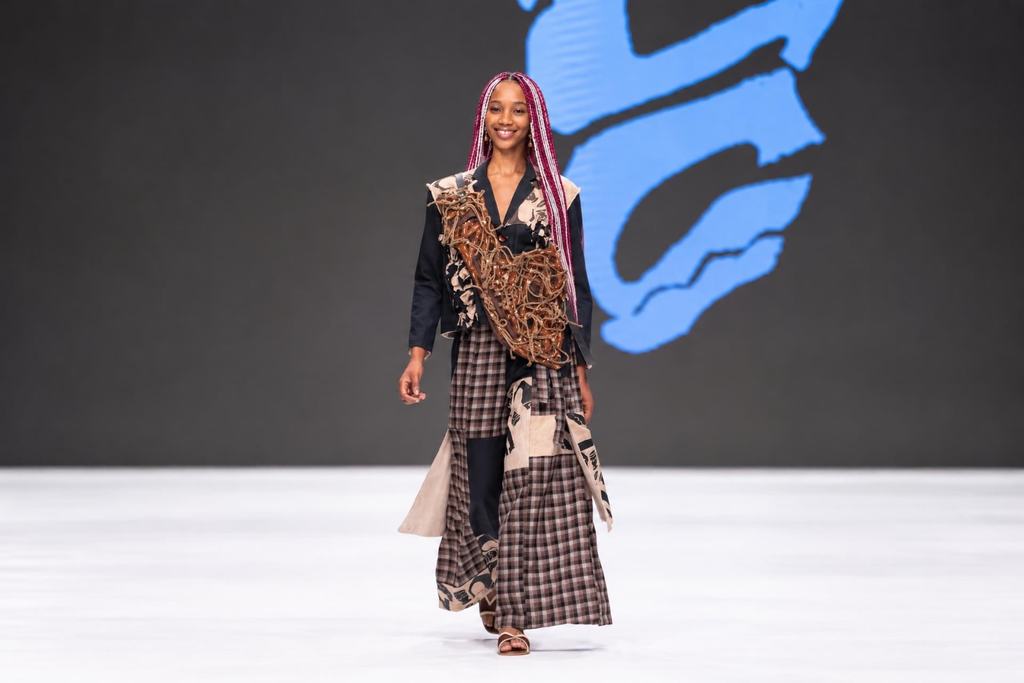
IGC Fashion Lagos Fashion Week placed indigenous textiles and material heritage at the centre of a contemporary design conversation. The Uganda-based fashion brand presented work informed by deconstruction, barkcloth and cowrie embellishments, approaching textiles as carriers of cultural knowledge rather than merely decorative surfaces.
The presentation was particularly relevant to the wider conversation surrounding African fashion because it drew attention to the material itself. A textile can have a history that extends beyond its colour, texture or appearance. It can reflect a community’s skills, its relationship with the environment and the knowledge passed between generations.
READ: Bakusoraya at Lagos Fashion Week 2026: Beninese Heritage
The collection invited audiences to consider what happens when designers bring such materials into modern clothing. Rather than treating heritage as something separate from contemporary fashion, IGC Fashion used its presentation to explore how indigenous processes and materials can inform new forms.
For me, this is an important direction for fashion because it asks audiences to look more closely at how garments are made. The surface of a fabric may attract immediate attention, but understanding its origin and production process can reveal another dimension of the design.
Understanding IGC Fashion and Its Creative Direction
IGC Fashion is a Uganda-based fashion brand whose work explores the relationship between indigenous materials, craftsmanship and contemporary design. Its 2026 presentation formed part of the wider Lagos Fashion Week programme, which brought together designers interested in heritage, craft and the future of fashion production.
The brand’s official event page describes its contribution to Lagos Fashion Week’s Woven Threads VII exhibition, presented under the theme Crafted. The exhibition examined the structures that support fashion through material, process and production.
IGC Fashion’s featured collection, Nsaamo, takes its name from the engraved hardwood mallets used in the production of Lubugo, or Ugandan barkcloth. The name points towards the tools and processes that help turn a raw material into a textile, placing the act of making within the collection’s conceptual framework.
This is an important distinction. Fashion often places the finished garment at the centre of attention, while the labour and techniques required to produce its materials receive less notice. By drawing attention to the tools and processes behind barkcloth, the collection invites a broader understanding of what makes a textile significant.
The available event information does not establish every detail of the brand’s founding history or the full biography of its creative team. This feature therefore focuses on the documented collection, its stated material references and the design questions raised by the presentation rather than adding unverified biographical claims.
IGC Fashion Lagos Fashion Week and the Story of Barkcloth
Barkcloth is a material made from the inner bark of certain trees. In Uganda, the craft of producing barkcloth has deep cultural significance, particularly among the Baganda people, and has long been associated with ceremonial and social practices.
The process differs from conventional woven textile production. Rather than creating cloth by interlacing threads on a loom, barkcloth makers work the bark through specialised techniques that transform it into a flexible sheet of material. The process requires knowledge of the tree, the appropriate harvesting methods and the techniques used to prepare and soften the bark.
Ugandan barkcloth is recognised internationally as an important element of cultural heritage. Its traditional production and social significance have also been documented by UNESCO, which included the barkcloth-making tradition of Uganda on its List of Intangible Cultural Heritage in Need of Urgent Safeguarding.
For fashion designers, barkcloth offers a different relationship with material. Its texture and structure are unlike those of many conventional fashion fabrics, which means it may require a different approach to pattern development, cutting and finishing.
The material’s cultural significance also calls for care. Using a heritage textile in contemporary design should involve an understanding of where it comes from, how it is made and why the technique matters to the communities that maintain it.
This does not mean that traditional materials must remain unchanged. Designers can explore new applications while acknowledging their origins and the expertise involved in their production. The challenge is to ensure that experimentation does not erase the history of the material or treat cultural knowledge as an anonymous decorative resource.
Nsaamo: Bringing the Making Process Into Focus
The title Nsaamo directs attention towards the engraved hardwood mallets used in the production of Lubugo barkcloth. The tools are not incidental to the process: they are part of the practical knowledge through which the material is transformed.
By drawing on this reference, IGC Fashion places production within the story of the collection. The textile becomes connected to the work required to make it, from the selection of raw material to the repeated actions used to prepare the bark.
This focus is valuable because contemporary fashion often celebrates innovation without fully explaining the processes that make it possible. A new silhouette or unusual surface can appear to be the product of an individual creative idea, yet the material may depend on generations of technical knowledge.
In craft-based production, the tool and the maker’s skill are closely connected. Knowing how to handle a material involves experience, judgement and an understanding of how it responds to pressure, moisture, temperature and repeated manipulation.
A fashion collection that acknowledges those processes gives audiences an opportunity to think about the work behind the final product. It also raises questions about how traditional skills can remain relevant as clothing markets and consumer expectations change.
For IGC Fashion, the use of the Nsaamo reference within the Lagos Fashion Week programme connected indigenous material knowledge with a contemporary design platform. It encouraged a conversation about craft as a living practice rather than simply a visual reminder of the past.
Deconstruction as a Contemporary Design Method
Deconstruction was another important element of the collection described in coverage of the show. In fashion, deconstruction involves rethinking the conventional structure of a garment, changing its proportions or rearranging its components to produce a different silhouette.
A designer might alter a familiar seam, expose a construction detail, create an asymmetrical shape or combine layers in a way that challenges standard expectations. The method can make the process of construction visible, turning it into part of the garment’s aesthetic.
When used with indigenous textiles, deconstruction creates opportunities to explore how a material can be interpreted beyond its traditional application. The designer must consider how the material behaves and how its qualities can support the new form.
Barkcloth, for instance, has a different structure from many woven fabrics. Its surface and flexibility can influence how it should be cut, shaped and joined. A successful design needs to account for those characteristics rather than assume that every fabric can be handled in the same way.
The relationship between material and construction is central to this process. Deconstruction is not simply about making a garment appear irregular. It involves understanding a structure well enough to alter it deliberately.
I believe this is where experimental fashion can become particularly meaningful. When the construction supports the idea, the finished piece communicates something about both the designer’s creative intention and the possibilities of the material.
Cowrie Embellishments and the Meaning of Detail
Cowrie embellishments appeared among the features identified in coverage of IGC Fashion’s presentation. Cowrie shells have been used in different African societies for adornment, trade and ceremonial purposes, although their specific meanings vary across regions and historical contexts.
In fashion, cowries can introduce texture, pattern and a recognisable natural form. Their curved surfaces contrast with the flatter surfaces of fabric, creating an additional visual dimension.
However, cultural meaning cannot be reduced to appearance alone. A cowrie detail may be used as an ornament in a contemporary garment, but the shell’s historical associations depend on the cultural and social context in which it is used. It is important not to assume that a single meaning applies to every community.
From a construction perspective, the use of shells also presents practical questions. Their weight, attachment and placement can influence the way a garment moves. Designers need to ensure that decorative elements are secured appropriately and do not compromise the comfort or durability of the piece.
When used thoughtfully, such details can create a connection between material, craft and contemporary styling. Their significance becomes stronger when the designer understands the reference and the role it plays within the larger design concept.
In IGC Fashion’s presentation, the reported combination of barkcloth, cowries and deconstruction created an opportunity to consider how indigenous materials and familiar forms can be brought into a modern fashion context.
Indigenous Materials and the Future of African Fashion
African fashion encompasses many different textile traditions, craft practices and contemporary design approaches. Barkcloth, handwoven fabrics, dyed textiles, embroidery and other techniques reflect distinct histories and methods rather than one uniform tradition.
Designers working with these materials face an important challenge: how to preserve the knowledge associated with them while creating products that can participate in present-day fashion markets.
This may involve collaborating with skilled makers, understanding the limitations of a material and developing new ways to use it without compromising its quality. It can also involve documenting techniques and ensuring that the people who hold the knowledge remain visible in conversations about the finished product.
The commercial side matters as well. Craft-based production can take time, and specialist materials may not be available in unlimited quantities. Designers need to consider production schedules, pricing, sourcing and the level of demand for the finished garments.
If a material requires specialised handling, the brand must ensure that the production team has the skills and resources needed to work with it. Increasing demand without planning can place pressure on the makers and compromise the quality of the result.
For customers, the story behind a material can provide a deeper understanding of a garment’s value. But cultural importance alone does not guarantee that a product is durable, ethically produced or environmentally preferable. Those questions require information about the actual production process.
IGC Fashion’s approach makes these issues relevant because it places material heritage at the centre of the design conversation. It encourages the industry to consider not only what a garment looks like, but also what it takes to produce it and what knowledge it carries.
Circular Fashion and Responsible Material Use
The official Nsaamo page situates the collection within a wider conversation about material, process and production, including the need to reconsider how fashion uses resources.
READ: Studio Imo Lagos Fashion Week: Crochet Reimagined
Circular fashion generally refers to approaches intended to reduce waste and keep materials and products in use for longer. Examples can include repair, reuse, recycling, design for durability and systems that make it easier for garments to be recovered or repurposed.
Indigenous materials and traditional techniques may offer useful lessons in how people have historically worked with locally available resources. However, it would be inaccurate to assume that every traditional method automatically meets modern sustainability standards. The environmental impact of a product depends on its full lifecycle, including how materials are obtained, processed, transported, used and eventually discarded.
Barkcloth production, for example, requires careful attention to how trees are managed and harvested. The sustainability of the practice depends on the methods used to protect the resource and maintain the craft over time.
The same principle applies to contemporary fashion. A brand needs to understand its supply chain and the consequences of its material choices. Using an indigenous textile can create a meaningful connection to heritage, but responsible production also requires attention to the people and ecosystems involved.
I find this distinction important because sustainability can easily become a marketing word without enough explanation. Clear information about materials, production and care gives customers a more reliable basis for understanding what a brand is doing.
Lagos Fashion Week’s Crafted Theme and the Wider Industry
Lagos Fashion Week 2026 provided a setting for designers to examine craft through different materials and creative approaches. The Woven Threads VII exhibition, themed Crafted, focused on the structures that underpin fashion through material, process and production.
IGC Fashion’s Nsaamo collection contributed a Ugandan perspective to this conversation. Its focus on barkcloth and the tools associated with its production broadened the discussion beyond the use of familiar decorative motifs.
The wider programme included designers exploring crochet, handworked textiles, deconstruction and other craft-led approaches. These presentations demonstrated that craftsmanship can influence the entire design process, from the choice of raw material to the construction of the finished garment.
For the industry, the next challenge is to connect that creative visibility with long-term opportunities. Designers and artisans need ways to build sustainable relationships, access markets and communicate the value of their work. Buyers need reliable information about materials and production, while customers need clear guidance on availability, pricing and care.
What IGC Fashion’s Presentation Contributes
IGC Fashion’s 2026 presentation invited audiences to look at textiles as more than surfaces. The connection to Ugandan barkcloth, the Nsaamo reference and the use of cowrie embellishments placed material knowledge and craft within the collection’s wider story.
The work also raised important questions about how designers can adapt indigenous materials for contemporary use while respecting their origins. Such questions involve creativity, but they also involve collaboration, accurate representation and the practical conditions under which craft is maintained.
I believe the most valuable aspect of this approach is the attention it gives to the process behind the garment. When people understand how a material is made and why a technique matters, they can appreciate the finished product in a more informed way.
The long-term influence of the collection will depend on how the brand develops its ideas, how its materials are sourced and how its work reaches audiences beyond the runway. Nevertheless, the presentation added a meaningful perspective to the Lagos Fashion Week conversation by connecting contemporary design with indigenous textile knowledge.
Fashion can be a space where inherited skills are not simply preserved as historical objects but explored through new forms. That process works best when innovation and respect for the source material remain connected.
IGC Fashion’s appearance at Lagos Fashion Week 2026 placed that relationship in view, reminding audiences that the future of African fashion can be shaped by looking carefully at the knowledge, materials and makers that already exist.
The writer of this article does not claim to know the individuals named personally. The information about their backgrounds, as published on Global News Arena, is based on independent online research.
Are you interested in learning how to write professionally and earning money as a writer and content creator? Contact Auxi Chat today to start your writing journey immediately.
If you have an article, opinion piece, event or news story you would like published, Global News Arena would love to hear from you.