Pettre Taylor Lagos Fashion Week: Stories Across Generations
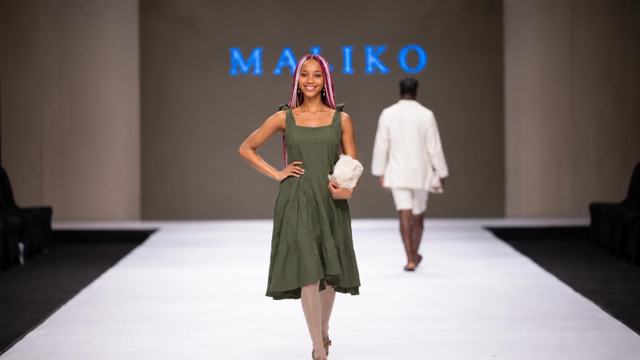
READ: Maliko at Lagos Fashion Week 2026: Artisanal Footwear
Pettre Taylor Lagos Fashion Week offered a thoughtful exploration of identity, movement and cultural inheritance through The Middlemen, a collection presented during the 2026 edition of the event. Designer Peter Acha drew inspiration from his connection to the Kwararafa Kingdom, also associated with the Jukun people, and used the collection to consider how stories and traditions travel across generations.
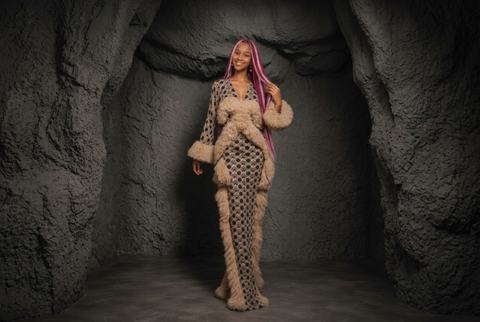
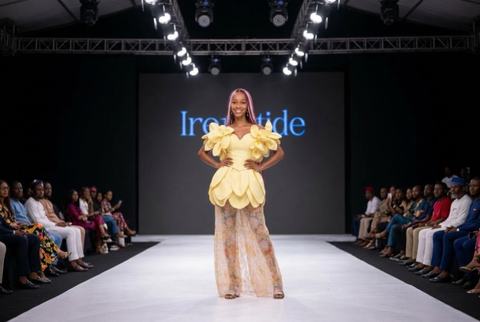
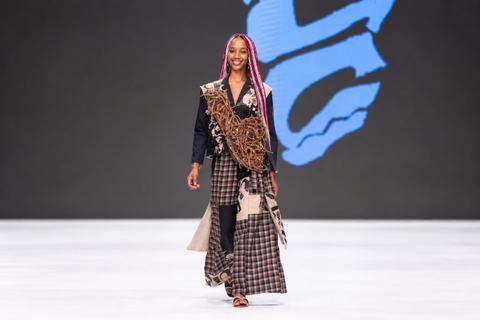
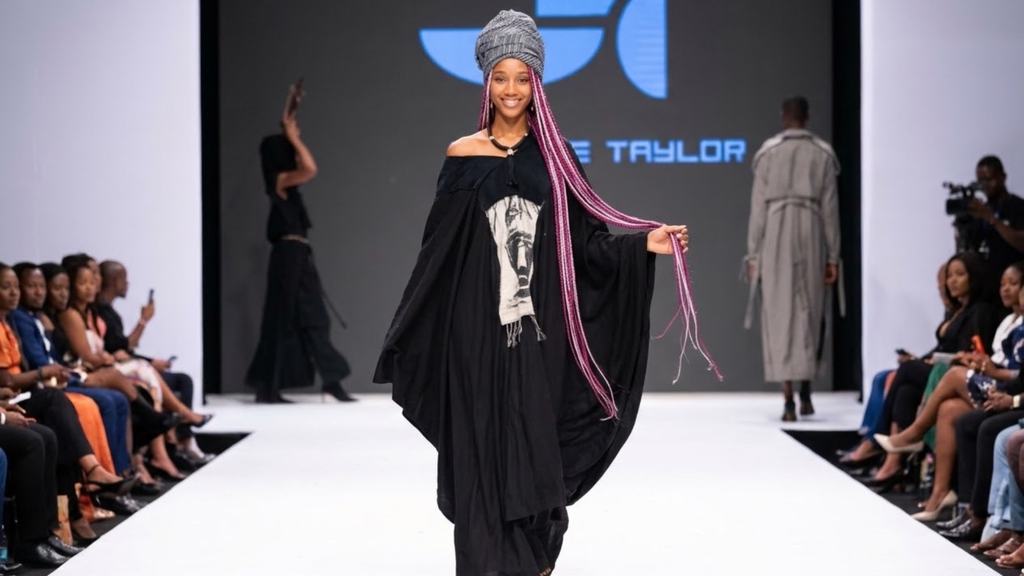
The runway presentation featured knitwear, woven fabrics and oversized avant-garde denim. A palette centred on grey, brown and white gave the collection a restrained visual foundation, while turbans and nomadic-inspired styling reinforced its focus on movement, ancestry and cultural memory.
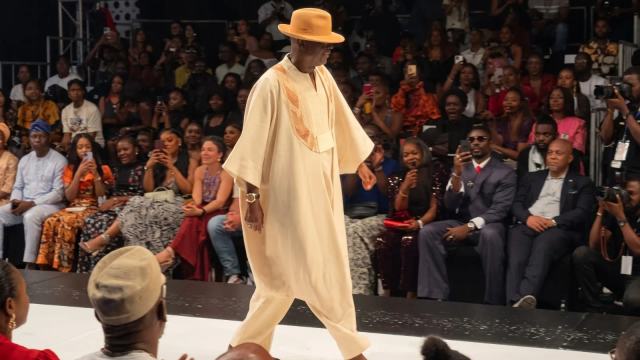
READ: Sanwo-Olu walks the runway at Lagos Fashion Week 2026
The collection was not simply an exercise in combining different materials. Its central idea concerned the people who stand between past and future, receiving knowledge from those who came before them and deciding what to pass on to those who follow.
For me, this is a compelling way to approach fashion because it gives clothing a role beyond appearance. A garment can carry references to a place, a community or a family history. Its material and construction can become part of a larger conversation about how people understand their origins and communicate them to others.
Who Is Peter Acha, the Designer Behind Pettre Taylor?
Pettre Taylor is a Nigerian fashion label founded by Peter Acha in 2019. The brand has developed a distinctive approach to fashion through sculptural forms, craft-led techniques and a sustained interest in cultural identity.
Acha’s work draws on West African heritage and traditional artisanal practices while exploring how those references can be expressed through contemporary clothing. Rather than treating heritage as something separate from modern design, the label uses it as a source of ideas for material, shape and storytelling.
The designer’s professional development has included participation in Lagos Fashion Week’s Green Access programme in 2022. The initiative supports designers exploring sustainability and responsible approaches to fashion. Acha was also selected for Central Saint Martins’ Makers Camp, a programme that highlights craft and design in West Africa, according to published profiles and fashion coverage.
These experiences help place Pettre Taylor within a wider conversation about the relationship between craftsmanship, creative identity and production. They also provide context for the label’s interest in techniques that require a close understanding of materials.
The brand’s official website presents its current collection, Shades of Brown, as an exploration of identity, colourism and contemporary representation. It draws on Japanese minimalism, Indian drapery and Nigerian craft traditions, including tie-dye, batik and embroidery. That later collection reflects the label’s continuing interest in how different influences can be brought together through clothing.
The 2026 presentation, The Middlemen, developed another aspect of this design direction by focusing on ancestry, migration and the transmission of knowledge.
Pettre Taylor Lagos Fashion Week and the Meaning of The Middlemen
The title The Middlemen refers to the position people occupy between previous and future generations. The collection’s stated concept considers how stories, techniques, culture, knowledge and traditions are passed on over time.
This idea places responsibility at the centre of the design narrative. People inherit histories they did not create, but they still influence how those histories are remembered and communicated. They may preserve certain practices, reinterpret others or introduce them to audiences who have never encountered them before.
Fashion provides a particularly visible way to explore this relationship. Clothing can carry patterns, textiles, forms and styling traditions that connect a contemporary design to earlier practices. A designer may preserve a technique while changing the garment’s shape, or use a familiar material in a way that speaks to a different generation.
The challenge is to maintain a meaningful connection with the source. A cultural reference should not become an unexplained decorative feature when its history is central to the collection’s concept.
In The Middlemen, the reported connection to Acha’s Kwararafa heritage gives the collection a personal starting point. The garments then become part of a broader exploration of how identity can be communicated through design.
I believe this is one of the strengths of storytelling in fashion. It allows audiences to ask questions about the references they see, rather than judging a collection only by whether an individual look is visually striking.
Kwararafa Heritage and the Search for Belonging
In published interviews and fashion coverage, Acha has described researching his roots and learning more about his connection to the Kwararafa Kingdom and the Jukun people. He explained that discovering more about his background influenced his thinking about movement from one place to another and the way identity can persist through migration.
The Kwararafa Kingdom is associated with historical communities in what is now central Nigeria. The history of the region is complex, involving different communities, political relationships and historical interpretations. It is therefore important not to reduce the kingdom’s history to a single contemporary ethnic identity or assume that every person connected to the region shares the same experience.
For a designer, researching heritage can open new creative directions. It can lead to questions about language, textile traditions, cultural memory and the relationship between communities that have moved across geographical boundaries.
Migration also complicates the idea of identity as something fixed. People may live far from the places their families came from, yet continue to maintain relationships with ancestral histories through stories, celebrations, language and material culture.
Clothing can provide one way of expressing that connection. A designer may use silhouette, styling or textile techniques to refer to a particular history without attempting to reproduce a traditional outfit exactly.
The value of such work depends on research and thoughtful interpretation. A collection can contribute to a wider conversation about heritage, but it should not be treated as a complete historical account in itself.
The Middlemen and the Experience of Migration
Movement from one place to another can change the way people understand home. Migration may be voluntary or forced, temporary or permanent, and motivated by many different circumstances. It can create new opportunities while also requiring people to navigate unfamiliar environments.
For Acha, the reported inspiration behind The Middlemen connects migration with the search for cultural origins. This gives the collection a narrative that extends beyond physical movement to include the transmission of memory and identity.
Fashion can communicate these ideas through contrasting forms. Layering may suggest accumulation, while loose or flowing silhouettes can evoke movement. Different materials can be placed together to show how multiple influences coexist within a single design.
These interpretations should be approached carefully because a garment does not have one universal meaning. A viewer may read a particular shape or material differently from the designer. The accompanying collection narrative helps explain the intended direction without requiring every audience member to arrive at the same interpretation.
The reported use of turbans and nomadic-inspired styling reinforced the collection’s interest in movement. Those details created a visual connection with the broader theme, while the mix of fabrics brought several textures into the presentation.
The result encouraged viewers to consider migration not only as a geographical event but also as a process through which people carry, adapt and reinterpret the knowledge they inherit.
Knitwear, Woven Fabrics and Oversized Denim
The collection combined knitwear, woven fabrics and oversized denim, creating contrast through both material and shape. Each offers different possibilities for construction and visual expression.
Knitwear is formed through interlocking loops, giving it properties that differ from woven cloth. Depending on the yarn and technique, it may stretch, drape softly or hold a more structured form. These qualities make knitwear useful for garments that explore texture and movement.
Woven fabrics are created by interlacing threads, often producing a more stable structure. Their weight, weave and finish influence how they hang and how they can be shaped into a garment.
Denim adds another dimension. Its familiar association with everyday clothing can be challenged through scale, proportion and construction. An oversized denim piece may appear more sculptural than a conventional fitted jacket or pair of trousers, especially when combined with other materials.
The mix of these fabrics allows a designer to create contrasts between softness and firmness, familiar and experimental, or fitted and exaggerated forms.
For Pettre Taylor, the combination of material and silhouette supported the collection’s wider narrative. The garments could be considered individually, but they also worked together as part of a presentation about identity, movement and inheritance.
Material selection is not only an aesthetic decision. Different fabrics require different construction methods, care instructions and production resources. A designer must consider how the pieces will fit, how they will move and how their different components will hold together.
A Restrained Palette of Grey, Brown and White
The collection’s reported palette centred on grey, brown and white. These colours created a restrained foundation for the varied materials and shapes.
Brown can connect visually with natural surfaces and earth tones, although its meaning depends on context. Grey offers a range of possibilities from light and muted to dark and industrial, while white can introduce contrast and make texture more visible.
A restrained palette can be particularly effective when a collection relies on craftsmanship. It allows the audience to focus on the surface of the material, the scale of the silhouette and the way separate fabrics interact.
Colour also affects how garments are styled together. A limited range of shades can create visual continuity across different pieces, even when their shapes vary considerably.
This does not mean that a restrained palette is automatically more sophisticated than a bright one. The effectiveness of a colour choice depends on how it supports the collection’s concept and how it works with the materials being used.
In The Middlemen, the reported shades provided a consistent background for knitwear, woven fabrics and oversized denim. The styling and material contrasts helped distinguish individual looks without making the overall presentation dependent on colour alone.
Craftsmanship and the Value of Slower Design
Pettre Taylor’s history of craft-led work places the label within a wider movement of designers reconsidering the relationship between production speed, material quality and creative expression.
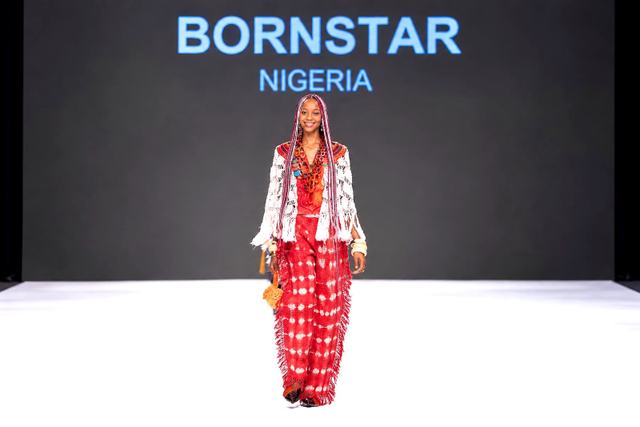
READ: Bornstar Nigeria Lagos Fashion Week: Movement in Design
Craft-led design often requires specialised skills and careful finishing. Depending on the garment, the process may involve handwork, repeated fitting, detailed construction or the adaptation of traditional techniques to contemporary forms.
These processes can take longer than mass-production methods, but time alone does not guarantee quality or sustainability. The materials used, working conditions, durability of the finished garment and the overall production system also matter.
For a small fashion label, balancing craftsmanship with commercial demands can be challenging. Designers must decide how many pieces can be produced, what prices are realistic and whether the required skills are available consistently.
Customers also have a role in this conversation. Understanding how a garment is made can help them assess its price, care requirements and expected lifespan. A piece designed to be worn for many years may offer a different kind of value from one intended for a short-lived trend.
Pettre Taylor’s emphasis on craft and material experimentation provides a useful framework for examining these questions. The label’s work demonstrates how construction can become part of a collection’s message rather than simply a technical stage that happens before the runway.
Lagos Fashion Week and the Future of Heritage-Led Design
Lagos Fashion Week provides a platform for designers to present collections to audiences from different parts of the fashion industry. Its programme includes labels exploring contemporary tailoring, indigenous textiles, knitwear, upcycling and other creative approaches.
Pettre Taylor’s presentation added a heritage-focused narrative to that mix. The collection connected the designer’s personal research with broader questions about migration and the transmission of cultural knowledge.
For the industry, heritage-led design can create opportunities for deeper storytelling and collaboration with skilled makers. It can also introduce customers to materials or techniques they may not know well.
However, turning a compelling runway concept into a lasting business requires planning. Brands need reliable production systems, clear product information, appropriate pricing and routes to reach customers. If a collection relies on specialised craft, the designers must also consider how to sustain those skills and maintain quality.
What The Middlemen Contributes to Fashion
The Middlemen offered a way to consider fashion as a link between generations. Its reported references to Kwararafa heritage and migration provided the conceptual foundation, while knitwear, woven fabrics, oversized denim and nomadic-inspired styling shaped the visual presentation.
The collection’s most important contribution may be the questions it raises about inheritance. What does a person carry from their background? Which traditions are preserved, which are adapted, and how can contemporary design communicate those choices responsibly?
These questions do not have simple answers. Cultural identity is complex, and one collection cannot represent every experience connected to a historical community. But fashion can create a space for discussion by bringing personal research and material choices into public view.
I believe this is where Pettre Taylor’s approach becomes particularly interesting. The clothing provides the immediate visual experience, while the collection narrative encourages audiences to think about the people and histories behind it.
The longer-term influence of the work will depend on how the label continues to develop its ideas and how audiences engage with its collections. Nevertheless, The Middlemen added a thoughtful perspective to Lagos Fashion Week 2026 by connecting contemporary fashion with the ongoing movement of memory, identity and cultural knowledge.
The writer of this article does not claim to know the individuals named personally. The information about their backgrounds, as published on Global News Arena, is based on independent online research.
Are you interested in learning how to write professionally and earn money as a writer and content creator? Contact Auxi Chat today to start your writing journey immediately.
Need a professional website in 72 hours? Contact Auxi Chat
If you have an article, opinion piece, event or news story you would like published, Global News Arena would love to hear from you.