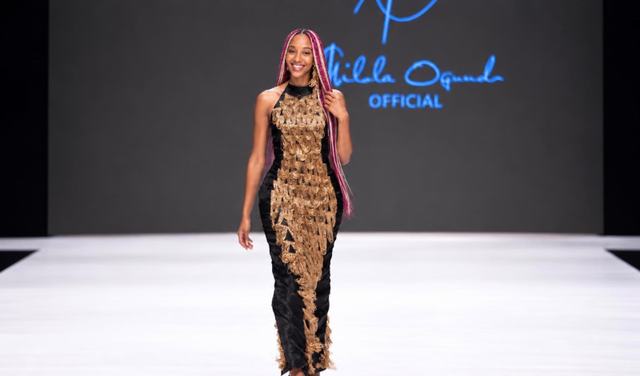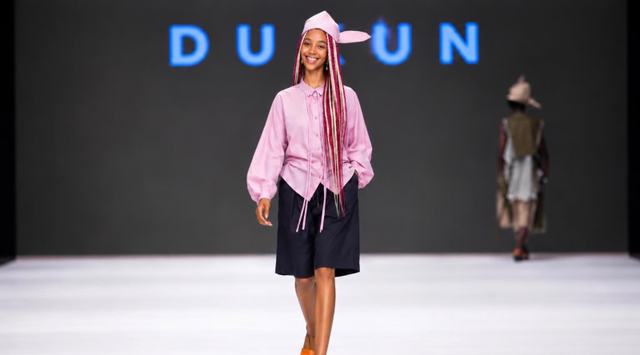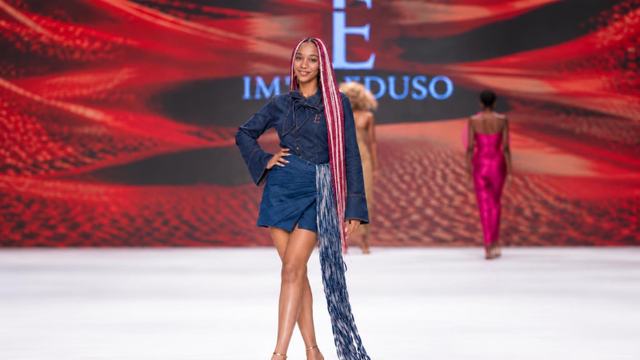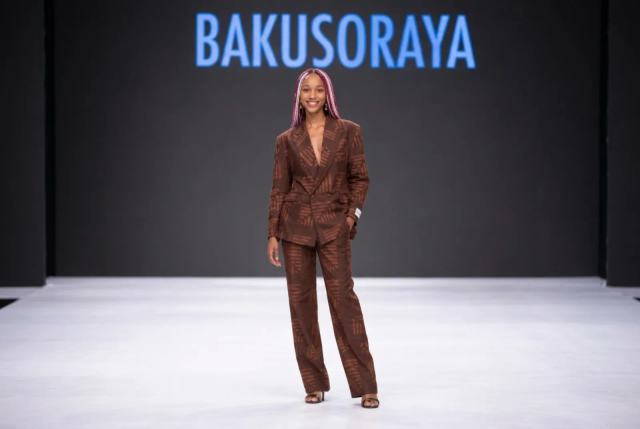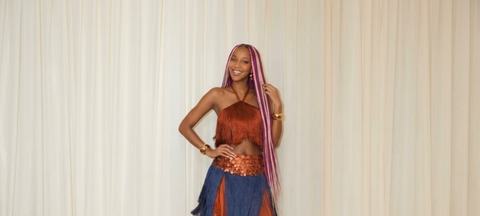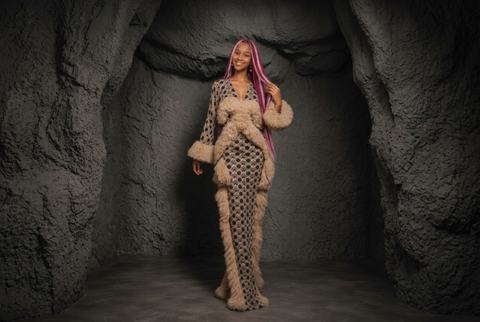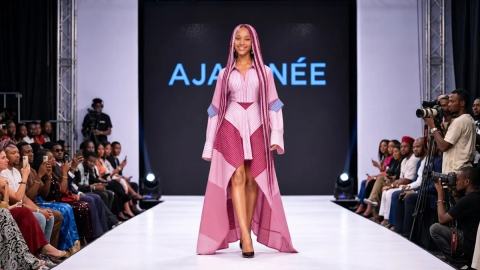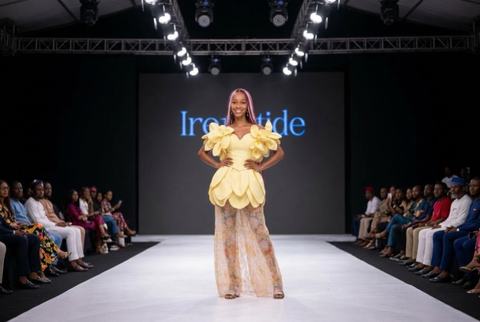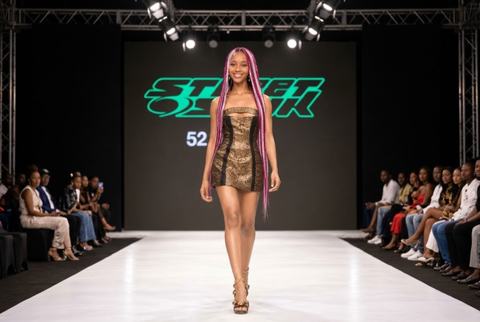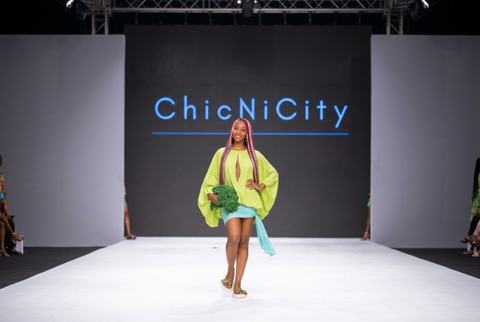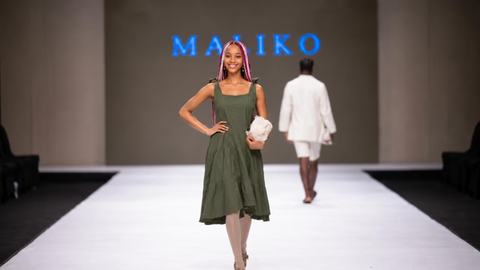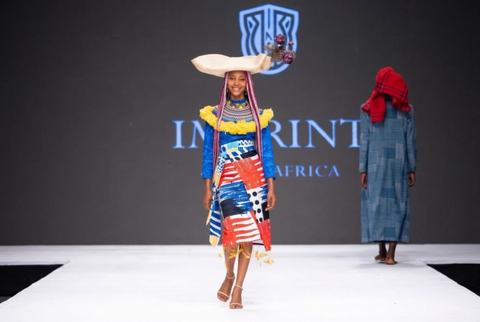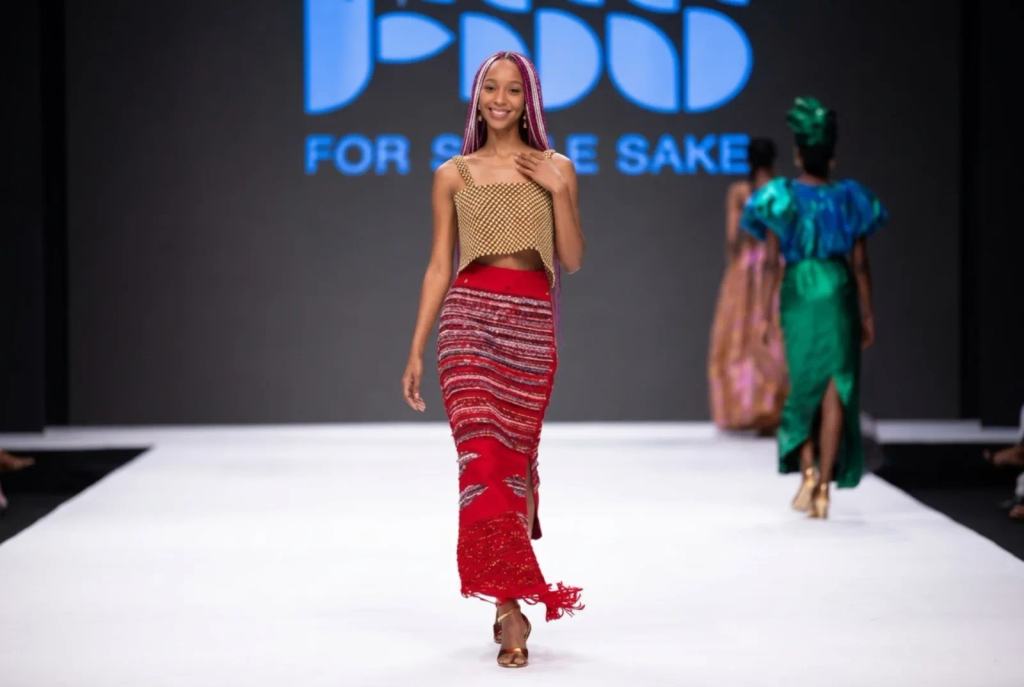
The significance of a collection title lies partly in the expectations it creates. A restrained title may suggest minimalism, while a name associated with celebration can invite audiences to anticipate colour, movement and expressive styling, For Style Sake Ariya Lagos Fashion Week 2026.
READ: Ibilola Ogundipe Lagos Fashion Week: Colour and Craft
The range of materials and silhouettes in For Style Sake's presentation supported this celebratory reading. Textured tweeds introduced depth, polka dots added visual playfulness, Aso Oke connected the collection to Nigerian textile heritage, and organza and sheer fabrics introduced lightness.
Rather than presenting celebration through one obvious visual formula, the collection moved between different expressions. Some garments could be read through their texture or structure, while others relied on colour, transparency or movement.
READ: Dukun Lagos Fashion Week: Itsekiri Heritage Reimagined
This is an important distinction. A collection can communicate a shared mood without making every garment look alike. The designer's task is to create relationships between the pieces so that variety contributes to a coherent presentation.
For Àríyá, the shared thread was the willingness to combine contrasting materials and visual approaches within a contemporary wardrobe.
Aso Oke and the continuing life of Nigerian textile heritage
Aso Oke holds an important place in Yoruba textile culture. Traditionally handwoven, it has been used in different forms of ceremonial and formal dressing and remains significant in contemporary Nigerian fashion.
Its continued presence in modern collections demonstrates how traditional textiles can move between established uses and new design possibilities. Aso Oke can appear in familiar garments or be adapted into unexpected silhouettes, combinations and styling approaches.
The challenge is to recognise the material's cultural significance while allowing it to function within contemporary design. Using a traditional textile does not automatically make a collection innovative, just as using a modern material does not necessarily make it forward-looking. The design decisions surrounding the textile are what give it a particular expression.
For Style Sake incorporated structured Aso Oke pieces into Àríyá, placing the material alongside tweed, organza, polka dots and sheer fabrics. This combination created a dialogue between different textile characteristics.
The firmness and visible structure of woven Aso Oke can contrast with the lighter qualities of organza. Tweed introduces another kind of texture, while sheer fabrics allow the body and underlying layers to remain part of the visual composition.
The result is an approach that treats textile heritage as one element in a larger design conversation rather than as an isolated symbol.
I believe this is a valuable way to consider the future of traditional textiles. Their relevance does not depend on being used only in familiar forms. They can remain culturally meaningful while being explored through contemporary construction and styling.
Textured tweeds and the appeal of contrast
Tweed is often associated with dense, textured fabric and garments that emphasise structure. Its surface can contain multiple colours or visible variations in yarn, creating depth without relying on a printed pattern.
In Àríyá, textured tweeds appeared alongside materials with very different visual qualities. That contrast matters because texture can change the character of a garment even when the silhouette remains relatively simple.
A textured fabric may create a more substantial appearance, while a sheer fabric can introduce delicacy. When the two are placed within the same collection, they establish different visual weights. The designer can use those differences to control how a look is perceived.
Tweed also offers a useful contrast to polka dots. One creates interest through the structure of the fabric itself, while the other creates a repeated visual motif. Both can be expressive, but they operate in different ways.
The combination allows a collection to explore pattern and texture without depending entirely on colour. Even a relatively limited palette can become visually interesting when materials have different surfaces and levels of density.
For Style Sake's approach to Àríyá showed how the interaction of fabrics can be as important as the individual garments.
Polka dots, colour and a playful visual language
Polka dots have a recognisable place in fashion because repetition gives them an immediate visual identity. Their effect depends on the size of the dots, the contrast between foreground and background, and the way the pattern is arranged across the garment.
Small dots may create a relatively subtle rhythm, while large multicoloured dots can become the main focus of an outfit. When the pattern appears on a voluminous silhouette, it can become more dramatic because the surface occupies more visual space.
The use of multicoloured polka dots in Àríyá contributed to the collection's playful character. They offered a contrast to the more structured appearance of tweed and Aso Oke, helping the presentation move between different moods.
Colour also affects how patterns are perceived. Bright shades can make a repeated motif feel energetic, while deeper tones may create a more restrained impression. The same pattern can therefore communicate differently depending on the palette and the garment's construction.
For Style Sake's reported use of pink, red, blue and yellow added further variety to the collection. These colours gave individual looks a distinct presence while supporting the broader idea of a wardrobe that embraces different expressions.
The interesting point is not simply that the collection used colour. It is that colour operated alongside texture, shape and pattern, creating several sources of visual interest.
Organza and sheer dressing
Organza and sheer fabrics introduce a different relationship between clothing and the body. Rather than concealing everything beneath the surface, they can allow layers, movement and transparency to become part of the design.
Sheer dressing can appear delicate or dramatic depending on the cut, colour, styling and degree of transparency. It can soften a structured garment, create contrast with a heavier fabric or introduce movement around sleeves and hems.
In a collection that also includes Aso Oke and textured tweeds, sheer materials can prevent the overall presentation from becoming visually heavy. They create variation in density and allow the garments to move between stronger and softer forms.
The construction of these pieces requires careful attention. Lightweight fabrics may behave differently from denser materials, and their transparency affects how seams, linings and underlayers appear. The designer must consider not only the outer surface but also the complete composition of the garment.
For Style Sake's inclusion of organza and sheer dresses expanded the collection's range, placing lighter pieces alongside more structured designs.
This balance helps explain why Àríyá should be viewed as more than a collection of colourful outfits. Its materials offered different ways to explore the relationship between structure, movement and personal expression.
Volume, sleeves and the power of silhouette
Silhouette is one of the first things an audience notices when a model enters the runway. It determines the outline of the garment and shapes how the body appears in relation to the clothing.
Voluminous sleeves can broaden the upper body, create a sense of drama or introduce movement around the arms. A structured skirt may establish a different proportion, while a flowing dress can create a more continuous line.
The value of volume depends on balance. A dramatic sleeve may work best when the rest of the garment is relatively restrained, or it may be combined with another strong element to create a deliberately expressive look. There is no single formula, but the proportions need to feel intentional.
For Style Sake's collection used voluminous sleeves and varied silhouettes to create distinction between looks. This gave the runway presentation room to move between more structured garments and softer, flowing pieces.
Silhouette also affects wearability. A dramatic shape may be visually compelling on a runway, but its practical use depends on movement, comfort and the occasion for which it is designed. Contemporary fashion must often balance these concerns with the desire to create something memorable.
A collection can be expressive without making every piece difficult to wear. Some garments may serve as statement pieces, while others provide more versatile options for everyday or occasion dressing.
The variety in Àríyá created space for these different possibilities.
Femininity without a single definition
Fashion has frequently presented femininity through a narrow range of visual conventions. Certain silhouettes, fabrics or colours have been repeatedly associated with particular ideas about how women should dress. Contemporary designers have more room to question those conventions, combining elements that were once treated as separate categories.
For Style Sake's collection moved between playful prints, structured textiles, flowing garments and sheer materials. This range allowed the presentation to explore different moods rather than defining femininity through one silhouette or fabric.
A woman may choose a structured outfit for one occasion, a relaxed look for another and a more expressive garment for a celebration. These choices need not contradict one another. They can reflect the different roles, preferences and experiences that make up an individual's life.
I find this approach meaningful because personal style is rarely static. It develops through experience, changing circumstances and the discovery of new ways to express oneself.
A fashion label that acknowledges this variety can create a wardrobe that feels broader than a collection built around one narrowly defined image. It can give customers room to experiment rather than suggesting that they must conform to a single aesthetic.
The range of Àríyá supported that more flexible understanding of contemporary dressing.
For Style Sake Ariya Lagos Fashion Week 2026 and the visibility of African design
Lagos Fashion Week provides a platform for designers to present their work to audiences that include fashion professionals, media organisations, buyers, stylists and consumers. For a label such as For Style Sake, the event also offers an opportunity to place its collection within a wider conversation about African fashion and the creative industries supporting it.
The 2026 theme, CRAFTED: Heritage. Innovation. Circular Futures., encouraged designers to explore the relationship between cultural knowledge, craftsmanship and the future of fashion. The programme included collections that approached these ideas through different materials and methods.
For Style Sake's Àríyá contributed through its combination of Aso Oke, contemporary fabrics, playful prints and varied silhouettes. Its approach differed from collections built primarily around textile reuse or a single traditional technique, but it remained part of the broader discussion about how African fashion can draw from different sources.
As noted, the runway included a variety of approaches to shape, texture, embellishment and colour. This diversity is important because African fashion cannot be reduced to one textile, one silhouette or one interpretation of heritage.
A strong fashion platform makes room for these differences. It allows designers to be considered individually while also revealing connections across the wider industry.
The business behind a creative platform
For Style Sake's history as a blog and its subsequent development into a broader fashion platform also raises questions about the business structures that support creative work.
A fashion blog requires consistent content, audience engagement and a clear point of view. A retail business requires additional systems, including product development, inventory management, customer service, fulfilment and financial planning. A label presenting original collections must also manage design development, sourcing, production and quality control.
READ: Imad Eduso Into the Wild at Lagos Fashion week 2026
These activities can reinforce one another, but each requires different skills. Creative direction may establish the identity of a collection, while business management determines how that collection reaches customers and whether the operation remains viable.
For designers and fashion entrepreneurs, digital platforms can provide opportunities to build audiences before expanding into other areas. However, visibility alone does not guarantee sales or long-term success. The relationship between editorial content and commerce needs to be clear, and customers must be able to find reliable information about products, prices and availability.
The sisters' journey from a personal style blog to promoting African brands offers an example of how a fashion project can evolve in response to its audience and the opportunities available within the industry.
The importance of supporting Nigerian and African brands
Independent designers often face challenges in gaining recognition, reaching customers and establishing consistent production. Fashion media, digital platforms and retail businesses can help address some of these difficulties by making brands easier to discover.
For Style Sake's stated focus on homegrown Nigerian and other African labels reflects the importance of this work. Supporting regional brands does not mean treating them as a single category or overlooking differences in quality, price, design and production. It means creating opportunities for audiences to discover and evaluate work that might otherwise remain outside their usual fashion choices.
There is also an economic dimension. Fashion supports a network of people involved in design, textile production, sewing, finishing, modelling, photography, retail and logistics. When a label grows, the benefits can extend beyond the designer, although the extent of that impact depends on how the business operates.
A sustainable creative industry requires more than attractive runway presentations. It needs reliable production, skilled workers, customer trust, access to markets and business models that allow brands to continue developing.
For Style Sake's evolution shows one way a fashion platform can contribute to that ecosystem by connecting audiences with African design.
What Àríyá contributes to contemporary fashion
The strength of Àríyá lies in its variety. Rather than relying on a single textile or silhouette, the collection moved between textured tweeds, multicoloured polka dots, structured Aso Oke, organza and sheer dresses. Voluminous sleeves and vibrant colours created additional variation.
That approach offers a perspective on contemporary style in which different moods can coexist. Tradition and modernity do not need to be separated into different wardrobes. Nor does a collection need to use one repeated silhouette to communicate a clear identity.
The challenge for For Style Sake will be to continue developing that variety while maintaining a recognisable design direction. A broad aesthetic range can be a strength, but the relationship between individual pieces needs to remain clear. Customers also need garments that deliver on fit, construction and quality, not only visual impact.
Future collections will show how the label continues to balance experimentation with wearability and how its interest in African fashion develops through original design.
A continuing story of personal style and African creativity
For Style Sake's story began with two sisters using a fashion blog to remain connected while living in different places. Over time, that personal project evolved into a platform with a broader interest in Nigerian and African fashion. Its presentation of Àríyá at Lagos Fashion Week 2026 added another chapter to that journey.
The collection's use of textured tweeds, polka dots, Aso Oke, organza, sheer fabrics and expressive silhouettes offered a varied interpretation of contemporary dressing. It created room for colour, structure, playfulness and cultural reference without forcing them into one fixed aesthetic.
The wider significance of For Style Sake lies in the relationship between personal style and the creative industry. The way people discover fashion, the platforms that introduce them to designers and the businesses that bring garments to market all influence which ideas reach an audience.
I believe personal style is most interesting when it leaves room for change. A person should be able to appreciate heritage, experiment with new materials, embrace colour or choose simplicity without feeling confined to one identity. Àríyá reflected that possibility through its variety of fabrics and silhouettes.
At Lagos Fashion Week 2026, For Style Sake presented a collection that placed different expressions of femininity and contemporary African style alongside one another. Its next chapter will reveal how the label continues to translate that creative range into a lasting fashion identity.
The writer of this article does not claim to know the individuals named personally. The information about their backgrounds, as published on Global News Arena, is based on independent online research.
Are you interested in learning how to write professionally and earn money as a writer and content creator? Contact Auxi Chat today to start your writing journey immediately.
Need a professional website in 72 hours? Contact Auxi Chat
If you have an article, opinion piece, event or news story you would like published, Global News Arena would love to hear from you.