There is something revealing about a fashion label that begins with a question, Kilentar fashion brand. Not a question about what is trending, which celebrity is wearing what, or how quickly a collection can sell out, but a question rooted in the ordinary language of commerce: What are you selling?
Kilentar fashion brand
The Kilentar fashion brand takes its name from the Yoruba expression “Kí lẹ̀ ń tà?”, a question commonly understood as “What are you selling?” In the markets of southwestern Nigeria, those words belong to a familiar rhythm of buying, selling, bargaining and conversation. Yet they also invite a more interesting interpretation when considered within the world of fashion. What exactly is a designer offering when a garment carries the influence of generations of craftsmanship, the knowledge of an artisan and the creative interpretation of someone determined to bring traditional techniques into a contemporary wardrobe?
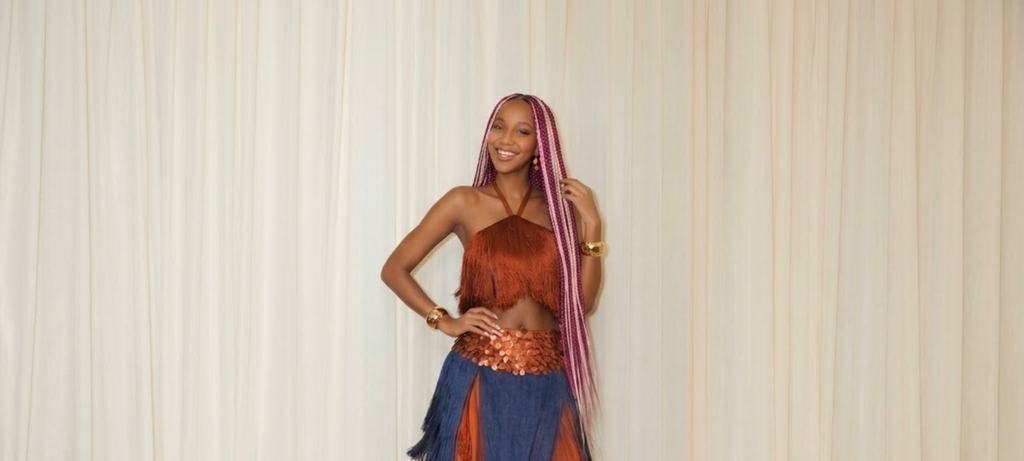
That is where I find the story of KÍLÉNTÁR particularly worth examining. The label, founded by British Nigerian designer Michelle Adepoju, places West African craftsmanship and cultural heritage within the conversation surrounding modern luxury womenswear. Its identity brings together textile traditions, handmade details and contemporary silhouettes, creating an approach to fashion that asks customers to consider more than the finished appearance of a garment.
Fashion is often discussed through the language of trends. We talk about colours, shapes, celebrities, runway moments and the pieces people want to purchase before a particular season ends. Those things matter to the industry, but they do not explain everything. Behind every garment is a series of decisions about materials, construction, labour, identity and the kind of story a designer wants to communicate.
For a brand such as KÍLÉNTÁR, these questions are especially relevant because craftsmanship is not simply an incidental feature of its identity. It is central to the way the label describes itself and the creative direction its founder has pursued.
What interests me most is the relationship between preservation and reinvention. How does a designer respect a traditional technique without allowing it to become a fixed historical object? How can a textile associated with one community or generation enter a modern wardrobe without losing the significance that made it worth preserving in the first place?
These are not questions with simple answers. They are, however, useful starting points for understanding the work of Michelle Adepoju and the wider possibilities of African fashion.
Michelle Adepoju: The Woman Behind the Brand
Michelle Adepoju is the founder and creative director of KÍLÉNTÁR. Raised in the United Kingdom in a Nigerian household, she grew up with connections to Yoruba heritage while also experiencing British culture and its creative influences.
According to the brand’s published biography and its profile on London Fashion Week, Adepoju studied Public Relations and Marketing Communications before developing her fashion business. Other profiles have also described her educational background in marketing and her early interest in vintage clothing, styling and creative experimentation.
I find the combination of these experiences interesting because the fashion industry is often portrayed as though successful designers must follow one clearly defined route. We sometimes imagine the designer who begins sketching collections in childhood, attends a prestigious fashion institution, enters the industry through an established fashion house and eventually launches a label.
Creative careers do not always unfold that way.
Adepoju’s background demonstrates how an interest in fashion can develop through observation, experimentation and a growing understanding of the commercial world. Her early attraction to vintage clothing and second-hand shopping was not merely about acquiring garments. Published interviews describe her interest in imagining how existing pieces could be changed, customised or transformed into something more personal.
There is an important creative instinct in that process. To look at a garment and see possibilities beyond its original design requires a particular kind of attention. A piece of clothing can be treated as a finished object, or it can be understood as material that might become something different through imagination, technical skill and experimentation.
That willingness to reconsider what already exists offers an interesting connection to the later direction of KÍLÉNTÁR, where traditional textiles and established techniques are interpreted through contemporary design.
Her marketing education also provides useful context. Fashion is an artistic field, but it is also a business. A designer must understand how to communicate a visual identity, reach potential customers, position a product and explain why it deserves attention in a competitive marketplace.
Creative talent and commercial understanding are not opposing qualities. In many cases, the survival of a fashion business depends on the ability to bring them together.
Adepoju’s journey reflects that intersection. She developed an interest in clothing, acquired knowledge of marketing and explored the possibilities of building a label with a distinctive identity. Her professional background did not require her to begin with every technical skill already mastered. Instead, her development involved learning, research and working with people whose expertise complemented her own.
I believe this is an important part of the story because entrepreneurship rarely means knowing everything before taking the first step. It often involves recognising what one can contribute, identifying the knowledge that is missing and building relationships with people who possess the skills needed to turn an idea into a finished product.
For a designer working with specialised textile traditions, those relationships are especially significant. The ability to imagine a beautiful garment is one thing. Understanding the processes required to produce its fabric, develop its structure and finish it properly is another.
Adepoju’s subsequent work with artisans across West Africa became central to the identity of her business.
A Journey Across West Africa That Changed the Direction of Her Work
A major turning point in Adepoju’s story came in 2018, when she travelled across West Africa. According to the brand’s account and its published designer profile, the journey exposed her to different cultural environments, traditional crafts and artisans whose knowledge had been developed and passed down over generations.
The experience helped shape the idea behind KÍLÉNTÁR, which was established in 2019 according to London Fashion Week’s profile. The brand’s own current biography gives 2020 as its founding year, reflecting a difference in how the label’s early development and formal establishment are described. Its early commercial activity is also documented in a 2020 interview with BellaNaija Style.
What matters about this period is the direction it gave to her creative ambitions. Rather than approaching African heritage only through familiar prints or recognisable cultural motifs, Adepoju became interested in the people and processes responsible for producing textiles and other handcrafted elements.
That is a meaningful distinction.
A traditional fabric can be admired for its colour, texture or pattern without the person looking at it knowing anything about its origins. The fabric may be purchased, photographed, worn and eventually discarded without the wearer ever considering the knowledge involved in its production.
Yet the textile itself represents only the visible result of a much larger process. Behind it may be years of learning, the development of specialist techniques, an understanding of local materials and the continuation of practices that have survived through generations.
When a designer takes an interest in that process, the creative possibilities become broader. The question shifts from how to make something that looks African to how to work with the specific materials, techniques and histories that inform the designer’s vision.
This is particularly relevant to a continent as culturally diverse as Africa. There is no single African fashion tradition, no universal aesthetic and no one way of representing the experiences of its many communities.
Nigeria alone contains a remarkable range of textile traditions, clothing practices and regional styles. Beyond its borders, West Africa encompasses different languages, histories, techniques and creative communities. A designer who works across these environments must recognise that the continent’s cultural richness cannot be reduced to one pattern or visual identity.
Adepoju’s travels helped direct her attention towards that diversity. Her work subsequently developed around the idea of bringing different forms of West African craftsmanship into a contemporary womenswear label.
For me, this is where the brand’s story becomes more than a conventional account of entrepreneurship. It raises the question of how creative businesses can engage with cultural knowledge without flattening it into a marketable stereotype.
There is a difference between using a traditional textile because it is visually appealing and developing an understanding of how it is made, why it matters and how it can be incorporated thoughtfully into a new design.
The second approach does not guarantee a perfect result, but it creates the possibility of a deeper relationship between the finished garment and the people whose knowledge contributes to it.
What the Name KÍLÉNTÁR Reveals About Its Identity
The name of a business is often the first encounter a customer has with its identity. Before seeing a garment, reading a biography or understanding the production process, the customer encounters the name and begins forming an impression.
KÍLÉNTÁR draws on a Yoruba expression used in everyday commercial life. The question, “What are you selling?”, is direct, conversational and familiar within the environment from which it originates.
Yet its meaning becomes more layered when considered alongside the brand’s approach to fashion.
What is a designer really selling? Is it a product, a lifestyle, an idea about beauty or an opportunity for customers to express something about themselves? Is the value of a garment determined entirely by its materials and construction, or does the story behind it also influence how people understand and appreciate it?
The fashion industry has always understood that clothing communicates. People dress for work, celebrations, religious gatherings, public appearances and private moments. Their choices can reflect their taste, social environment, professional ambitions or relationship with particular cultural traditions.
Luxury fashion adds another dimension because customers may be purchasing craftsmanship, rarity, design authorship and the experience associated with a product, alongside its practical use.
The KÍLÉNTÁR name creates an interesting link between these ideas and the everyday commercial language of Yoruba culture. It brings a familiar expression into a different setting while retaining its connection to the act of exchange.
I see this as an example of how cultural identity can inform a brand without requiring every customer to share the same background. Someone familiar with Yoruba may recognise the phrase immediately. Another customer may discover its meaning through the brand’s story and begin to understand the cultural reference that informs the name.
In both cases, the name offers an entry point into the label’s identity.
However, the deeper test of a fashion brand is whether its products and practices sustain the meaning attached to its name. A compelling story may generate interest, but the design, construction and customer experience must support the expectations created by that story.
That is true of any fashion business. The name may open the conversation, but the work determines what follows.
The Women Artisans Behind the Craftsmanship
One of the most important aspects of KÍLÉNTÁR’s stated approach is its emphasis on the people who make its textiles and garments possible.
The brand says it works with a community of around 30 female hand-weavers and dyers across West Africa. Its published account also describes a weaving operation in Burkina Faso, where the company develops woven designs from thread to finished textile.
These details offer a useful view of the production philosophy the label wants to communicate. Instead of presenting craftsmanship as a vague source of inspiration, the brand describes relationships with people whose specialist skills contribute directly to the materials used in its collections.
I think this deserves attention because discussions of fashion often place the designer at the centre of every achievement. The creative director receives the interview, the label appears on the garment and the finished collection becomes the object of public attention.
But a garment may depend on many other people.
Someone must understand the fibres and prepare the materials. Someone must weave, dye or embellish the fabric. Someone must develop patterns, cut the material, assemble the components and complete the finishing work. The number of people involved varies according to the garment and its production method, but the underlying principle remains the same: fashion is often a collective achievement presented under a single name.
The role of artisans becomes particularly significant when the design incorporates traditional techniques that require specialist knowledge.
Handweaving, for example, involves more than producing a piece of cloth. The maker must understand the structure of the weave, the arrangement of threads, the relationship between tension and texture, and the practical possibilities of the finished material.
Dyeing also requires knowledge of materials, preparation and process. Different techniques can create different visual effects, and achieving a consistent result requires skill and experience.
When these techniques are incorporated into contemporary clothing, the designer and artisan must work within the possibilities and limitations of the material. The result is not always achieved by simply transferring a drawing onto fabric. It can require experimentation, adjustment and collaboration.
This is one reason handmade fashion can be difficult to reproduce at the scale associated with industrial production. The process may take longer, and the materials or techniques may introduce variations that are part of the character of the finished piece.
For the customer, those details can contribute to the garment’s distinctiveness. For the business, they also create practical questions about pricing, production schedules, quality control and the number of pieces that can realistically be produced.
It is important, however, to distinguish the brand’s stated production commitments from independently established outcomes. The presence of female artisans in a production model does not automatically prove that all workers receive fair wages, enjoy secure working conditions or experience measurable improvements in their economic circumstances.
Those claims would require additional evidence.
Nevertheless, the relationship between a fashion label and the people responsible for its craft remains an important subject. If a brand’s identity depends on traditional knowledge, then the people who possess that knowledge deserve to be recognised as contributors to the work rather than treated as an incidental detail in its marketing.
The broader question is how the fashion industry can create business arrangements in which specialised craftsmanship remains economically viable and the people who perform it receive appropriate recognition for their expertise.
From Traditional Textiles to Contemporary Womenswear
The challenge facing a designer who works with traditional materials is not simply to preserve what already exists. It is to discover how those materials can function within the lives of contemporary customers.
A textile developed through traditional methods may possess qualities that distinguish it from mass-produced alternatives. Its texture, weight, pattern or structure can influence the silhouette of a garment and the way it moves when worn.
The designer must understand those qualities before deciding how to use them.
KÍLÉNTÁR’s approach combines traditional textile techniques with modern womenswear. The label’s published collections include dresses, skirts, tops and coordinated pieces, with designs incorporating handwoven fabrics, embellishments and other handcrafted details.
The purpose of this combination is not simply to reproduce traditional clothing in a new setting. It is to interpret the materials and techniques through contemporary forms.
That interpretation can be seen as a conversation between the past and the present. The textile may draw on a longstanding tradition, while the silhouette reflects a different set of design decisions and expectations about how the garment will be worn.
I find this relationship especially interesting because it challenges the idea that tradition must remain unchanged to remain authentic.
Cultures have always adapted to new circumstances. Clothing changes in response to materials, technology, trade, migration, social expectations and individual creativity. What people wear today is rarely an exact reproduction of what previous generations wore, even when the designs retain recognisable cultural influences.
Fashion therefore offers one way to examine how traditions continue to develop.
A designer can honour the knowledge behind a traditional textile while changing its scale, combining it with another material or incorporating it into a silhouette that would not have existed in the same form when the technique first developed.
The important consideration is whether the resulting work is thoughtful and well executed, rather than whether it simply repeats what came before.
This is also where the customer becomes part of the story. A contemporary garment must function within the circumstances in which it will be worn. It needs to fit, move, feel appropriate for its intended use and offer a level of quality that justifies its price.
The creative ambition and the practical requirements must coexist.
For KÍLÉNTÁR, the opportunity lies in making handcrafted textiles relevant to customers who may want something distinctive without necessarily seeking traditional clothing in its conventional form.
That is a different proposition from selling a textile solely on the basis of its cultural origin. It asks the designer to demonstrate what the material can become when placed within a contemporary design framework.
Yoruba Heritage and the Question of Representation
The relationship between Yoruba heritage and contemporary fashion provides another important dimension to Adepoju’s work.
Her upbringing in a Nigerian household in the United Kingdom gave her a personal connection to Yoruba culture while placing her within a different cultural environment. That experience offers context for understanding why questions of identity and heritage have become relevant to the direction of her brand.
For many people who grow up between cultures, identity is not necessarily a choice between two separate worlds. It can be an ongoing process of understanding how family history, everyday experience and the environment in which one lives influence the way one sees oneself.
Fashion can become one way of expressing that relationship.
A designer may use particular materials, colours, silhouettes or techniques to explore cultural influences without attempting to represent every aspect of the community from which those influences originate. The result is a personal interpretation, shaped by the designer’s knowledge, experiences and creative decisions.
I believe this distinction is important. No individual designer can speak for an entire culture, and no single fashion label can represent the full diversity of Yoruba or West African heritage.
What a designer can do is develop a particular point of view and communicate it through the work.
Adepoju’s approach places Yoruba identity within a broader West African creative context. The label’s name provides a direct cultural reference, while its work with artisans and textile techniques brings additional influences into the design process.
This creates a layered identity rather than one dependent on a single visual symbol.
It also raises questions about how cultural knowledge travels. A technique may originate within one community, be practised by artisans in another country and eventually appear in a garment sold internationally. The finished product becomes part of a wider exchange between places, people and markets.
Such exchanges can create opportunities for cultural visibility, but they also require care. Different communities have their own histories and traditions, and a broad reference to African craftsmanship should not erase those distinctions.
Recognising the origins of materials and techniques allows customers to understand the specific knowledge behind a garment. It also provides a more accurate account of the people and places that contribute to the finished work.
In this sense, cultural identity is not simply an aesthetic resource. It is a subject that requires understanding, context and responsible interpretation.
The Business Reality of Building a Fashion Label
It is easy to romanticise the idea of creating a fashion brand. We see the finished collection, the photographs, the beautifully styled models and the attention that follows a successful presentation. What is less visible is the commercial work required to keep the business functioning.
A designer must make decisions about sourcing, manufacturing, pricing, distribution, customer service and the amount of money that can be committed to future production.
These decisions become particularly important when a label relies on specialised craftsmanship.
Handmade production may require more time than standardised manufacturing, and the cost of a garment must account for the labour and materials involved. A business must also consider whether it can meet demand without compromising the quality or character of its products.
Producing too little can mean losing potential sales. Producing too much can leave a business with unsold stock and money tied up in inventory.
Neither challenge is unique to African fashion, but designers working with artisanal production must pay close attention to the relationship between demand and the capacity of their production network.
There is also the challenge of communicating value to customers. A person shopping for clothing may compare two garments that look similar at first glance without knowing that one incorporates a lengthy handmade process while the other is produced using standard industrial methods.
The designer must find a way to explain what distinguishes the product without relying entirely on broad claims about luxury or heritage.
That explanation can include information about the materials, the techniques used, the construction process and the people involved in making the garment.
The more clearly customers understand those details, the better equipped they are to make informed decisions about what they are buying.
Adepoju’s background in marketing is relevant to this aspect of her work. Developing a distinctive design identity is one part of building a label. Communicating that identity in a way customers understand is another.
The challenge is to make the commercial message consistent with the actual product.
A business can tell a compelling story, but the quality of its garments, the accuracy of its descriptions and the reliability of its customer experience must support that story over time.
This is where creative ambition meets commercial discipline. A fashion label needs more than an interesting origin. It needs a workable business model.
Sustainability Beyond a Fashion Industry Buzzword
Sustainability has become a prominent term in fashion, but its meaning can vary considerably from one business to another.
Some brands focus on the materials they use. Others emphasise waste reduction, manufacturing processes, durability, resale or the conditions under which their products are made. A genuinely comprehensive assessment must consider several aspects of production rather than relying on one appealing claim.
KÍLÉNTÁR identifies craftsmanship, organically grown cotton and traditional production techniques as elements of its approach. The brand also publishes information about its sustainability and community impact commitments.
These details provide a starting point for examining its stated priorities, but they should not automatically be interpreted as proof of a complete environmental or social outcome.
For example, a material described as organic may address particular aspects of agricultural production, but the environmental footprint of a finished garment also depends on other factors, including processing, transportation, durability and what happens when the item is no longer used.
Similarly, handmade production is not automatically sustainable in every respect. Its overall impact depends on the materials, processes, working arrangements and quantity of goods produced.
I think this is an important distinction because the fashion industry can sometimes turn sustainability into a marketing adjective rather than a measurable objective.
Customers deserve clear information about what a brand actually does, what it is trying to improve and what evidence supports its claims.
For a business that works with traditional artisans, there is an additional question about whether its commercial model helps maintain the conditions necessary for those skills to continue. If specialised craftsmanship becomes economically unviable, the knowledge may become harder to pass on to future generations.
That does not mean every traditional technique must be preserved unchanged or that every handmade product is inherently superior to a machine-produced alternative. It means that the consequences of production deserve to be considered alongside the appearance of the finished garment.
The most useful sustainability conversations are specific. They examine materials, working conditions, waste, durability and the realities of manufacturing instead of assuming that a particular aesthetic automatically produces a positive outcome.
KÍLÉNTÁR’s stated emphasis on craftsmanship creates an opportunity for these questions to be explored in greater detail as more information about its production practices becomes available.
International Recognition and the Challenge of Global Fashion
The international fashion industry operates through a network of designers, manufacturers, buyers, editors, retailers and customers whose interests do not always align.
A designer may have a distinctive creative vision but still need to persuade retailers that the products can sell. A collection may attract press attention but face practical challenges in production or distribution. A label may receive international recognition while continuing to work through the financial pressures common to growing businesses.
This is why visibility and long-term commercial success should not be treated as interchangeable.
KÍLÉNTÁR has received international fashion coverage, and Adepoju’s profile has expanded through the label’s development. The brand has presented work at New York Fashion Week, appeared in publications including Vogue and ELLE, and its founder was named to the Forbes 30 Under 30 Europe list in Arts and Culture in 2025, according to the brand’s published biography.
These milestones provide evidence that the label has entered broader international fashion conversations.
Yet I believe the more interesting question is what a designer does with that visibility.
Recognition can introduce a brand to new audiences, create opportunities to meet industry professionals and increase awareness of a particular creative approach. But maintaining that attention requires continued work.
A designer must decide how the label will evolve, which creative principles should remain central and how new collections can develop without losing the qualities that made the brand distinctive.
International exposure can also bring pressure to satisfy expectations. Customers may want familiar products, retailers may seek commercially predictable collections, and media attention may encourage designers to repeat the elements that previously attracted praise.
The challenge is to respond to those realities without allowing them to eliminate creative freedom.
For an African designer working with traditional craftsmanship, there is an additional risk that international audiences may expect every collection to fit a narrow idea of what African fashion should look like.
That expectation can be limiting. African designers should be able to work with traditional textiles, contemporary tailoring, experimental forms, minimalism or any other creative direction they choose.
Their work should be evaluated on its own terms rather than against an expectation that cultural identity must always be immediately visible.
KÍLÉNTÁR’s emphasis on craftsmanship offers one particular approach to that challenge. It creates a recognisable relationship between the label’s cultural references and its contemporary design language without establishing a universal formula for other designers to follow.
What African Fashion Can Learn From the Relationship Between Craft and Commerce
The wider story of KÍLÉNTÁR raises questions that extend beyond one designer or one label.
Across Africa, creative businesses operate within environments rich in skills, materials, cultural knowledge and entrepreneurial energy. Turning those resources into sustainable commercial opportunities, however, requires more than the existence of talent.
It requires access to markets, reliable production systems, business knowledge, investment and the ability to communicate value to customers.
Traditional craftsmanship may offer a distinctive foundation for a fashion business, but the people involved must be able to sustain their work economically. Designers need production partners who can deliver the required quality, and customers need enough information to understand what makes the finished product different.
These relationships do not develop automatically. They depend on communication, trust and a clear understanding of expectations.
I also believe African fashion deserves to be discussed in terms of its commercial possibilities without being reduced to a story of overcoming obstacles.
African designers are not simply trying to prove that they can participate in an industry created elsewhere. They are creating products, building businesses and developing perspectives that can contribute to fashion on their own terms.
The continent’s cultural and textile traditions are part of that picture, but so are experimentation, contemporary lifestyles, technology and changing customer preferences.
The strongest creative industries allow these different influences to coexist.
A designer should be able to build a business around traditional weaving without being expected to represent every aspect of African identity. Another designer should be able to create minimalist clothing without having to demonstrate cultural authenticity through a particular pattern or fabric.
The important thing is the freedom to develop a distinct creative position and the commercial infrastructure needed to support it.
In that context, KÍLÉNTÁR offers one example of how a brand can place artisan knowledge near the centre of its identity while pursuing a contemporary fashion direction.
Its development also reminds us that the relationship between heritage and commerce is not automatically straightforward. Cultural significance does not eliminate the need for business discipline, and commercial success does not by itself establish that every person involved in production benefits equally.
Both dimensions deserve attention.
The Future of KÍLÉNTÁR and the Meaning of Creative Continuity
When I return to the question behind the brand’s name, I find that it becomes more interesting the longer one considers it.
What are you selling?
The immediate answer may be a dress, a skirt, a top or a coordinated outfit. But the work behind those products can also introduce customers to textile techniques, cultural references and the creative possibilities of materials that might otherwise receive less attention.
That does not mean every purchase must carry a profound cultural message. Sometimes people simply want clothing that fits well, looks beautiful and makes them feel comfortable. There is nothing wrong with that.
The more important point is that fashion can accommodate different levels of meaning. A garment can be practical and expressive, commercially produced and culturally informed, contemporary in appearance while drawing on knowledge developed long before its creation.
For KÍLÉNTÁR, the challenge is to continue developing that relationship without allowing the story to become more important than the work itself.
The label’s future will depend on its ability to maintain design quality, develop its commercial relationships, communicate accurately with customers and make decisions that support the business over time.
Its approach to craftsmanship also raises the question of how the relationships behind the garments can remain meaningful as the brand grows. Expansion can create opportunities, but it can also place pressure on production capacity and the processes that distinguish a label from its competitors.
There is no single answer to those challenges. Every business must determine how to grow in a way that fits its resources, ambitions and creative priorities.
What can be said is that the relationship between traditional knowledge and contemporary design remains a fertile area for fashion. It allows designers to look beyond the immediate demands of trends and consider how materials, techniques and cultural histories can inform new work.
Michelle Adepoju’s journey provides a useful example of how that exploration can become the foundation of a fashion business. Her background in marketing, her interest in vintage clothing and her travels across West Africa all form part of the context behind the label she established.
Her story is not simply about bringing African craftsmanship to an international audience. It is also about the practical process of turning creative interests into a recognisable business, working with specialised skills and developing products that connect cultural references with contemporary customers.
That process is ongoing, and its significance should be measured through the work the business continues to produce rather than through its narrative alone.
Ultimately, I return to the idea that heritage does not have to remain untouched to retain its value. Traditions can be studied, questioned, adapted and reinterpreted. They can inform new silhouettes, inspire different uses of materials and create opportunities for people whose skills deserve recognition.
The responsibility lies in doing that thoughtfully, acknowledging the sources of the work and recognising the people whose knowledge makes it possible.
Perhaps that is the more lasting question behind KÍLÉNTÁR. Not simply what the brand is selling, but what it chooses to preserve, what it is willing to reinvent and how it intends to connect the two.
In fashion, as in many creative industries, the most interesting work often emerges when those questions are taken seriously.
The past does not need to be copied exactly to remain relevant. Sometimes, its greatest possibility lies in what a new generation chooses to make from it.
The writer of this article does not claim to know the individuals named personally. The information about their backgrounds, as published on Global News Arena, is based on independent online research.
Are you interested in learning how to write professionally and earning money as a writer and content creator? Contact Auxi Chat today to start your writing journey immediately.
If you have an article, opinion piece, event or news story you would like published, Global News Arena would love to hear from you.