Geometric Motion Design Lab at Lagos Fashion Week 2026: Indigo, Geometry and Identity. Fashion communicates through more than colour, fabric and decoration. Shape is equally important. The angle of a shoulder, the proportion of a jacket, the arrangement of panels and the space created around the body can influence how a garment is understood. These decisions become especially interesting when a designer treats clothing as a study of geometry rather than simply as a way to cover the body.
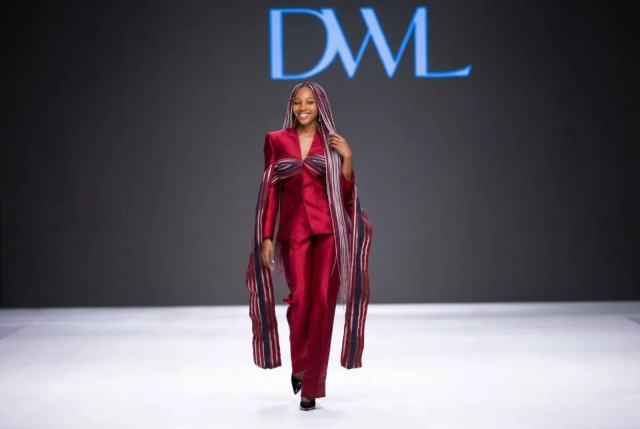
READ: DWL at Lagos Fashion Week 2026: Heritage Redefined
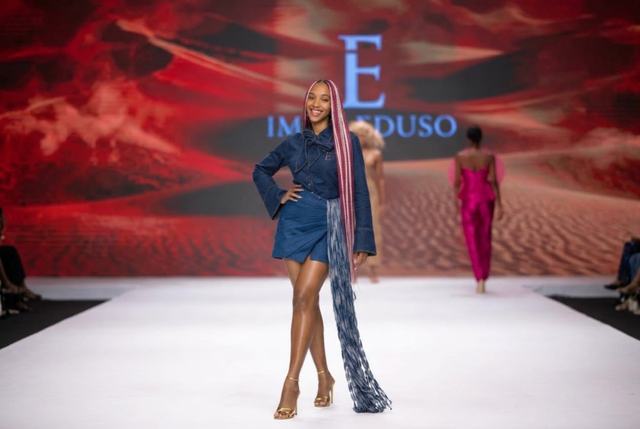
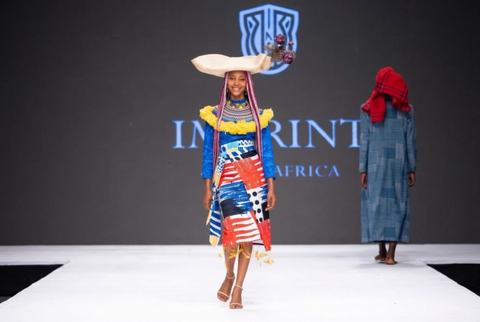
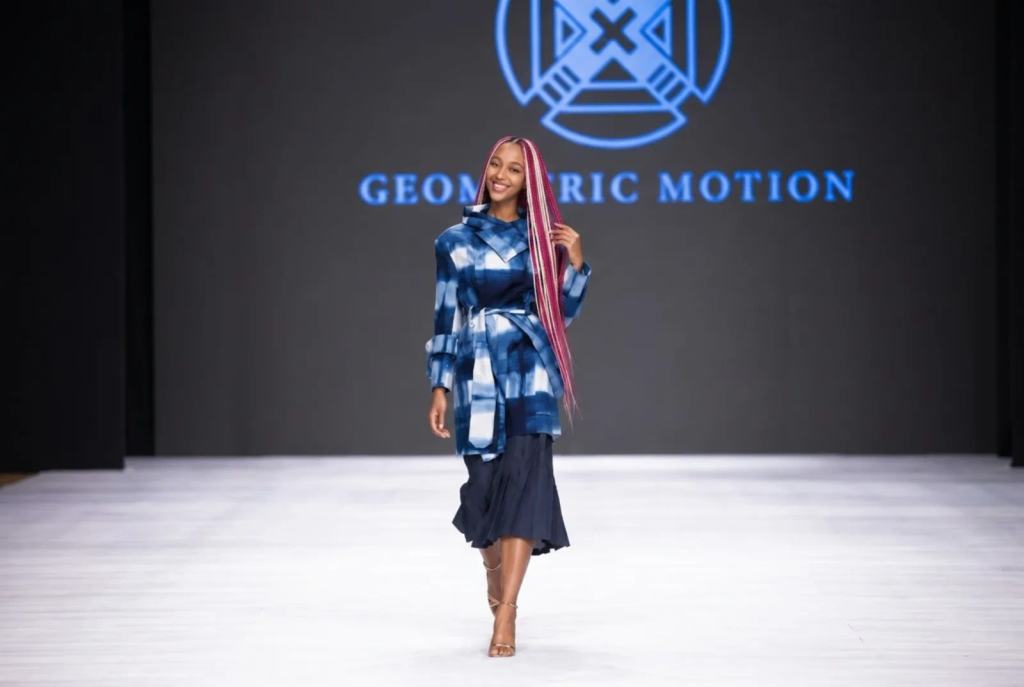
At Lagos Fashion Week on Thursday, 29 October 2026, Geometric Motion Design Lab brought this relationship between form and identity to the runway. The brand's Spring/Summer 2027 collection, Indigo Exoskeleton, explored indigo, structure and African identity through geometric cuts, bold prints, relaxed silhouettes and contemporary tailoring.
described a 20-look presentation that used indigo treatments, sharp cuts and layered details to examine how pattern and form can work together.
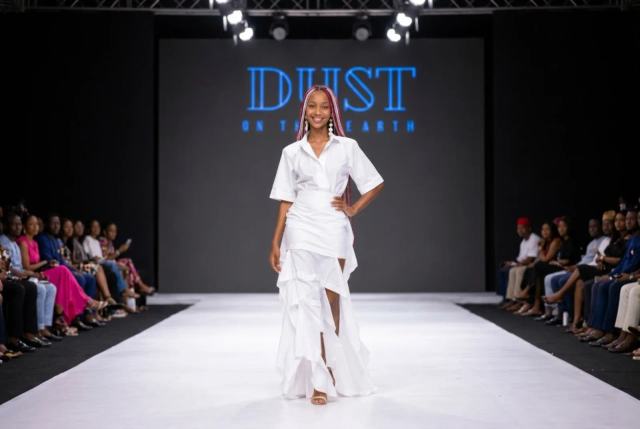
READ: Dust of the Earth at Lagos Fashion Week 2026
The title Indigo Exoskeleton is particularly suggestive. An exoskeleton is an external structure that provides support and shape. In fashion, the idea can be interpreted as a way of thinking about how clothing constructs a visible outline around the body. Indigo, meanwhile, brings a colour and textile dimension to that structure.
Together, these ideas provide a useful framework for understanding the collection.
What the brand's name suggests: Geometric Motion Design Lab at Lagos Fashion Week 2026
The name Geometric Motion Design Lab brings together three ideas: geometry, movement and experimentation.
Geometry concerns the relationships between shapes, angles, lines and proportions. Motion introduces the question of how those forms behave when a person moves. A design lab suggests a space for testing possibilities, exploring methods and developing a visual language through experimentation.
The name alone cannot establish the full biography or design philosophy of the people behind the label, and the public information available about its founders is limited. It is therefore more accurate to examine the documented collection and the creative concepts it presents than to attach unverified personal history to the brand.
The 2026 runway work offered a clear starting point. It placed geometric cuts and contemporary tailoring alongside print, indigo and relaxed forms. These elements suggest an interest in the way clothing can combine visual structure with practical movement.
A garment may look architectural when a model stands still, but it must also function when the wearer walks, sits, turns or raises an arm. The challenge is to preserve the design's intended shape while allowing the body to move naturally.
That tension between structure and motion makes the collection's name especially relevant.
Indigo as a design language
Indigo has a long history in textile traditions across different parts of the world, including Africa. It is valued for its depth, its variations in shade and the visual character it can give woven or dyed fabric. Depending on the dyeing process and material, indigo can appear dark and saturated or lighter and more irregular.
Its significance in contemporary fashion is not limited to historical reference. Indigo can serve as a versatile design tool. It can create contrast with lighter fabrics, make printed patterns more visible or give a garment a distinctive surface without relying on heavy embellishment.
In Indigo Exoskeleton, the colour was part of a broader exploration of African identity and textile expression. According to, the collection combined indigo treatments with sharp cuts, layered details and bold prints.
This combination matters because a textile treatment does not operate independently of a garment's construction. The same fabric can communicate differently when used in a fitted jacket, a loose shirt, a structured skirt or an oversized outer layer. Pattern placement and the direction of the cut can further change the impression.
Indigo therefore becomes part of the overall architecture of the clothing. It contributes to the surface, but its effect depends on how the fabric is shaped and arranged.
The exoskeleton and the architecture of clothing
The idea of an exoskeleton invites a closer look at the outline clothing creates around the body. Some garments follow the body's natural shape, while others create a new external form. A jacket may broaden the shoulders. A sculptural skirt may add volume around the hips. A layered garment may create an outline that changes as the wearer moves.
These design choices can challenge familiar expectations about how clothing should fit. They may also introduce new ways to think about proportion and silhouette.
Geometric construction can make this approach more deliberate. Straight lines, angular panels, asymmetry and carefully positioned seams can guide the eye across the body. Repetition of shapes can establish rhythm, while a sudden change in proportion can create emphasis.
The risk is that geometry can become purely decorative if it does not contribute to the garment's larger design. Successful construction makes the relationship between shape, fabric and body feel intentional.
The reported use of sharp cuts and layered details in Indigo Exoskeleton placed these decisions at the centre of the collection. Its varied silhouettes offered different interpretations of how structure can exist alongside ease.
Structured tailoring meets relaxed silhouettes
One of the most interesting aspects of contemporary dressing is the movement between formal structure and everyday comfort. The distinction between tailored clothing and relaxed clothing has become less rigid in many wardrobes. A sharply cut jacket can be worn with looser trousers, while an oversized shirt may be combined with a more structured skirt.
Geometric Motion Design Lab explored this kind of contrast through its collection. Structured tailoring established definition, while relaxed silhouettes allowed the garments to take a less rigid approach to the body.
The relationship between these forms can create versatility. Structured pieces may provide a strong visual anchor, while looser garments introduce movement and comfort. The two approaches can also create contrast within an individual look.
I believe this balance is one of the more important questions facing contemporary fashion. People increasingly expect clothing to work across different parts of their lives, but practicality does not have to eliminate creative expression. A garment can be comfortable and still have a distinctive silhouette. It can be wearable without being visually ordinary.
The challenge for designers is to understand how construction, material and proportion can support both needs.
African identity without a single uniform
African fashion is often discussed as though it represents one unified aesthetic. In reality, the continent contains many cultures, textile histories, techniques, environments and approaches to dressing. Designers working in contemporary African fashion draw on these influences in different ways.
Some use traditional textiles directly. Others explore familiar colours, reinterpret established silhouettes, work with local craft practices or create designs influenced by contemporary urban life. Still others combine several of these approaches.
Geometric Motion Design Lab's collection approached African identity through a relationship between indigo, structure, pattern and contemporary form. That is one interpretation among many, and it should not be treated as a definition of African fashion as a whole.
The value of a diverse fashion platform is that different interpretations can exist alongside one another. A collection rooted in a particular textile tradition does not need to look like a collection built around geometric construction. Both can contribute to a larger discussion about how cultural identity is expressed through clothing.
The wider Lagos Fashion Week programme illustrated this range of approaches. described designers exploring heritage through indigenous textiles, deconstruction, tailoring and material reuse.
Within that setting, Indigo Exoskeleton offered a design-led interpretation in which colour and shape played central roles.
Print, layering and the movement of the eye
Print can introduce rhythm to a garment. Repeated motifs guide the eye, while contrasting shapes can make a surface feel active or visually complex. When print is combined with geometric tailoring, the designer must consider how the pattern interacts with the garment's seams and panels.
A pattern that looks continuous on a flat piece of fabric may change when the material is cut and assembled. The placement of motifs can affect whether the final garment appears balanced, fragmented or deliberately asymmetrical.
Layering introduces another variable. Multiple pieces or overlapping panels can create depth, but they also change the outline of the body. A layered jacket may appear more substantial, while a lighter layer can soften the edge of a structured garment.
The combination of bold prints and layered details in Indigo Exoskeleton therefore gave the collection several ways to create visual movement without relying exclusively on colour.
These decisions also affect how a collection photographs. Runway images capture a particular moment, and a complex print or silhouette may look different from one angle to another. Seeing garments in motion can reveal relationships that are less apparent in a still photograph.
The value of experimentation in a design lab
A design lab implies an interest in testing ideas rather than repeating a single formula. Experimentation can involve fabric, shape, construction, proportion or the relationship between a garment and the person wearing it.
Not every experiment needs to produce a radical silhouette. Sometimes the change is subtle: a familiar jacket receives an unexpected panel, a traditional cut is adjusted to create more movement, or a fabric is used in a context that changes its visual meaning.
READ: Kilentar Fashion Brand: Michelle Adepoju’s African Vision
For designers, experimentation can be a way to establish a recognisable identity. The goal is not simply to make every collection look different. It is to develop a consistent set of questions and techniques that can produce new answers over time.
The 20 looks reported for Indigo Exoskeleton created an opportunity to explore variations within a shared concept. A collection benefits when individual garments can stand on their own while also contributing to a coherent narrative.
The next stage of Geometric Motion Design Lab's development will be worth watching for how these ideas evolve, whether through new textile treatments, further explorations of structure or different approaches to everyday dressing.
Fashion, function and the wearer
The visual language of a runway collection is only one part of its story. Clothing ultimately enters people's lives. Its success also depends on fit, comfort, construction quality, maintenance and whether the intended wearer can use it in real situations.
For a label interested in geometry and structure, these considerations can be particularly important. A strong silhouette needs to remain functional. Layering must account for movement and temperature. Fabric choices should suit the purpose of the garment, while seams and closures need to withstand ordinary use.
The relationship between design and function is not a compromise in which creativity must be reduced to make a garment practical. Instead, function can become another design problem to solve.
A well-considered garment may look distinctive because its construction has been carefully resolved. The lines can be bold because the pattern has been engineered to support them. A relaxed silhouette can remain intentional because its volume has been controlled.
These are the practical foundations that allow a visual idea to become a wearable product.
What Indigo Exoskeleton contributes to the season
Geometric Motion Design Lab's Spring/Summer 2027 collection placed indigo, geometry and contemporary African identity in conversation. Its combination of sharp cuts, bold prints, relaxed silhouettes and layered details offered a perspective on how structure can influence the way clothing is perceived.
The collection also demonstrated why fashion week coverage benefits from looking beyond individual standout pieces. The more revealing question is how a label organises its ideas, how the garments relate to one another and what design principles connect them.
For Geometric Motion Design Lab, those principles can be explored through shape, surface and movement. The collection's title suggests an interest in the visible framework of clothing, while the use of indigo gives that framework a distinctive textile dimension.
I believe the collection's lasting significance will depend on how clearly these ideas continue to develop. A single runway presentation introduces a direction. Subsequent work will show whether the brand can deepen its design language while maintaining the relationship between visual identity and wearability.
At Lagos Fashion Week 2026, Indigo Exoskeleton provided a starting point for that conversation, adding another perspective to the ongoing exploration of African identity and contemporary design.
The writer of this article does not claim to know the individuals named personally. The information about their backgrounds, as published on Global News Arena, is based on independent online research.
Are you interested in learning how to write professionally and earn money as a writer and content creator? Contact Auxi Chat today to start your writing journey immediately.
Need a professional website in 72 hours? Contact Auxi Chat
If you have an article, opinion piece, event or news story you would like published, Global News Arena would love to hear from you.